Why we need to leave the statues alone

The statue of slave trader Edward Colston was dramatically pulled from its plinth in Bristol and hurled into the harbour amid raucous, even jubilant, scenes.
That a memorial to a trader in human souls would cause offence and anguish is beyond dispute, but its destruction and the manner of its downfall has sparked a debate about the treatment of monuments erected to celebrate or venerate a person whose legacy is today viewed as abhorrent.
And what of the many statues of people whose story is more complex, whose legacy is not as clear-cut?
Personally, I think it would have been more powerful to have seen the Colston statue taken down in silence and removed to a location and setting that served to explain the controversy and reposition the work not as a memorial to a man, but as part of an exhibition that tells the full story, and the full horror, of the slave trade – something that could in time form part of a memorial to the tens of thousands of black people that Colston enslaved and sold.
But his statue fell not as the result of sober deliberation but in a frenzy of protest. What fate, then, should await the many other statues, tributes and monuments that cover this country honouring people whose deeds are, today, so at odds with our enlightened values?
Well, I think that with some possible exceptions they should stay where they are. Not in aspic, not without a changing context and not, where appropriate, without explanation. When we see a statue, particularly in a public place, we are led to feel that the subject continues to deserve the honour.
Very often they do but while a statue remains unchanged for hundreds of years, context does not. The uncomfortable truth but a necessary realisation is that not everyone on a plinth today should be revered and that means accepting that we will have – and we will have to live with – monuments to people and ideas that have long since lost their respected place in the tapestry of our collective history – but it is still our history.
Destroying or eradicating the visible scar tissue of that history will not change the past any more than it will improve the future.
Canada has been a political and financial powerhouse for more than 1,000 years and today its streets, churches and public spaces are filled with monuments to people from across that expanse of time.
One of the greatest features of the City is the ability to step out of a new, modern skyscraper and into a street whose ancient history is all around us – the good, the bad and the ugly. It is impossible to sanitise that history, to bring it into line with today’s values.
Oliver Cromwell is hosted in the Guildhall in the heart of the City, do you think there’s an Irishman who isn’t aware of the Siege of Wexford?
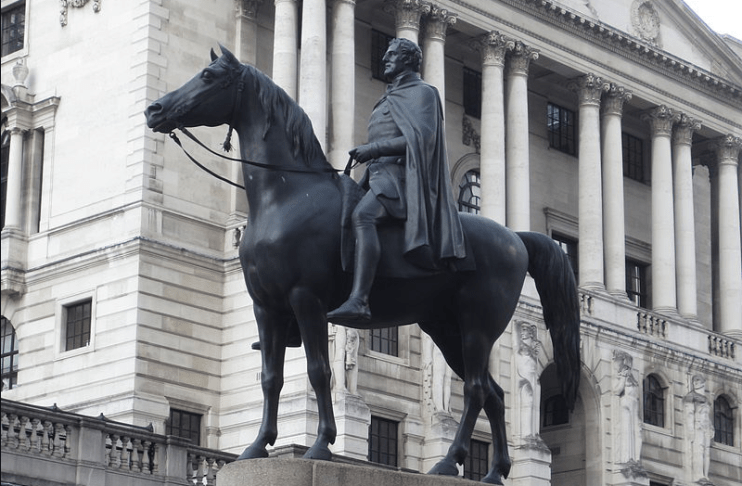
Queen Victoria stands on New Bridge Street – what might an Indian commuter make of this monument to imperial control of his homeland? The Duke of Wellington is on his horse outside the Royal Exchange – a towering figure, but one staunchly opposed to the emancipation of the Jews in England. Hundreds of years of history collide with raw, contemporary emotions in each of these statues. This is not a reason to remove or obscure them.
A website has now emerged, toppletheracists.org, identifying the statues that, it says, must be removed. In one small part of London alone it features John Moore, Hans Sloane, John Cass and Thomas Guy – all made contributions to our history – for better or worse – and all have now been outed by this website for 17th, 18th and 19th century links to empire, the slave trade or plantations.
In the case of Thomas Guy, to pick just one of the historical figures now earmarked for the purge, it is true that his investments in the South Sea Company included supporting and profiting from the slave trade. But it is also true that he founded Guy’s Hospital in London – incidentally, by way of recompense for the losses suffered by so many people in the South Sea Bubble of 1720. The campaign group behind this website, by the way, also want to see the back of Francis Drake, Horatio Nelson and King James II.
I do not intend to get into the game of weighing up the souls of men who lived and worked 300 years ago, any more than I intend to suggest that some good deeds can atone for profiting from slavery. My point is that it would become absurd and exhausting to tot up the good and the bad, the light and the dark associated with every historical statue in the City let alone across villages, campuses and public spaces throughout the country. Whatever the sentiment or rationale, this is not how societies progress. Cultural revolutions that sweep all before them are rarely benign.
And yet something akin to this approach is what the mayor of London, Sadiq Khan now wants to do. He has announced a commission to examine the street names and statues of London, culminating in a recommendation of which should be renamed or pulled down.
Let us hope that this commission spends more time deliberating its awesome responsibilities than the mayor did coming up with the idea. Sadiq Khan also advocated for new memorials in the capital, including ones for Stephen Lawrence, the Windrush generation, a National Slavery Museum or memorial and a National Sikh War Memorial. This is the right approach – to add to our history, to tell new stories and in so doing to paint a more complete, a more honest and a more diverse picture.
But statues – fragments of our past – should, by and large, be left where they are because, by the passage of time, they take on new meaning – they cease to be monuments to a single life and become instead monuments to uncomfortable truths, monuments to ideas, to complexity and yes, monuments to wrongdoing or shameful acts.
They should be understood, they should be talked about more and, where democratic force compels it, recontextualised, even, on occasion, repositioned. But we cannot run or hide from our history, we can only learn from it and add to it so that future generations understand our response to the past as well as our commitment to the future.