Skip to content
Monday 17 August 2026London --:--Frankfurt --:--Zurich --:--
NewslettersSearchEN · DE
MorningWire

European business, markets and politics

FTSE 100
10,750.11
-0.21%
DAX
26,440.31
0.00%
CAC 40
8,636.80
0.00%
STOXX 50
6,539.59
0.00%
  • Europe
  • Markets
  • Business
  • Economy
  • Technology
  • Politics
  • Opinion
More
GermanyFranceBankingAIEnergyFintechPropertyCapital Markets
  • Germany
  • France
  • Europe
  • Markets
  • Business
  • Economy
  • Technology
  • Politics
  • Opinion
  • DE
Wednesday 19 April 2023 11:42 am  |  Updated:  Wednesday 19 April 2023 11:52 am

Will inflation ever fall back below 10 per cent? Yes, but we’ve been wrong before
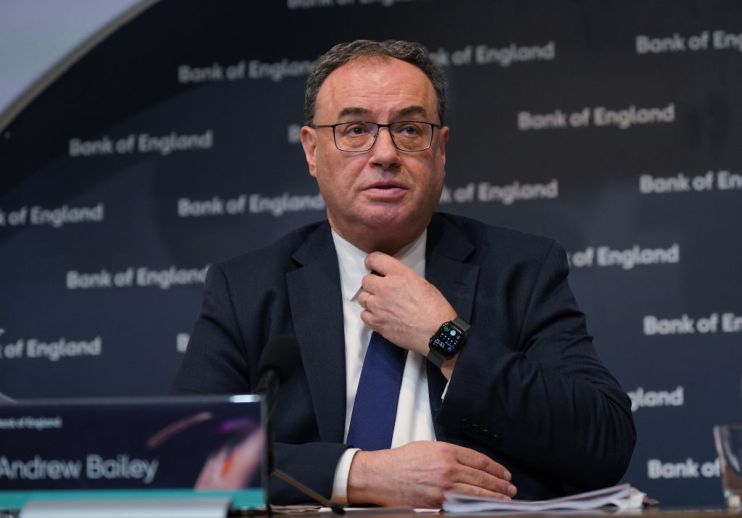
Bank of England Raises Key Interest Rate To 4%
Examine the ONS’s numbers and anyone can see signs of domestic price pressures holding pretty firm in response to Bank Governor Andrew Bailey and co’s aggressive interest rate increases (Photo by Yui Mok - Pool/Getty Images)

We find ourselves in the same situation again.

UK inflation has topped the City and Bank of England’s expectations, hanging in the double digits in March at 10.1 per cent. The forecast was for it to slip to 9.8 per cent.

Families and businesses will be forgiven for worrying whether it will ever fall back below 10 per cent – the last time it did so was August, seven months ago.

Britain now very clearly has the worst inflation problem in the rich world.

Economists keep saying it will definitely, definitely fall, which eventually will happen. Energy prices have tumbled, and today’s data showed the rate of price increases for inputs used by firms is curbing. The Office for Budget Responsibility reckons the consumer price index will slump to around three per cent by Christmas.

March’s overshoot was primarily driven by food inflation rising yet again to more than 19 per cent, levels not seen since the late 1970s.

Milk prices, up 40 per cent; olive oil nearly 50 per cent; sugar about 42 per cent.

The problem with inflation that’s driven by rising prices of everyday essentials is that consumers can’t really change their behaviour to avoid them.

Sure, they can trade down to budget retailers. They’ve clearly been doing that, with German discounters Aldi and Lidl gaining market share.

But rising food prices hit families right where it hurts.

Read more

Temporary inflation slowdown set to boost Burnham

Rising inflation graph with increasing percentage symbols, highlighting economic trends and financial market impact

That has left some wondering whether the Office for National Statistics is fully capturing the rate of price increases in the UK economy. Exposure to food inflation that is nearly double the headline rate means people have every right to think inflation is actually a lot higher.

That’s a problem for the Bank of England. It risks households assuming prices will keep increasing at a rapid clip as the year progresses, the absolute worst scenario for any central bank.

Examine the ONS’s numbers and anyone can see signs of domestic price pressures holding pretty firm in response to Bank Governor Andrew Bailey and co’s aggressive eleven straight interest rate increases.

Britain now very clearly has the worst inflation problem in the rich world

Core inflation – which strips out food and energy – was unchanged in March at 6.2 per cent. Services inflation, which the Bank has said needs to trim for it to stop raising borrowing costs, is still elevated.

A combination of strong wage increases and companies fattening up their margins is probably to blame for inflation’s staying power. The Bank flooding the economy with cheap money for too long has amplified those factors.

This leads us to the Bank blame game. Is it all Andrew Bailey’s fault that inflation has stayed above his two per cent target for about 18 months?

No. A constellation of factors have jolted prices, but he and the rest of the monetary policy committee (MPC) were, in hindsight, wrong to wait until December to 2021 to back their first rate increase.

Trying to reclaim their inflation credentials will almost certainly force the MPC into another rate increase on 11 May – maybe by 50 basis points, but more likely 25 basis points. Markets think rates could eventually hit five per cent (maybe a bit overblown).

We certainly haven’t reached peak rates yet.

Read more

Interest rate cut is ‘off the table’, says Bank of England governor

Governor Andrew Bailey has launched a defence of the Federal Reserve's independence.

Share this article

  • Facebook
  • X
  • LinkedIn
  • WhatsApp
  • Email

Similarly tagged content:

Sections

  • Markets & Economics
  • News

Categories

  • Economics

Related Topics

  • Bank of England
  • UK inflation
  • UK interest rates

Trending Articles

  • Jobs market ‘stops moving’ as employment costs weigh on hirers

  • House prices suffer biggest August slump in eight years 

  • Back bookshops in bid to rebuild high streets, Burnham urged

  • Aldi boss wades into supermarket ‘price-gouging’ row

  • Reform pledges £50bn savings in ‘generational’ benefits shake-up

More from Morning Wire

  • Temporary inflation slowdown set to boost Burnham

    Economics
    Rising inflation graph with increasing percentage symbols, highlighting economic trends and financial market impact
  • Interest rate cut is ‘off the table’, says Bank of England governor

    Economics
    Governor Andrew Bailey has launched a defence of the Federal Reserve's independence.
  • Hold interest rates but ‘sound hawkish’, Morning Wire Shadow MPC tells Bank of England

    Economics
    Andrew Bailey, Governor of the Bank of England, with the Bank of England building and Union Jack flag in the background
  • Bank of England holds interest rates but warns of rises to come

    Economics
    Bank of England headquarters in 2025, showcasing modern architecture and iconic London skyline in the background.
  • El Nino heatwaves to ‘fuel inflation next year’

    Economics
    Firefighter in helmet and uniform watching a blazing forest fire at night, red glow in the sky
  • Bank of England may set the stage for interest rate hikes this year

    Economics
    Bank of England recession warning
  • ‘Door is open’ to interest rate hike as inflation fears return

    Economics
    Bank of England headquarters in 2025, showcasing modern architecture and iconic London skyline in the background.
  • As it happened: Stocks rise but oil tops $95; inflation eases

    Markets
    Man in suit and red tie speaking at a podium to an audience in a modern building.
MorningWire

Independent European business, markets and political news for decision-makers.

Morning Briefing

Europe

  • Germany
  • France
  • Europe
  • UK & Ireland

Business

  • Markets
  • Banking
  • Technology
  • Energy
  • Property
  • Fintech

Editorial

  • Opinion
  • Editorial Policy
  • Corrections
  • Contact

Company

  • About Morning Wire
  • Privacy Policy
  • Terms of Use
  • Cookie Policy
© 2026 Morning Wire Ltd · Published by Morning Wire Media, Bahnhofstrasse 65, 8001 Zürich, Switzerland
Privacy · Terms · Cookies · Facebook