Wind industry facing turbulence in US and Europe as China emerges as low-cost competitor

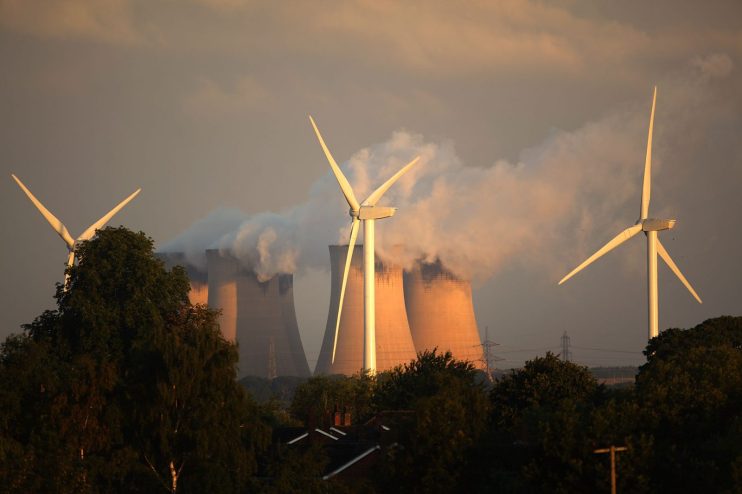
The global wind industry is suffering from turbulence.
While margins in Europe and the US have been squeezed amid low demand, supply chain disruptions and construction delays, prices in China have fallen dramatically due to increasing competition and strong local supply chains.
With demand expected to pick up next year amid the drive to transition to clean energy, China is starting to emerge as a low-cost competitor to US and European manufacturers.
The global wind market reached $112.23bn (£88.2bn) in 2022 and is projected to reach $278.42bn (£218.94bn) by 2030, growing at an average of 13.7 per cent per year, according to a report by Kings Research.
China is racing ahead of competitors to become one of the largest wind markets and a key driver of wind installations.
Wind capacity additions in 2023 could reach 110GW — an increase of 26 per cent year on year — with most of this rise coming from China, according to Bloomberg Intelligence (BI)’s Global Wind Energy Outlook.
China accounted for 47 per cent of the world’s newly installed wind power capacity in 2022 (31.65 GW), according to Statista, followed by the United States at 13 per cent.
It accounts for 56 per cent of the installed capacity of wind turbines globally, up from 37 per cent in 2018, according to Evwind.
Chinese wind turbines cost 20 per cent less than their European and US counterparts, according to BloombergNEF’s Wind Turbine Price Index for the second half of 2023, and the price of turbines in China has fallen by 57 per cent since 2020.
BloombergNEF’s Index found that turbine prices were up three per cent compared to the first half of the year, to an average of $990,000 (£778,526) per megawatt.
Keen competition, strong local supply chains and stable raw materials prices have pushed prices down.
This has had an impact on the global wind market. Chinese competitors are now “increasingly targeting profitable overseas markets with their cheaper turbines”, BloombergNEF said.
In emerging markets such as the Middle East and Africa, Latin America and South East Asia, Chinese manufacturers are “ramping up their efforts to export their machines where they are directly competing with the Europeans and the US”, according to Leo Wang, a BloombergNEF analyst.
But for now, Chinese manufacturers are unable to compete in mature wind markets in Europe and the US, Wang added.
“Manufacturers in Europe and the US are still focusing on margins first, and then they’re putting market share in the second spot,” Wang said. “It’s still too early to say that the European and US turbine makers will reduce their selling prices [because of China].”
European manufacturers are in a tricky spot: high post-pandemic costs driven by material price increases, inflation and supply chain disruptions have pushed up prices and led to two years of squeezed margins.
Wind turbine prices are 30 per cent higher than their pre-pandemic levels, according to research from BloombergNEF.
“There has been this clear upward [price] trend since 2020,” Wang explained. “Wind turbine manufacturers [are] focusing on maintaining elevated prices so that they will be able to improve their margins.”
Higher subsidies in the US for green energy in President Biden’s Inflation Reduction Act (IRA) have also put pressure on European countries to boost their renewable sectors, which have been hit by bottlenecks around accessing land permits and poor grid connections.
Wang said: “There’s a wave of factory expansion or construction coming up [in the US] so that the market will be ready for the upcoming demand increase in the US [in the next few years].”
This should not, however, cause European manufacturers to shift production capacity to the US, Wang said.
“Even if things are going really, really well in the US, it’s very likely that European turbine makers will still maintain their footprint in Europe,” Wang said.
In fact, a US focus on climate-friendly policies may be a good thing for the industry.
“It sort of drives [European] policymakers to rethink their wind policies and strategies, and urges European policymakers to ramp up their support towards the wind industry as well, which could be something really, really positive for the sector,” Wang said.