Windfall tax would jeopardise North Sea investments argues UK’s offshore energy body

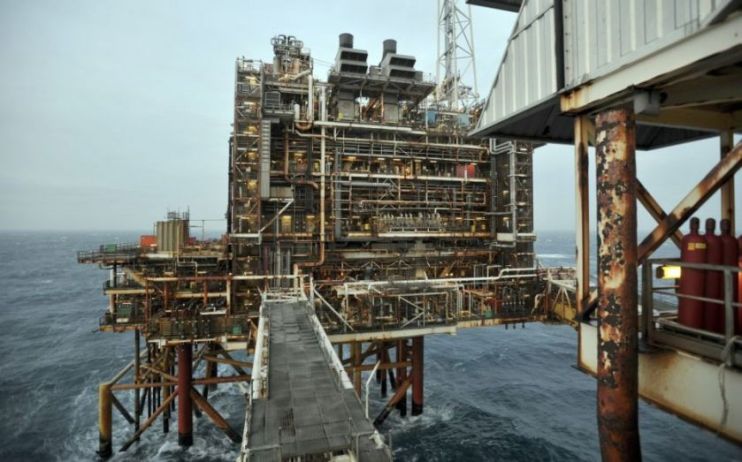
The UK’s leading offshore energy body has warned Kwasi Kwarteng that a windfall tax on energy companies could undermine stability in the North Sea oil and gas sector.
The boss of Offshore Energies UK (OEUK) wrote to the Business Secretary earlier this week, urging the government to ensure the tax regime remained “predictable” to incentivise more investment.
Deirdre Mitchell, chief executive of OEUK, argued that levies have typically discouraged investment in the energy sector.
She explained: “Historically, a stable and predictable regime has led to an increase in investment and activity levels in the basin, which in turn has driven an increase in tax revenue.”
“When ‘windfall taxes’ have been used in the past, data demonstrates that investment has fallen away, undermining capex and opex activities, jobs, and production.”
The comments follow sustained calls from the Labour Party for the government to impose a one-off £2bn levy on energy companies as part of plans to shave £600 off bills for low-income households amid the deepening cost-of-living crisis.
Energy bills have spiked to nearly £2,000 per year, and with analysts forecasting a further hike this autumn, the government is under increasing pressure to announce more packages of support for households.
Fossil fuel traders have become a prime target for raising revenues, with both Shell and BP unveiling record underlying profits during the first three months of the year powered by spiralling oil and gas prices.
The government has so far opposed calls to bring in further levies, concerned it would deter investment in the UK’s energy sector.
Conservative MPs helped vote down proposals from the Labour Party
North Sea oil and gas exploration is a key feature of Downing Street’s recently published energy security strategy, alongside ramping up nuclear and renewable power.
However, both Chancellor Rishi Sunak and Kwarteng have called on Shell and BP to honour their spending commitments, with both firms pledging to invest £25bn and £18bn respectively in the UK’s energy sector over the decade.
Meanwhile, Prime Minister Boris Johnson appeared to retract his opposition to a levy at Prime Minister’s Questions.
He said the government would “look at all sensible measures” when challenged by opposition leader Keir Starmer over the proposals.
Starmer has described a government U-turn as “inevitable.”
North Sea oil and gas companies are already charged at a higher 40 per cent rate, more than double what is paid by domestic corporations.
OEUK also highlighted that the Office For Budget Responsibility estimates that oil and gas producers will pay £7.8bn to the taxman this year.
This is £5.3bn higher than forecast in October last year, and is roughly equal to one per cent of the nation’s entire tax revenue.
This also a 20-fold increase on 2020-21, when plummeting demand and prices saw energy companies make multi-billion-pound losses, contributing to a UK tax take of just £400m from the offshore oil and gas sector.
Unlike other industries they were not offered public money to prop up their operations.
Mitchell said: “The current fiscal regime is working and is already generating extra revenue for HMT that can then be utilised to address the challenges facing the economy, while still sustaining investor confidence in the UK for the near and longer term.”
Earlier this week, BP chief executive Bernard Looney warned last week that further levies could jeopardise domestic investment.
He said: “By definition, windfall taxes are unpredictable, and so would challenge investment in home-grown energy.”