Without China onside, Sunak’s global AI safety summit will be pointless

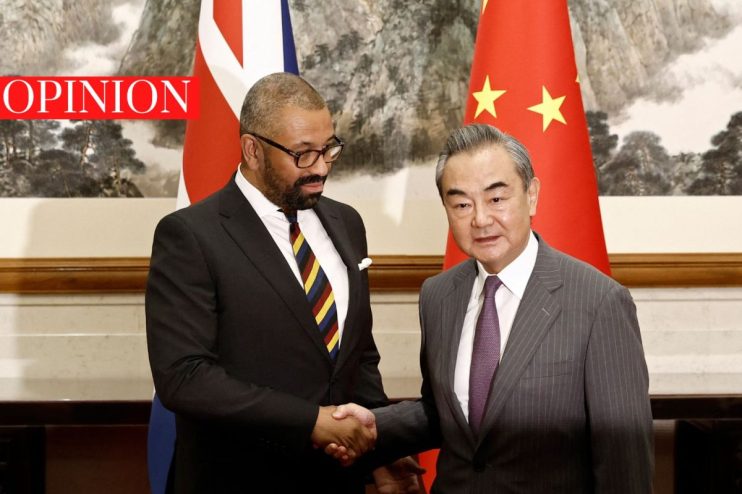
We have to get China to agree to rules on AI, or there’s barely any point having the conversation, writes Alex Petropoulos
Next week, Rishi Sunak will host an AI summit in London, just as the world starts to try and grapple with the uncertainty facing us in a future dominated by this technology. One thing is for sure, shutting China out of talks would undermine the safety of the British public and the world.
Bold claims about AI deserve thorough inspection. With things moving so fast, confidence is often a sign of radicalism and vested interests rather than expertise. But most AI policymakers agree that when it comes to AI Safety, cooperation is key. That’s why it was worrying to hear an outcry after Sunak invited China in response to spying allegations. Shutting out China would be a terrible mistake.
AI proliferation makes international collaboration essential. Potentially dangerous capabilities in AI models can be easily spread and shared between people—and across national borderlines—quickly and cheaply.
With enough computing power, even dangerous AI models developed in far-off countries could be cheaply copied between devices and misused from anywhere in the world. We are only as safe as the least cautious developer worldwide allows us to be. That’s why fostering international cooperation is so important.
Highly capable models can bring global benefits but also risks on an international scale. For example, an AI model with strong bioengineering capabilities could create novel and dangerous pathogens, leading to new pandemics. So far, the government has been prudent in identifying and addressing these concerns, and such models are a focus of the upcoming AI summit. However, playing politics and ignoring China would undermine these efforts.
AI safety draws many parallels to nuclear non-proliferation. When nuclear weapons first arose, the international community united to ensure they wouldn’t fall into the wrong hands, limiting nuclear warheads to only nine countries. By reducing and limiting the spread of this dangerous technology, we mitigated the risk of nuclear war and its catastrophic consequences.
The international community must now come together and do the same with AI. We need a set of rules and institutions that enable the non-proliferation of potentially dangerous capabilities in AI models. Shutting China out from AI Safety talks would be like disinviting the Soviets from the nuclear arms talks.
China is currently a runner-up to the US’s AI dominance. However, new models can go from cutting-edge to yesterday’s news in a few months. China has the potential to rapidly catch up to, or even overtake, Western progress.
The West has tried to limit China’s pace of AI Development with export controls on the powerful chips necessary for training advanced AI models. While these export controls do work, they aren’t wholly effective. Already, there is a growing black market for high-end chips. A year after the US introduced an initial tranche of laws limiting the sale of advanced chips to China, Joe Biden’s administration were forced to issue another round of rules to close loopholes which meant developers in Beijing could still get a hold of them.
These export restrictions will likely not work forever. While advances in AI have primarily stemmed from access to more and faster computer chips, we are also using existing chips more efficiently than ever – approximately 2.5x so every year. At that pace, in three years, training a model that would have previously taken you 1,000 state-of-the-art chips would only take 64. While restricting China’s access to computing power may work right now, it’s not a sustainable solution.
Relying on export controls alone to keep dangerous AI advances from China is insufficient and borderline reckless. Instead, the government should work with China at the AI summit to make comprehensive progress towards an international consensus on AI Safety.
The government shouldn’t let tit-for-tat politics undermine what would otherwise be its biggest success so far. The AI Summit could be a resounding win for British soft power and a win for the world, mitigating against risks posed by advanced AI. To do that, we need to be the bigger man and treat China as an equal.