Skip to content
Thursday 20 August 2026London --:--Frankfurt --:--Zurich --:--
NewslettersSearchEN · DE · FR
MorningWire

European business, markets and politics

FTSE 100
10,720.61
-0.21%
DAX
25,946.75
-0.55%
CAC 40
8,484.97
-0.20%
STOXX 50
6,430.05
-0.22%
  • Europe
  • Markets
  • Business
  • Economy
  • Regulation
  • Politics
  • Opinion
More
GermanyFranceEU InstitutionsCompetitionPublic AffairsBankingTechnologyEnergy
  • Germany
  • France
  • Europe
  • Markets
  • Business
  • Economy
  • Regulation
  • Politics
  • Opinion
  • DE
Friday 01 March 2024 11:30 am  |  Updated:  Thursday 29 February 2024 3:56 pm

Wolves and the waning Chinese interest in English football

By: Frank Dalleres

Sports Editor

Add as a preferred source on Google
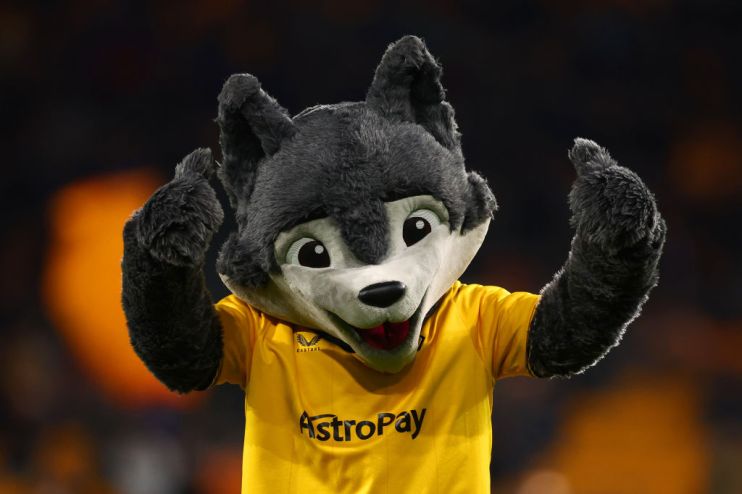
Wolves are the last Chinese-owned team in the top two divisions of English football

It was a sign of the times when Wolves were bought by the Chinese conglomerate Fosun International in July 2016.

Suddenly, China was pouring money into football, buying clubs in Europe and luring overseas stars to play in its domestic football league with exorbitant salaries.

That summer, investors from the country also bought Aston Villa and West Bromwich Albion in England, as well as Italian giants Inter Milan.

A few months earlier, two Chinese companies had purchased a 13 per cent stake in Manchester City’s owners City Football Group, with President Xi even paying the club a visit.

The following year Chinese owners took over at Southampton and Reading, while Chinese Super League clubs were hoovering up international stars such as Brazilians Oscar and Hulk.

President Xi kicked off the investment in football in 2016 when he declared his intention to turn the country into a footballing superpower.

Signing top talent from abroad would raise the level of the domestic league, while ownership of foreign clubs would provide avenues for exporting the best Chinese players, the theory went.

But that plan has long since changed, with central policy switching to encouraging investment at home.

As early as summer 2017, Chinese authorities reasoned that the influx might in fact be harming the local talent pipeline and announced a punitive tax on overseas signings of more than £5m.

Villa’s owner, Tony Xia, sold up to the club’s current owners in 2018, and since then the trickle of Chinese investors exiting football has become a flood.

Gao Jisheng offloaded Southampton in 2022, when Chinese ownership of City Football Group was reduced to just one per cent. 

Read more

Swansea buck gambling trend as Snoop Dogg’s club sign green wellness brand

Snoop Dogg performing on stage, holding a microphone, wearing sunglasses and a graphic t-shirt, surrounded by a crowd

This week, Lai Guochuan was replaced as owner of West Brom by American businessman Shilen Patel after months of unrest from supporters. 

A similar situation is unfolding at Reading, where Dai Yongge has been accused of taking the club to the brink of administration and will surely be gone soon.

That all leaves Wolves, one of the early adopters, as the last outpost of Chinese ownership in English professional football. 

They have also been by far the most successful – not including Manchester City, where Far East influence has been minimal.

Wolves are the only one of the five English teams to be majority owned by Chinese investors who are in the Premier League, and they look like staying there for another year.
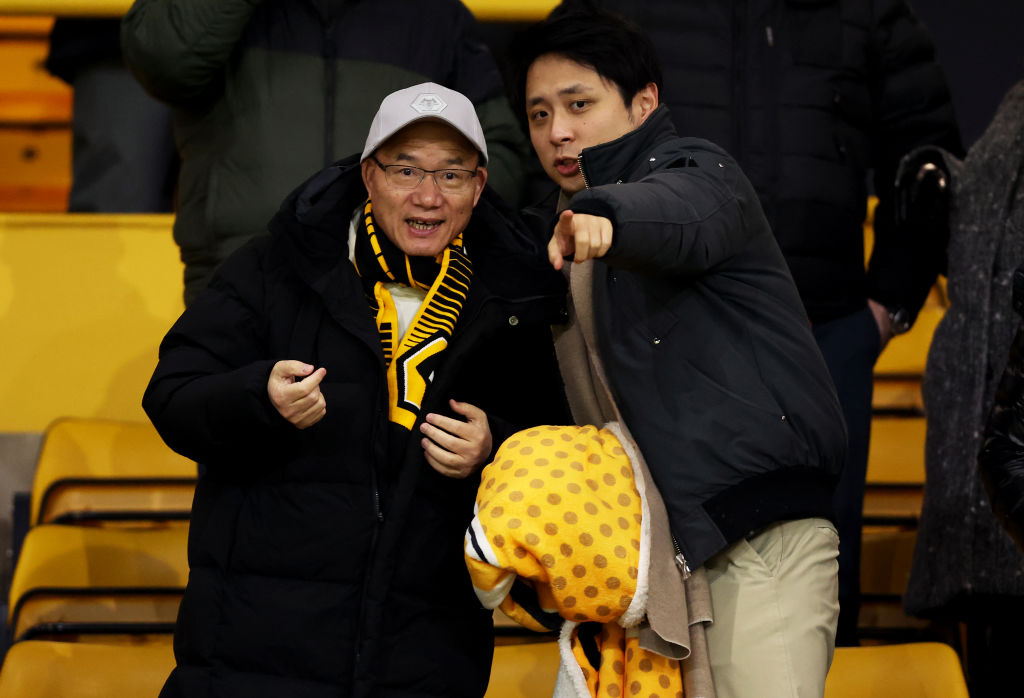
Guo Guangchang of Fosun, which has owned Wolves since 2016

Despite some grim pre-season predictions, the Black Country club went into this weekend ninth in the table, ahead of Newcastle United and Chelsea.

Their close working relationship with super-agent Jorge Mendes has raised questions, but on the other hand has helped the club to access a better calibre of player.

So is Fosun set to continue bucking the trend and hold onto Wolves? That is harder to say. Belt-tightening last summer led to speculation that the owners had had enough. 

But in a letter to supporters in August, chairman Jeff Shi wrote that Fosun “remains committed to Wolves and has never had any plans to sell the club. The club is a long-term project and an important one for Fosun.”

Booming interest in acquiring European football teams means that Fosun ought to have takers should they decide to sell up. 

For now, however, they remain a reminder of President Xi’s brief dalliance with trying to get China to take over the footballing world. 

Read more

Everton Friedkin Group owners inject £38m, reportedly to pay Burnley

Hill Dickinson Stadium exterior, Liverpool, with fans on steps, waterfront, and city skyline.

Share this article

  • Facebook
  • X
  • LinkedIn
  • WhatsApp
  • Email

Similarly tagged content:

Sections

  • Sport

Categories

  • Sport Business
  • Sport

Related Topics

  • Football
  • Football finance
  • Premier League football
  • Sport business

Trending Articles

  • Jobless Banquet: Youth unemployment surge ‘sends Neets to KFC’

  • City law firm sues prominent Emirati business family

  • Amanda Blanc has worked her magic at Aviva

  • As it happened: Miners fuel FTSE 100 recovery; oil jumps as Trump claims Strait of Hormuz

  • House prices in wealthy London boroughs fall by up to £300,000

More from Morning Wire

  • Swansea buck gambling trend as Snoop Dogg’s club sign green wellness brand

    Sport Business
    Snoop Dogg performing on stage, holding a microphone, wearing sunglasses and a graphic t-shirt, surrounded by a crowd
  • Everton Friedkin Group owners inject £38m, reportedly to pay Burnley

    Sport Business
    Hill Dickinson Stadium exterior, Liverpool, with fans on steps, waterfront, and city skyline.
  • How Britain can stay clear of rivals as home of overseas sport club owners

    Sport Business
    Football fans protest holding Love United Hate Glazer and Glazers Out Ratcliffe Out banners.
  • Exclusive: Rugby League monitoring Henry Pollock amid £1m Hearn wage demands

    Sport Business
    A young man with blonde hair and a dark shirt, clenching his fist and smiling, likely celebrating or cheering.
  • West Ham: Staveley receives Sadiq Khan encouragement to buy London Stadium

    Sport Business
    Low-angle view of a football stadium from the pitch, showing the corner marking and empty seats under a blue sky
  • Fifa want to sell the family silver but should World Rugby do the same?

    Sport Business
    New Zealand All Blacks rugby players performing the Haka pre-game with arms raised and intense expressions
  • Liverpool owners tipped to sell – but not to Amazon boss Bezos – by former CEO

    Sport Business
    John W. Henry and Linda Pizzuti Henry with the Premier League trophy at a stadium.
  • Is £5bn now the entry ticket into Premier League football?

    Sport Business
    Jeff Bezos, Amazon founder, in a dark suit and red tie at a formal event, looking right.
MorningWire

Independent European business, markets and political news for decision-makers.

Morning Briefing

Europe

  • Germany
  • France
  • EU Institutions
  • Europe

Business

  • Markets
  • Business
  • Economy
  • Regulation
  • Competition
  • Public Affairs

Editorial

  • Opinion
  • Editorial Policy
  • Corrections
  • Contact

Company

  • About Morning Wire
  • Privacy Policy
  • Terms of Use
  • Cookie Policy
© 2026 Morning Wire Ltd · Published by Morning Wire Media, Bahnhofstrasse 65, 8001 Zürich, Switzerland
Privacy · Terms · Cookies · Facebook