Yoga for the many? Offering prices at a sliding scale relies on trust for profits

Big pharma, hardly a stalwart of social equity, has been offering sliding scale payment for years and now purpose-driven businesses such as Mission Yoga are trying to prove goodwill can pay the bills, writes Sascha O’Sullivan
In the gardens of Christ Church in Spitalfields, you never know what you’re going to get. It could be investment bankers enjoying a sandwich in the sunshine, laptop-toting students or a homeless Londoner trying to find shelter.
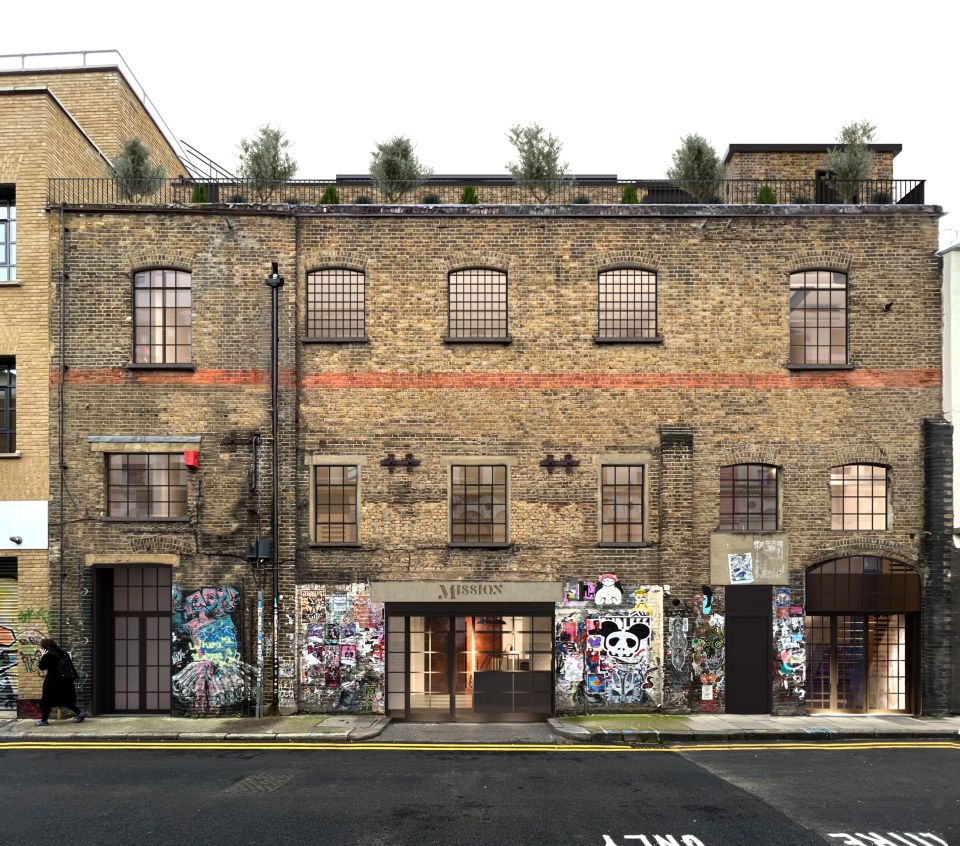
This is the view from the windows of the signature studio at Mission Yoga, the soon-to-be largest home of asanas in Europe, opening next month.
Bathed in light, the room will be able to have 75 students practising at once.
But the outlook means you – quite literally – can’t turn away from a problem which has plagued the wellness industry. In a sector set to be worth £30.6bn this year in the UK, how can you profess to be doing good, enhancing communities and creating “wellness”, if the price point is inaccessible?
There are many fallibilities in the yoga world: teachers who do other types of training in secret to keep their bodies in good nick, an almost puritanical dedication to certain kinds of diets, overpriced gym leggings, cultural appropriation and inclusivity to name but a few.
Mission wants to admit to these: it serves wine in its in-house restaurant, it offers calisthenics as well as vinyasa, but most importantly, it seeks to offer its classes at a price point for those working in the City and for those living in Tower Hamlets, a borough with some of the highest levels of deprivation in London.
The sliding scale payment model is not new, but has started to gain momentum alongside the rise of B Corporations, purpose-driven businesses and ESG-concerns.
The premise of it is not dissimilar from how income tax works in almost every modern economy: those who can afford to pay more towards the benefit of the state in order to subsidise those who can’t.
It’s why, in the UK, for every pound an individual earns over £150,000, they pay 45 per cent of it back to the Exchequer. It’s also why there was such an uproar when Liz Truss and Kwasi Kwarteng moved to abolish the top tax band. It was an affront to many Brits’ sense of fairness.
In its purest form, a sliding scale offers exactly the same service at different price points; for those who are able to, they can pay say £25 for a class, while others pay as low as £10. This can work for the business, but leave self-employed teachers out of pocket.
Mission offers a kind of unbundling of its services, those paying the top tier – £179 a month for unlimited yoga classes – also have more access to classes than those in the bottom tier, priced at £99 a month.
Those paying the most are paying “the true cost of the customer service,” says Genny Wilkinson Priest, the founder of Mission.
“It’s for people who have jobs, who don’t really worry about money, who are paying for both their needs and wants,” she said. The existence of corporate programs, where people working for banks and law firms in the City, pay less for the service undermines this, says Wilkinson Priest.
“Tell me why people who have jobs are paying less,” she says, “they should be paying the top rate because they are subsidising the people who can’t to support their community.”
A tiered pricing structure or sliding scale model as it’s known in most customer-facing businesses is also used within the pharma industry.
For most, it’s based on a country-to-country basis, so those nations with the lowest income pay less for drugs. In 2008, GlaxoSmithKline introduced a pricing structure which meant on an individual level, people’s ability to pay was assessed. In the NHS, the £9 fee for prescriptions work in a similar way.
But smaller businesses are starting to jump on to a movement which can, they hope, boost their bottom lines and look good for their community initiatives.
In the art world, Australian-Palestinian artist Sarah Bahbah sells limited editions of her prints on a sliding scale, ranging from $50 and $300. For her, it’s about democratising an industry normally only the purview of the extremely wealthy.
The theory behind it is both based on social equity and actually boosting sales by creating loyal customers out of people who would otherwise have been immediately turned off by the high price.
Outside of pharma, it is also self-selecting and therefore relies on trust, a commodity often in short supply.
“I do believe in the goodness of people. It’s kind of like, if someone’s gonna break into your house, they’re gonna break into your house, right? There’s not much you can do,” Wilkinson Priest told Morning Wire
The original opening of Mission, set for autumn last year, was pushed back as a result of planning woes with the local council.
Looking on to the gardens of Christ Church may have been fertile ground for inspiration, but the listed status of the building also meant every inch was subject to extra scrutiny.
When they open next month, Wilkinson will find out if trust or, in the yogic tradition, ahimsa, meaning non-harm, can pay the bills.