Yoti boss warns social media ban needs tougher age-check standards

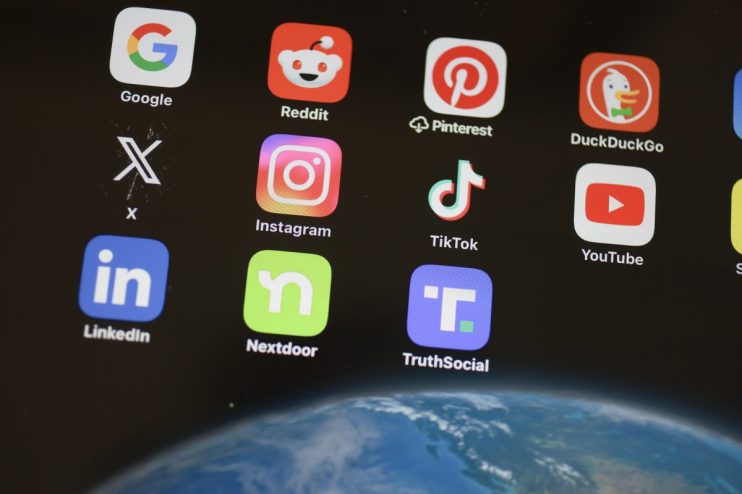
The chief executive of digital identity giant Yoti has urged ministers to introduce minimum standards for age verification, warning the government’s proposed social media ban for under-16s risks falling short without clearer rules on how platforms check users’ ages.
The intervention comes after Keir Starmer announced plans to block children under 16 from accessing major social media platforms from 2027, alongside restrictions on features including livestreaming and communication with strangers.
Under proposals published by the Department for Science, Innovation and Technology (DSIT), ministers have asked Ofcom to advise on what constitutes “highly effective age assurance” before the measures are introduced.
While the government says the policy is intended to better protect children online, many of the practical details remain unresolved, including just how platforms will verify users’ ages without creating excessive barriers or collecting unnecessary personal data.
Robin Tombs, whose company provides age assurance technology to tech behemoths Tiktok, Meta and Sony Playstation, said the effectiveness of the policy would depend on how those standards are ultimately defined.
“If you don’t have minimum standards, the market just falls apart,” Tombs told Morning Wire. “If you make it too easy to get around some of the checks, the whole thing falls apart because it’s the weakest link that all the kids will go to.”
He added age assurance should not be viewed as a one-off exercise but as part of an ongoing process, with regulators setting clear expectations around accuracy and enforcement.
Lessons from Australia’s ban
The debate has been shaped by Australia’s under-16 social media ban, which came into force last year and has since faced criticism after research suggested many teenagers continued accessing restricted platforms.
Tombs, whose company participated in Australia’s age assurance technology trial, said: “A lot of people have drawn the wrong conclusions from the Australian process.”
“It is quite possible to do effective age checks for 16-year-olds as long as you’re not expecting perfection.”
Instead, he argued Australia failed to require platforms to apply appropriate “safety buffers” when using facial age estimation technology.
“If you set it at 16, you’re going to get a lot of 14 and 15-year-olds who get through,” he said. “Then people claim the thing is a bit of a joke.”
The company believes platforms should combine facial age estimation with alternative methods such as digital identity wallets or document checks, rather than relying on a single approach.
Meanwhile, civil liberties groups have argued that expanding age verification across social media could require millions of users to provide identity documents or biometric information, increasing the amount of sensitive data processed online.
But Tombs rejected that characterisation, arguing there is an important distinction between verifying someone’s age and verifying their identity. “You can do an age check without identifying someone,” he said.
Intrusive tech
He added that most platforms using Yoti receive only confirmation that a user is above a required age threshold, while facial images used during age estimation are deleted immediately after the check.
The company says most users offered multiple verification methods choose facial age estimation over uploading passports or driving licences.
However, the Information Technology and Innovation Foundation (ITIF) warned that a blanket ban would require intrusive age verification while restricting access to platforms that already offer parental controls and safety tools.
“The UK should prioritize smarter design, stronger safety tools, and greater parental controls, not widescale bans that remove technology from young people and choice from families,” policy analyst Alex Ambrose said.
He also warned that blanket bans could require “aggressive age-verification systems involving intrusive identity checks”, raising concerns over online privacy.
Jess Lloyd, principal analyst at Forrester, said the plans signalled “a global shift in platform accountability”, comparing their potential impact to GDPR in forcing tech companies to redesign products and absorb new compliance costs.
Forrester research found 55 per cent of UK consumers support banning social media for under-16s, while 67 per cent believe the benefits outweigh the drawbacks.
At the same time, Lloyd said consumers remain sceptical about whether the measures can work in practice, with 61 per cent expecting restrictions to be difficult to enforce.