You’re virtually there: How MelodyVR is helping music fans see their favourite artists

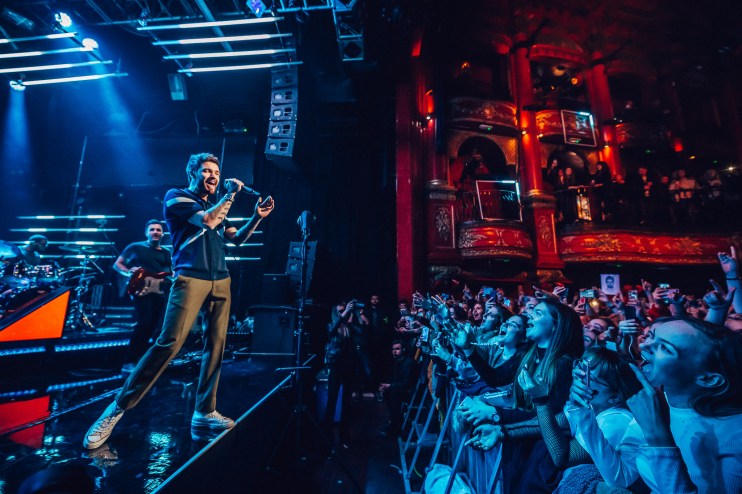
Most music lovers will probably be familiar with the scramble for gig tickets, the eye-watering cost to see your favourite artist, figuring out the logistics of travelling to and from the venue.
A large proportion of events are oversubscribed, so many fans end up missing out anyway. But one upbeat company is giving fans the option of watching shows in virtual reality instead.
Co-founders Anthony Matchett and Steven Hancock launched MelodyVR in 2018; the firm currently collaborates with around 850 artists, including the likes of Lewis Capaldi, Wiz Khalifa, Sigrid, The Chainsmokers, and Imagine Dragons — and you can watch them all perform from the comfort of your home.
I meet Matchett at MelodyVR’s offices in Soho, and I’m guided to a kind of post-production studio. This chief executive is exactly what you would expect from someone who has spent years working in the music industry — cool, collected, and fashionable.

Having never used virtual reality technology before, I’m keen to have a go, and I’m handed a headset and remote control. A selection of artists pop up all around me. I click on Post Malone and find myself in the middle of a crowd with an unobstructed view of the stage.
You can pause the show, select a different track, and choose where you’re positioned around the stage. One fun quirk about this technology is that you can even choose to be on the stage with the band, and I chuckle as I spin in my (real) seat and see the staff working backstage at the (virtual) gig. Rather than a window like a traditional broadcast, the cameras capture a sphere all around you, which means that you get a better feeling of being present.
It’s hard not to feel self-conscious when you’re wearing a giant pair of opaque goggles, grinning at stuff that other people around you can’t see. But it is fun, and I get the sense that it would get more enjoyable the more you use it.
Matchett insists that the aim is not to replace live music. “We are all massive music fans here, but there are only so many shows that you can actually get to — maybe the band you love is performing on the other side of the world, the gig is sold out, or you don’t want to pay £1,000 for a ticket because it has been massively overhyped. There are lots of reasons why people can’t get to shows, and that’s why we started the company.”
When I ask if live venues are worried that his business could eat into their revenue stream by reducing demand for gigs, Matchett says no. “Many shows sell out in the first 10 minutes, so when you look at it from that perspective, the demand nearly always outstrips the supply. Promoters aren’t concerned that people are going to sit at home with virtual reality rather than go out with their mates. But ultimately, if you can’t get to a show, this is the next best thing.”
He also argues that virtual reality is a way for artists to offer more creative content for fans. Gone are the days when you get extra visuals or content in a CD case, so Matchett says artists are now looking for other ways to tell a bit more of their story.
“Music is not a particularly visual thing outside of videos, but virtual reality gives fans an opportunity to see behind the curtain, to understand the creative concept behind an album.”
While the company is moving to a Spotify-like subscription model of £10 a month, it currently charges its users between £7 and £12 depending on the content.

So do the artists need a certain level of popularity for it to make commercial sense for MelodyVR to have them on their platform? The co-founder says yes, to an extent. But he also stresses that the company is primarily focused on offering users an eclectic mix of music genres in order to appeal to as many people as possible.
That in itself presents a challenge, because unlike Spotify which licences millions of tracks that already exist, MelodyVR has to create the content. And, of course, this involves working with the artists (as it stands, MelodyVR has partnerships with some massive record labels, including Universal Music, Warner, and Sony, to name but a few).
The MelodyVR team use small, unmanned tech to capture concerts. As the company grows, Matchett tells me that more of the content is original, because the artists are increasingly willing to contribute their time.
One glaring problem with virtual reality is the price of the headsets; while the costs are coming down, an Oculus Go can still set you back around £200. Recognising that these devices aren’t commonplace in people’s homes, Matchett’s solution was to offer its users a virtual reality experience via an app on their smartphones. “Since then, everything has rocketed,” he says.
In its short history, the company has raised $75m, which it has used to create new content and develop the platform. Just last week, it announced that O2 customers in the UK will be offered a MelodyVR subscription in their price plan, which continues the firm’s ongoing 5G partnership with the telecomms giant.
When I ask how Matchett managed to get these big artists and businesses on board, he says it’s been about perseverance. “The thing with VR is it’s very much a show-and-tell technology; once you see it, you get it. The hardest part was getting the headset on bands and managers, but once we did that, it was relatively straightforward. The idea of you being anywhere on stage with the band and it feeling real and convincing is quite hard. Six years ago it was very difficult, but now a lot more people know who we are, how we work, and why we exist.”
Some might argue that virtual reality is a gimmick. Perhaps MelodyVR is the company to prove that it’s not.