Japan needs its Thatcher moment or Abenomics is destined to be a failure

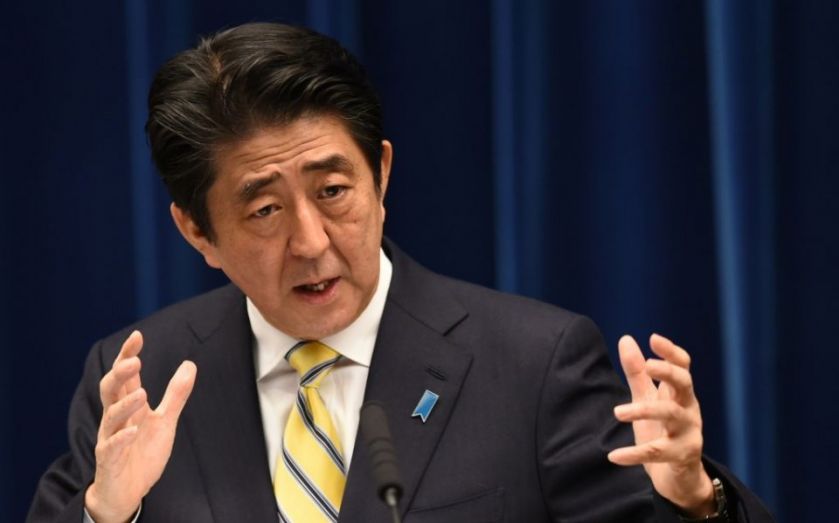
Prime Minister Shinzo Abe of Japan is halfway there. After two decades of stagnation, matched by a consistently underwhelming political response to this seminal challenge, there is no doubt that Abe is at least aware of the true extent of the problem: that his legacy is wholly bound up with ending Japan’s “Lost Decades”. In one sense, the Prime Minister has made a political success of reform already, as he realises the key political principle of action – that a flurry of activity implicitly binds a leader to his people.
So the good news is that Abe has communicated that he is fully committed to ending his country’s malaise, that he is on his people’s side, and will do whatever it takes to make things right. Further, given the fractured state of the main opposition Democratic Party of Japan (DPJ), he is set to coast to victory in the 14 December snap election he has just called.
But while the political outcome – a strong mandate for Abe’s ruling Liberal Democratic Party (LDP) – is a foregone conclusion, what follows in terms of policy is not. As I said, Abe is still only halfway there. For the simple fact remains that the snap election is necessary because Abenomics – the Prime Minister’s three-pronged strategy of monetary expansion, fiscal stimulus, and structural reform – has run aground.
While his premiership remains unchallenged, Abe’s early popularity has waned as the shine of Abenomics has worn off. The December election can best be seen as a way to lock in a comfortable parliamentary majority before making the hard choices necessary to rescue the “third arrow” of Abenomics, that of structural reform.
Yet for all the bells and whistles let loose by vast monetary expansion and extensive fiscal stimulus, it is an open question as to how committed Abe really is to reform. While it is true that the Bank of Japan has just pledged to buy ¥80 trillion (£432bn) of government bonds a year, a towering number equivalent to 15 per cent of Japan’s GDP, and that the government deficit stands at a significant 8 per cent of GDP, the third arrow, on which everything ultimately hinges, has been far less developed.
The immediate culprit for Abenomics coming off the rails has undoubtedly been the hike in the consumption tax earlier this year, designed to plug the gaping hole in Japan’s finances. At 240 per cent of GDP, Tokyo’s government debt is easily the highest in the world; no Japanese government could do much of anything unless a credible medium-term debt reduction strategy were in place. As such, the Prime Minister duly raised VAT, and the still fragile Japanese economy swooned, heading into its sixth recession in the past two decades.
Its economy contracted at an annualised rate of 7.3 per cent in the second quarter of 2014, and by 1.6 per cent in the just released third quarter numbers. Alarmingly, the grip of low inflation on Japan – despite all the recent fiscal and monetary firepower – has been surprisingly resilient, with inflation tumbling back to 1 per cent in September, a full percentage point below the Bank of Japan’s ambitious stated goal. Unsurprisingly, Abe balked at implementing the next VAT rise, scheduled to go into effect in October 2015.
So the Prime Minister called the snap election because Abenomics is in real peril. Abe’s actions over the past few days have been impressive. First, he quieted fiscal hawks by swearing credibly that the tax rise would be implemented without fail in April 2017, presumably when the economy is in more robust shape. Setting a specific date for the tax’s implementation made his decision to value growth and escaping low inflation over the tattered public finances seem more palatable.
But the heart of the matter rests with answering one question. Will Abe – following in the footsteps of his heroine Margaret Thatcher – use the political mandate he is about to receive to truly take on the very strong vested interests in Japan that stand in the way of structural reform: allowing workers to be fired (and thus more of them hired), farmers to be exposed to the demands of competition, women to play a more substantial role in the workplace, and finishing the game-changing Trans-Pacific Partnership (TPP) trade deal with many of its neighbours and the US. In other words, will Abe use his mandate to effect lasting change in Japan, or not?
It isn’t the mandate that matters; we must all keep our eyes on what Abe does with it.
Dr John C Hulsman is senior columnist at Morning Wire He is a life member of the Council on Foreign Relations, and author of Ethical Realism, The Godfather Doctrine, and Lawrence of Arabia, To Begin the World Over Again. He is president and co-founder of John C Hulsman Enterprises (www.john-hulsman.com), a global political risk consultancy, and available for corporate speaking and private briefings at www.chartwellspeakers.com