Skip to content
Monday 24 August 2026London --:--Frankfurt --:--Zurich --:--
NewslettersSearchEN · DE · FR
MorningWire

European business, markets and politics

FTSE 100
10,816.56
+0.64%
DAX
26,136.56
0.00%
CAC 40
8,484.43
0.00%
STOXX 50
6,462.22
0.00%
  • Europe
  • Markets
  • Business
  • Economy
  • Regulation
  • Politics
  • Opinion
More
GermanyFranceEU InstitutionsCompetitionPublic AffairsBankingTechnologyEnergy
  • Germany
  • France
  • Europe
  • Markets
  • Business
  • Economy
  • Regulation
  • Politics
  • Opinion
  • DE
Tuesday 26 January 2016 8:57 am

Google tax deal: Taxing companies is after all just a stealthy way to tax people

By: James Nickerson

Add as a preferred source on Google

Another day, another deluge of headlines about a multinational’s tax affairs.

It seems that Google’s £130m payment is motivated, in part at least, by concerns over George Osborne’s “diverted profits tax.” He claims it’s a great success, others describe the amount is “derisory .” Both miss the point spectacularly.

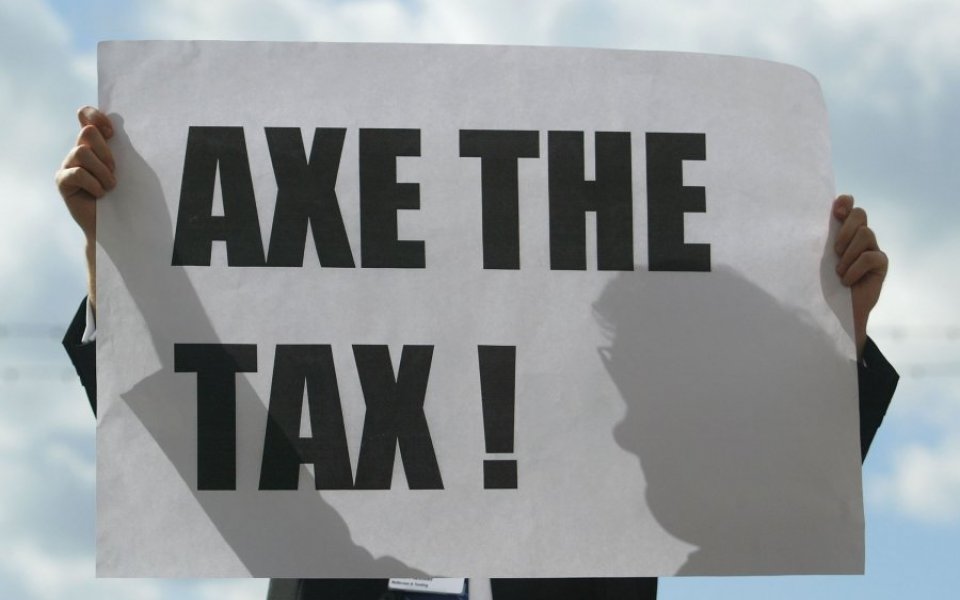
We shouldn't be taxing companies in the first place. A company is simply a legal construct – only people can pay taxes. The only people who can bear the burden are employees through lower wages, shareholders through lower returns on capital or customers through higher prices.

There are campaigners who deny this obvious truth and demand arbitrary “clampdowns” on avoidance and that those companies pay their “fair share”, whatever they deem it to be. But there is little point engaging with those who feel that compliance with the law is inadequate and that companies should also have to clear additional and arbitrary hurdles that move with the political mood. The government must resist their demands to consign the rule of law to the dustbin.

Read more: Google agrees to pay £130m in back taxes in deal with HMRC

There also seems to be a shocking lack of understanding on the part of politicians as to how corporation tax is assessed. Just this afternoon Rachel Reeves, the former shadow chief secretary to the Treasury, criticised the government for letting Google "get away" with paying two per cent tax on their sales . If senior politicians don’t appreciate that corporation tax is paid on profits rather than sales, there is little chance of sensible debate or reform.

And it’s increasingly hard for authorities and indeed companies themselves to determine where these profits are being generated.

The patchwork of domestic tax laws and international treaties which are supposed to govern the international tax system are obsolete. There were designed at a time when the lion’s share of GDP in developed counties was generated from manufacturing. Assets were physical, tangible and immobile.

Read more: Tax code needs radical simplification

A world in which a company headquartered in California could make money selling internet advertising to clients in the UK, booking the sales through an Irish subsidiary which sends licensing fees to Bermuda via Amsterdam could not have been imagined when the system was designed.

There are limits to what George Osborne can do to fix the antediluvian international tax system: he cannot change laws in Ireland or the Netherlands.

Even if he could it wouldn't be worth saving. The system lacks any legitimacy and is fuelling public misconception and resentment.

Taxing companies is after all just a stealthy way to tax people and its time has passed. Taxes on capital income disguised as “business taxes” should be replaced with a tax on distributed income, stripping out much of the complexity and unfairness.

Share this article

  • Facebook
  • X
  • LinkedIn
  • WhatsApp
  • Email

Similarly tagged content:

Sections

  • Markets & Economics

Categories

  • Markets

Trending Articles

  • Billions in pensions go missing: JP Morgan and Standard Life reconnect Brits with lost wealth

  • Treasury launches review in bid reform hospitality business rates

  • A global tram renaissance is underway. Why isn’t London jumping on board?

  • Burnham forgets, the Labour Party is a moral crusade or it is nothing

  • Iranian hackers behind UK energy plant attack

More from Morning Wire

  • Susannah Streeter: investors are bracing for tax rises

    Opinion
    Chancellor John Healey smiling, wearing a navy suit, white shirt, and red tie.
  • Big bank bosses on alert as tax noise gets louder under Burnham

    Banking
    Two men, one in a white shirt and red tie, the other in a navy jacket, conversing outdoors.
  • Labour backbencher adds to criticism of stamp duty on shares

    Politics
    Callum Anderson, a smiling business professional in a navy suit and striped tie against a gray background.
  • Five-star Mayfair hotel hit with HMRC winding-up petition

    Hospitality
    Exterior of The Stafford London hotel, a brick building with British and American flags, elegant windows, and ornate raili...
  • Ten bold ideas to fire up the British economy

    Economics
    Morning Wire
  • Britain should back the North Sea if it wants energy security and net zero

    Opinion
    Oil prices have risen as Israel and Iran tensions escalated.
  • Ask the expert: Is this a hack for contributing £29,000 to an ISA?

    Personal Finance
    Marianna Hunt discussing financial strategies at a business conference, wearing a professional suit, engaging with the aud...
  • Ask the expert: How do I avoid double tax on my pension?

    Personal Finance
    Marianna Hunt discussing financial strategies at a business conference, wearing a professional suit, engaging with the aud...
MorningWire

Independent European business, markets and political news for decision-makers.

Morning Briefing

Europe

  • Germany
  • France
  • EU Institutions
  • Europe

Business

  • Markets
  • Business
  • Economy
  • Regulation
  • Competition
  • Public Affairs

Editorial

  • Opinion
  • Editorial Policy
  • Corrections
  • Contact

Company

  • About Morning Wire
  • Privacy Policy
  • Terms of Use
  • Cookie Policy
© 2026 Morning Wire Ltd · Published by Morning Wire Media, Bahnhofstrasse 65, 8001 Zürich, Switzerland
Privacy · Terms · Cookies · Facebook