A UK-Australia trade deal must address Canberra’s reluctance to tackle climate change

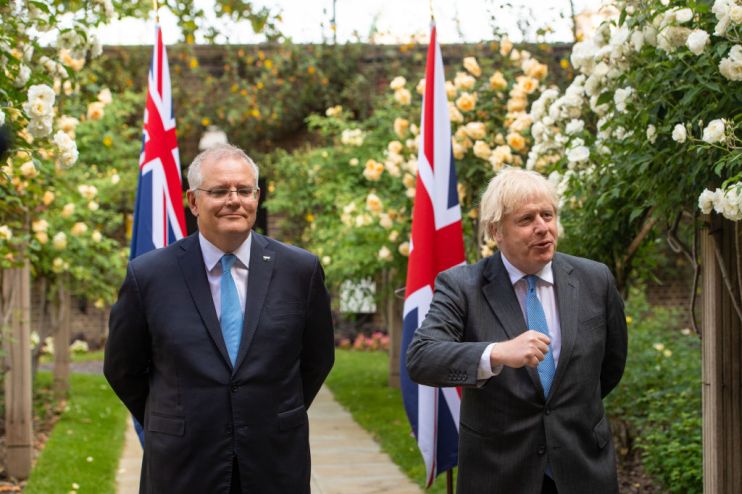
The new trade deal with Australia is the first building block in the Prime Minister’s vision for a Global Britain, and sets the UK on a firm path to joining the Comprehensive and Progressive Agreement for Trans-Pacific Partnership. There has already been fierce debate over the contents of the agreement. Environmental concerns must be at the heart of a closer trade relationship with Australia, a country which has often lagged behind global efforts to tackle climate change.
To date, the UK has dwarfed Australia in the battle to reduce emissions. According to the Climate Change Performance Index, the UK is the 2nd highest performer of the 57 countries that are tracked. Australia is 8th from bottom, and the second worst for the climate policy metric. Australia’s reliance on coal extraction means that it has the highest carbon emissions per capita in the entire world.
The UK has legislated for net zero and has successfully unveiled decisive policies ahead of COP26 this year, with decarbonisation strategies for transport, heat and buildings on the horizon. Australia, on the other hand, has announced a net zero target by 2050, but not yet legislated for it, with Scott Morrison noticeably holding back from a binding commitment this week at Cornwall’s G7.
Thirty years is a long way away, but the success of such targets hinges on decisions and agreements made today. It is vital, therefore, that this deal should be “net zero ready”. To ensure this, it should pass three main tests.
First, does the deal encourage Australian farmers towards more sustainable farming practices like those we have here in the UK?
The UK has some of the most sustainable farming practices in the world, evidenced by our ranking of 10th in the Economist Intelligence Unit’s Food Sustainability Index. In contrast, Australia has the highest agricultural emissions per capita in the World. One practical example of this difference is that Australian agriculture uses 71 highly hazardous substances that are banned in the UK, including neonicotinoids, which can devastate pollinator populations.
The deal should start the pathway to bringing Australian standards up towards our own. This would not only be important for the global fight against climate change, but it would allow Australian and British consumers to reap the rewards of a more sustainable agricultural sector.
The second question we must ask is whether it encourages the exchange of net zero-related technology and goods?
The UK has consistently been the first-mover on net zero technology, be it our dominance in offshore wind, our hasty electric vehicle rollout or our rapid modernisation of the energy retail sector towards fully renewable power. In turn, we have bred a generation of insurgent green tech companies such as Octopus, Bulb and OVO to name just a few.
The deal should stimulate the progression and exportation of our cleantech innovators, so that the benefits of our ingenuity are felt in Cairns as well as Cambridge. The sharing of these technologies will benefit the UK economy as much as it will Australia’s own climate ambitions, providing the twin track gains of economic growth and decarbonisation.
The final test must ask if the deal has safeguards and sanctions for environmental transgressions, within broader protections against anti-competitive behaviour?
While the UK has decarbonised by two fifths – or 44 per cent – since 1990, Australia’s emissions have increased by a third. This disparity is driven by the limited take up of sustainable farming practices.
This emphasis on sustainability – combined with higher land prices – has meant that the UK’s cost of production is two-thirds higher than the average Australian farmer. If Australian farmers’ environmental standards are not “levelled up” – for want of a better phrase – to the UK’s base, there is a risk they will be able to use less sustainable methods, punishing British farms for maintaining a better quality of production. The agreement should acknowledge this and put in sufficient safeguards in place to ensure Australian farmers are held to the same environmental standards, protecting both the environment and interests of farmers in the UK.
We are already two years deep into this Parliament and the inevitable tensions and trade-offs between policy objectives that bedevil every government are becoming visible. This trade deal is hopefully the first of many and can be used as a blueprint of future deals with larger economies such as the US, Brazil and India. In the run up to COP26, our climate commitments must be in line with our wide ambitions on trade and international markets.