Skip to content
Sunday 13 September 2026London --:--Frankfurt --:--Zurich --:--
NewslettersSearchEN · DE · FR
MorningWire

European business, markets and politics

FTSE 100
10,650.44
+0.39%
DAX
25,568.56
+0.82%
CAC 40
8,179.77
+0.78%
STOXX 50
6,325.13
+0.90%
  • Europe
  • Markets
  • Business
  • Economy
  • Regulation
  • Politics
  • Opinion
More
GermanyFranceEU InstitutionsCompetitionPublic AffairsBankingTechnologyEnergy
  • Germany
  • France
  • Europe
  • Markets
  • Business
  • Economy
  • Regulation
  • Politics
  • Opinion
  • DE
Thursday 17 February 2022 6:15 am  |  Updated:  Wednesday 16 February 2022 5:15 pm

Andrew Bailey fell asleep on inflation and now it is workers who will face the flames

By: Paul Ormerod

Add as a preferred source on Google
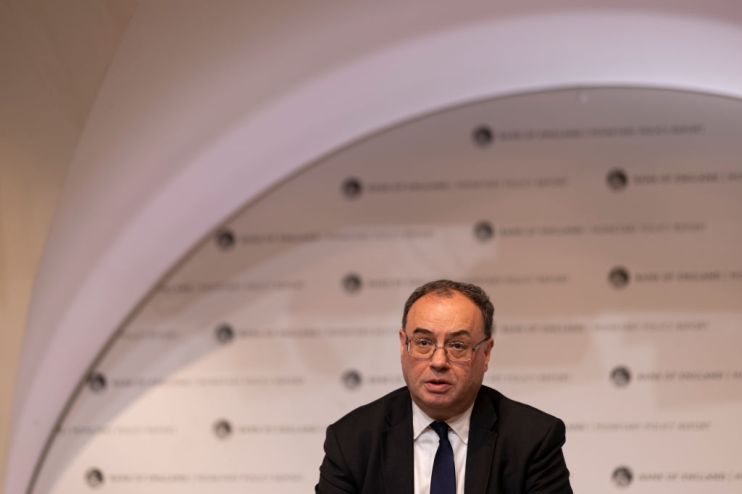
Bank Of England Monetary Policy Report Press Conference
Andrew Bailey has attracted attention with some of his comments over the past months, including the one he recently made about workers asking for a pay rise. (Photo by Dan Kitwood/Getty Images)

Is there a comfortable chaise longue in the office of Andrew Bailey, Governor of the Bank of England?  I think we should be told. Because it has become apparent that the Bank has been asleep on the job.

In the year to December 2021, consumer prices rose by 5.4 per cent. We have to go back to March 1992 to get a higher number, when it was 7.1 per cent.

At the end of 2020 inflation seemed under control, exactly as it had been for the previous thirty years. Then, prices had only risen by 0.6 per cent over the year.

There was a brief flurry during 2011.  Inflation was around 4 per cent for most of the year, peaking at 5.2 per cent in September. Then, as now, fuel and food prices were the main drivers.

Economists at the time predicted that the rise would only be temporary.  They were proved right and the increase in prices in the year to September 2012, a year after the peak, was only 2.2 per cent. The difference this time round, compared to a decade ago, is that many economists have been warning that the rise in inflation is more than a mere blip. It has legs.

There is a real risk of a wage-price spiral. Higher wages translate into higher costs, which in turn become even higher prices.

Andrew Bailey has of course been widely ridiculed for his statement that workers should not seek pay rises to compensate for the increase in prices. Scathing remarks have been made about his £575.000 salary.

To be fair, the Governor of the Bank has a public duty to make statements on aspects of the economy which are of concern. From a purely analytical perspective he is correct. The rise in world energy prices represents a transfer of income from countries which are net consumers of energy, such as the UK, to those which are net producers.

Read more

Bailey warns on inflation risks as Iran war roils UK economy

Bank of England Governor Andrew Bailey addressing financial stability concerns at a press conference

We can put in place schemes to change the distributional consequences within the UK. But the inescapable fact is that the real income of the country as a whole has fallen.

There is a frightening precedent, going back nearly fifty years.

In the winter of 1973-74, the world price of oil was quadrupled by OPEC.  Inflation was pushed into double figures. However, far from accepting the cut in real wages which was required, the workforce pursued higher wage demands. In the space of barely a year, inflation surged to over 20 per cent.

As I have said many times in this column, when China and India started to engage with the world economy during the late 1980s onwards, the effective world supply of labour rose massively. This made it hard for workers in the West, particularly the less skilled, to demand wage increases. And this kept inflation low.

But all this has ended across the West as a whole. The evidence has been mounting for some time.  

And on top of this Brexit has further strengthened the bargaining power of labour. It is certainly desirable that workers moderate their wage demands. But in the circumstances, it is unrealistic to expect them to do so.

The Bank should have been warning about the inflation danger much more forcefully. Instead, the Monetary Policy Committee has pussyfooted around debating wholly trivial increases in interest rates.

Ideally, short term interest rates should already be at 4 or 5 per cent.  But the Bank could at least make a start in the right direction by giving them a very substantial hike this month.

Read more

As it happened: FTSE 100 dives as oil prices surge past $100 in blow to inflation

Diversified Energy Company said it would pay for the sale with a $35m share issuance.

Share this article

  • Facebook
  • X
  • LinkedIn
  • WhatsApp
  • Email

Similarly tagged content:

Sections

  • Opinion

Categories

  • Opinion

Trending Articles

  • Wetherspoon boss: ‘Not up to Burnham’ to choose who is on the high street 

  • Badger Beer maker Hall & Woodhouse doubles profit ahead of tie-up with James May

  • Four interest rate hikes loom despite surprise economic growth

  • Primark sales slip as owner dresses up retailer for demerger

  • As it happened: FTSE 100 rallies as economy beats forecasts; oil falls back

More from Morning Wire

  • Bailey warns on inflation risks as Iran war roils UK economy

    Economics
    Bank of England Governor Andrew Bailey addressing financial stability concerns at a press conference
  • As it happened: FTSE 100 dives as oil prices surge past $100 in blow to inflation

    FTSE 100 Live
    Diversified Energy Company said it would pay for the sale with a $35m share issuance.
  • Oil hits $100 a barrel as Iran war escalates

    Economics
    Wellington statue in front of the Bank of England building with a British flag flying under a cloudy sky
  • How patient can the Bank of England be?

    AD
    Historic Royal Exchange building in London with modern skyscrapers behind, clear blue sky.
  • Four interest rate hikes loom despite surprise economic growth

    Economics
    Andrew Bailey, Governor of the Bank of England, speaking at a press conference with the logo in background.
  • Andrew Bailey warns markets are not ready for the rise (or fall) of AI

    Markets
    Andrew Bailey, Governor of the Bank of England, in a suit and tie, looking thoughtful during a press conference.
  • How the Treasury got ‘fed up’ with the Bank of England’s payments plan

    Fintech
    The Bank of England's Breeden argued the recent inflation bump was transitory (Photo by Chris Ratcliffe/Bloomberg via Getty Images)
  • House prices fall for first time in three years as borrowing costs weigh on buyers

    Property
    Dense housing on a hillside with traditional brick and white stucco homes, some under construction, surrounded by trees.
MorningWire

Independent European business, markets and political news for decision-makers.

Morning Briefing

Europe

  • Germany
  • France
  • EU Institutions
  • Europe

Business

  • Markets
  • Business
  • Economy
  • Regulation
  • Competition
  • Public Affairs

Editorial

  • Opinion
  • Editorial Policy
  • Corrections
  • Contact

Company

  • About Morning Wire
  • Privacy Policy
  • Terms of Use
  • Cookie Policy
© 2026 Morning Wire Ltd · Published by Morning Wire Media, Bahnhofstrasse 65, 8001 Zürich, Switzerland
Privacy · Terms · Cookies · Facebook