Skip to content
Sunday 23 August 2026London --:--Frankfurt --:--Zurich --:--
NewslettersSearchEN · DE · FR
MorningWire

European business, markets and politics

FTSE 100
10,816.56
+0.64%
DAX
26,136.56
+0.59%
CAC 40
8,484.43
+0.37%
STOXX 50
6,462.22
+0.63%
  • Europe
  • Markets
  • Business
  • Economy
  • Regulation
  • Politics
  • Opinion
More
GermanyFranceEU InstitutionsCompetitionPublic AffairsBankingTechnologyEnergy
  • Germany
  • France
  • Europe
  • Markets
  • Business
  • Economy
  • Regulation
  • Politics
  • Opinion
  • DE
Wednesday 03 April 2024 5:05 am  |  Updated:  Tuesday 02 April 2024 7:12 pm

As Derby’s historic rail industry declines, it should look to Redcar for a model of letting go

By: Paul Ormerod

Add as a preferred source on Google
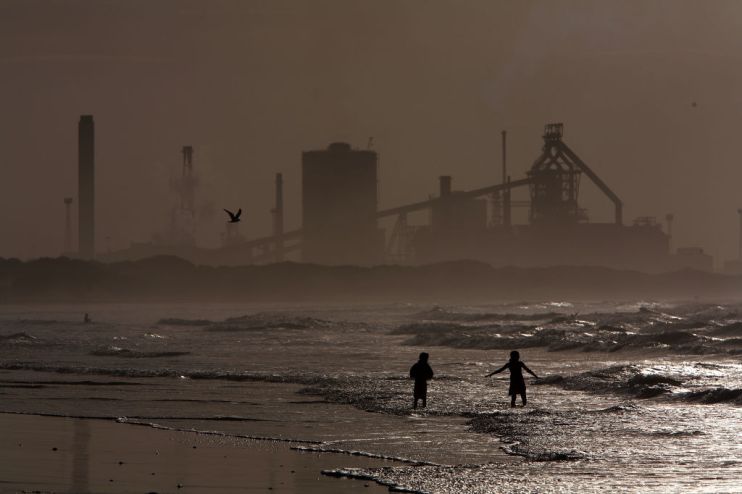
MIDDLESBOROUGH, UNITED KINGDOM - JULY 21: Locals and children play on the surf at high tide on Redcar beach in the shadow of the Corus Steelworks in Teeside, on July 21, 2008, in Middlesborough, England. The giant iron and steel works on the south bank of the River Tees produces 3.4 million tonnes of slab steel a year. (Photo by Christopher Furlong/Getty Images)
Locals and children play on the surf at high tide on Redcar beach in the shadow of the Corus Steelworks in Teeside, on July 21, 2008, in Middlesborough, England. (Photo by Christopher Furlong/Getty Images)

From steelworks to freeport, Redcar’s redevelopment offers a model for moving on which Derby may wish to follow, writes Paul Ormerod

Derby has been a place where rail locomotives and rolling stock have been built for the best part of two centuries. A manufacturing capability was developed in the early 1840s, barely a decade after Stephenson’s Rocket had ushered in the rail revolution in transport.

But last week the managing director of Derby’s Alstom train-building plant announced that production is coming to an end. The next potential order is 18 months away.

In the same way that Derby is linked to railways, Port Talbot is synonymous with steel. But earlier this year the plant’s owners, the Tata conglomerate, announced the closure of its two blast furnaces at the cost of 2,800 jobs.

In each case, there has been great consternation about the impact on the local economy. Trade unions and others have come forward with rescue proposals as ministers get involved with crisis talks. But we have been here before, many times over. History just repeats itself.

Like Port Talbot, Motherwell in Scotland was a major producer of steel. Its Ravenscraig works had one of the longest lasting steel production facilities in the world. It closed in 1992. Likewise Redcar in North Yorkshire was dominated by its steel works for many years. The operation closed for good in 2015 after a long, lingering death.

There is no doubt that closures of major plants bring hardship to the local community. The impact is not just on the workers directly employed, but on the businesses which are part of the supply chain.

It is always tempting to provide subsidies to companies and industries which get into difficulties in the regions of the UK. They alleviate short-term distress. But the usual outcome is that taxpayers’ money is wasted. Sooner or later, the ailing firm either folds completely or decimates its workforce by bringing in new technology.

Read more

Virgin Trains gets green light for channel tunnel route

Red Virgin high-speed train on tracks at a station platform, under an arched glass roof, with blurred people.

In complete contrast to these gloomy stories, last month Nvidia held its global artificial intelligence conference in California. It is in fact hard to imagine a more different setting.

The company’s founder and president, Jensen Huang, held up a prototype of Blackwell, a graphics processing unit of almost unbelievable power. “I’m holding around $10bn of equipment here,” he said.

The chip-making company, which is how we could describe it, was only founded in 1993. It now has a market capitalisation of over £2 trillion (trillion!). Its products announced last month deliver a huge upgrade to the AI infrastructure of the world.

It is blindingly obvious to say that not every company can be an Nvidia. But we need to recognise that prosperity can only be sustained by embracing the future, challenging and disruptive though it may be, rather than clinging on to the past.

In a modest but still very encouraging way, Redcar offers hope that these ideas are getting some traction in the UK.

When the steelworks closed in 2015, the government appointed Lord Heseltine to review how to regenerate the area. He created the South Tees Development Corporation, rebranded as Teesworks.
Last year, he and the Conservative Mayor for Tees Valley, Ben Houchen, ceremonially demolished the power station which supplied the steel plant. The area is now completely cleared and will become the UK’s largest freeport.

A local Labour MP, Andy McDonald, is seen as being on the left of the Labour Party. But he embraced the change: “We’ve had an era that provided great prosperity for the people of Teesside, we’ve now got to embrace the opportunities that are available to us in terms of green industries and renewable power, and all that goes with it.”

These are exactly the sentiments which are needed to take Britain forward. Otherwise, many towns in
the region will remain stuck in a spiral of decline.

Read more

Ordnance Survey revenue jumps as map maker goes digital

Ordnance Survey has revealed that an increase in demand for its data from financial services firms has helped its revenue near the £200m mark.

Share this article

  • Facebook
  • X
  • LinkedIn
  • WhatsApp
  • Email

Similarly tagged content:

Sections

  • Opinion

Categories

  • Opinion

People & Organisations

  • Tata Steel

Trending Articles

  • Can debt-ridden Morrisons become a Big Four supermarket again?

  • Ratcliffe’s Ineos saves Runcorn plant

  • Mike Ashley’s Frasers offers to pay personal shoppers in Harvey Nichols takeover

  • Amazon says it buys books in bulk to ‘improve products’

  • Burnham predicted to raise taxes for ‘fundamental’ cost of living support

More from Morning Wire

  • Virgin Trains gets green light for channel tunnel route

    Transport & Infrastructure
    Red Virgin high-speed train on tracks at a station platform, under an arched glass roof, with blurred people.
  • Ordnance Survey revenue jumps as map maker goes digital

    Markets
    Ordnance Survey has revealed that an increase in demand for its data from financial services firms has helped its revenue near the £200m mark.
  • New Premier League rules could see £11bn invested into new stadiums

    Sport Business
    Architectural rendering of a vibrant, modern urban development surrounding a large football stadium
  • Exclusive: Fulham launch £900 a head Michelin-guide recognised hospitality at Craven Cottage

    Sport Business
    Aerial view of Fulham FCs Craven Cottage stadium redevelopment, Riverside Stand, and Thames riverfront in London.
  • PwC’s Embankment HQ to get major makeover ahead of Canary Wharf move

    Property
    Architectural rendering of a modern building with a curved roof, balconies, and a landscaped terrace with city skyline views.
  • New planning rules ‘could blight high streets with empty pubs’

    Hospitality
    GettyImages 170179379 could depict a general business scenario, such as a diverse team discussing strategy in a modern off...
  • WRITER Makes Agentic AI Economically Sustainable at Enterprise Scale With Palmyra X6 Release and Major Harness Upgrades

    Business Wire
  • Google backs publisher model as Apple considers price tag for news

    Media
    AI copyright laws
MorningWire

Independent European business, markets and political news for decision-makers.

Morning Briefing

Europe

  • Germany
  • France
  • EU Institutions
  • Europe

Business

  • Markets
  • Business
  • Economy
  • Regulation
  • Competition
  • Public Affairs

Editorial

  • Opinion
  • Editorial Policy
  • Corrections
  • Contact

Company

  • About Morning Wire
  • Privacy Policy
  • Terms of Use
  • Cookie Policy
© 2026 Morning Wire Ltd · Published by Morning Wire Media, Bahnhofstrasse 65, 8001 Zürich, Switzerland
Privacy · Terms · Cookies · Facebook