Bailey holds the torch for a proud UK tradition – failing our monetary policy

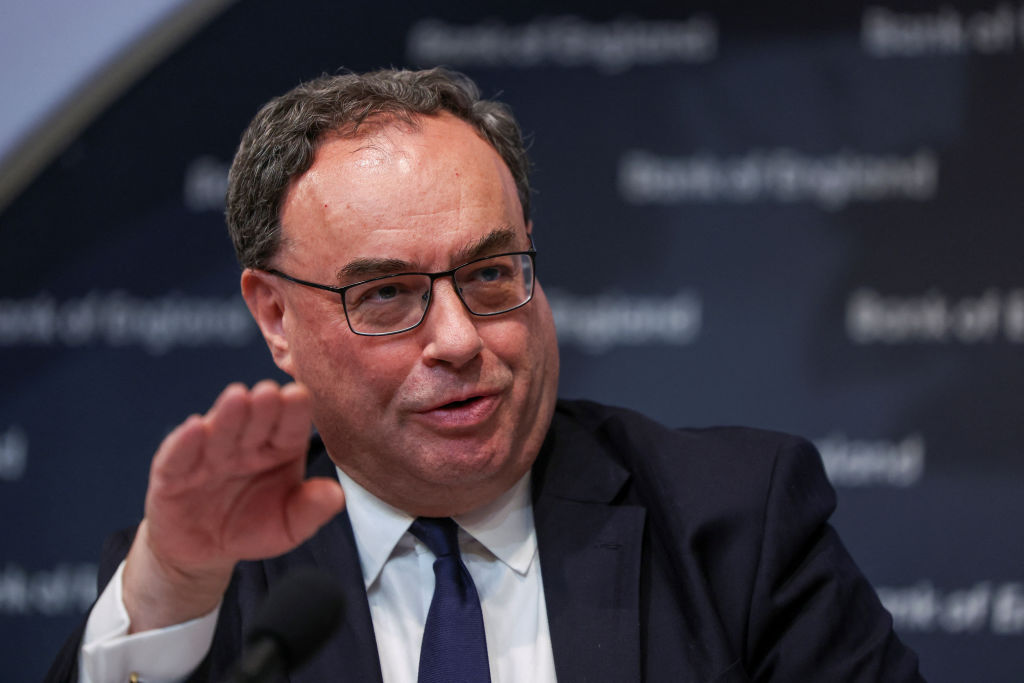
Andrew Bailey and the economists at the Bank of England are part of a long line of people who have failed Britain’s monetary policy, writes Will Cooling
Since the pandemic eased, the challenge facing governments across the world has been the return of inflation, with wages and price rises surging far beyond the 2 per cent that central banks have typically been trying to hit since the 1990s. While there have often been temporary factors that have contributed to high inflation, core inflation, which strips these out, remains stubbornly high. Indeed, in Britain it reached a thirty-year high this March of 6.8 per cent, which was not only higher than forecast but is 240 per cent above target.
Britain entered this period of resurgent inflation with unusual vulnerabilities. Brexit was explicitly sold to wavering voters as a way of increasing both wages and prices by reducing foreign competition, something that comes at a greater economic cost now outside of a low-inflation environment. The implosion of so many low-cost suppliers and our continued overreliance on natural gas means that domestic and industrial fuel will continue to be higher than what we were accustomed to.
But above all our enduring weakness has been monetary policy. The advent of the European Monetary Union has fundamentally changed Britain’s relationship with the continent, as now we have the unique ability in Western Europe to engage in competitive devaluation against our neighbours. It is an ability we have repeatedly made use of throughout the 2010s, which is why statistics on British economic performance have become so sensitive to if and how you correct for exchange rates. That’s why the markets responded so badly when they felt the short-lived Chancellor Kwasi Kwarteng was threatening another, even greater dose, of the same medicine.
But beyond all this, the Bank of England has not successfully combated high inflation with interest rate rises like the American Federal Reserve did in the 1980s or the Bundesbank consistently did in pre-EMU Germany. Until 1997 it was the Chancellor of the Exchequer that set interest rates and they typically chose fiscal rather than monetary solutions to combat high inflation. Indeed, when tasked with tackling rising inflation last autumn through monetary policy amid a sudden relaxation of fiscal policy, Threadneedle Street openly sat on their hands until the residents of Downing Street were persuaded to change course.
It cannot be stressed enough what a hammer blow interest rate rises place on an economy. They concentrate pain on the government, as well as those individuals and companies that borrowed during the good times. This not only depresses their spending and reduces all our incomes, it encourages everyone to be more cautious. In the short-term banks pay for people and companies to park money in their vaults, but even when the crisis abates, there’s a lingering fear of being caught out owing too much money if the cost of borrowing increases again. Given that Britain has long struggled with there being too little investment in its industrial base or public infrastructure, the last thing we need is for people to become even more risk averse.
Sadly, it seems that too many people have learnt the wrong lesson from Liz Truss, behaving as if her premiership imploded because she couldn’t say “pork markets” sweetly enough. Her aggression and maladroitness merely threw into stark relief the key problem facing our economy, and that is we need to get inflation, and therefore interest rates, under control so that the cost of government, corporate and individual debt doesn’t become unbearable to service.
The crisis Liz Truss and Kwasi Kwarteng provoked was long coming, and it hasn’t gone away. There are no easy or simple answers to get our country out of this mess, but you cannot seek a solution without recognising the problem. There is simply no valid reason for the government to still be running a deficit when unemployment is less than 4 per cent and inflation is so high. Indeed, it is positively dangerous for this to continue while the Bank of England is raising the cost of borrowing to cool the economy down. Such incoherence may provoke a credit crunch as the little money people want to lend rather than save flows to the government rather than private enterprise.
The government can choose to close that deficit through lower public spending, or higher taxes, or securing greater economic growth through deregulation or closer alignment with Europe. But close it they must. Otherwise, before too long we’ll be right back in the same demeaning chaos as last October, and that really would be a disgrace.