Bank of England: UK economy could suffer biggest crash in 300 years

The UK economy is likely to shrink by an enormous 14 per cent in 2020 in its worst crash in 300 years amid the coronavirus pandemic before rebounding strongly in 2021, the Bank of England has said as it kept interest rates on hold at their current record-low levels.
The Bank said it expected the UK economy to contract by 25 per cent in the second quarter of the year, having shrunk around three per cent in the first quarter.
Its “illustrative scenario” said GDP is likely to crash 14 per cent in 2020 as a whole in one of the worst estimates yet produced. It is based on the coronavirus lockdown and government support measures being eased in June.
Yet the Bank said the UK economy would rebound strongly by 15 per cent in 2021. It cautioned that any estimates are highly uncertain, however.
Unemployment is expected to soar to nine per cent in the second quarter of this year, higher than in the wake of the 2008/9 financial crisis. It stood at around four per cent in February. It is likely to stay high, remaining at seven per cent in 2021.
Around 2m people are set to lose their jobs this year, according to the Bank. Roughly 6m are thought to be on the government’s furlough scheme.
Bank of England holds rates but more stimulus could come
The Bank of England’s report into the economy came as it held rates at the record-low level of 0.1 per cent. The monetary policy committee (MPC) voted 7-2 not to add to the BoE’s £645bn bond-buying programme. Two members advocated £100bn more of purchases.
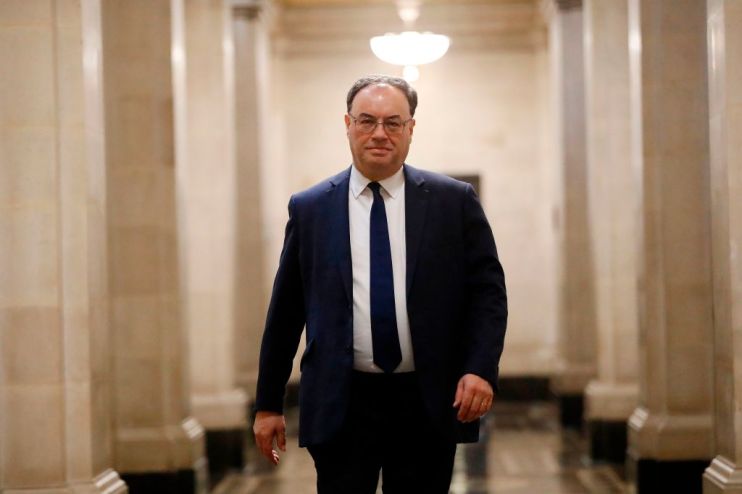
Speaking to journalists after the decision, Bank governor Andrew Bailey said Threadneedle Street is ready “to take action should we need to do so”. He said: “I would really leave that strong message with you.”
Bailey said the Bank has another MPC meeting in June before it gets “anywhere near completion” of its current bond-buying programme. He said the BoE will “take stock” before that.
He also suggested that the Bank’s QE scheme is effectively unlimited, like the US Federal Reserve and European Central Bank. “Do not overdraw the distinction between what we’re doing and any other sort of ‘open-ended commitment’,” he said.
Capital Economics’s chief UK economist Paul Dales said the Bank of England is likely to ramp up bond-buying in the coming months. He said the Bank’s economic scenario “suggest to us that more policy stimulus will be needed to boost demand”.
Bank predicts worst slump in 300 years
Threadneedle Street’s “scenario” of a 14 per cent drop in GDP in 2020 would be the worst economic performance in 300 years. According to the Bank’s historical analysis, not since 1706 has a sharper drop occurred.
Yet despite the huge contraction in the economy, the Bank predicts a sharp rebound. This is more optimistic than many other reports.
The Bank of England praised the government’s coronavirus support schemes. The monetary policy report said that “the support measures in place are assumed to help prevent much longer‐lasting damage”.
However, even with the strong bounce the economy is not expected to return to its pre-virus size until the middle of next year.
It said as coronavirus ravages the economy and oil prices, inflation is expected to drop below one per cent. It will stay low and only recover to the two per cent target in 2022.
Yet the MPC cautioned that “the unprecedented situation” made any predictions highly uncertain.
“It will depend critically on the evolution of the pandemic, and how governments, households and businesses respond to it,” it said.
Alastair Darling, who was chancellor during the 2008/9 financial crisis, said it is “optimistic” to think there will be a quick economic bounce-back.
Speaking on the BBC’s Today programme, he said: “It will not be possible for everybody to go back to work immediately, it will take time.” He added: “This is a long haul [recovery], let’s just accept that.”
UK banks can weather the storm
The Bank of England said the UK’s banks are in a strong position to deal with the downturn. It said they can keep lending to businesses throughout the unprecedented slump.
In a financial stability report, it “stress tested” Britain’s major banks. It said their reserves were more than adequate to deal with any losses.
Bailey once again encouraged banks to keep lending. He said it was in their own interests to ensure companies stay afloat and do not default on their debts.
The Bank of England has intervened dramatically in the economy to try to stem the fallout from coronavirus. Central banks around the world have launched unprecedented stimulus.
At two emergency meetings at the start of March it slashed rates to their current record low level. It ramped up its quantitative easing (QE) bond-buying programme by £200bn.
It also took a number of steps in March to make it easier for banks to lend to small businesses and launched a “commercial paper facility” to buy companies’ short-term debt.
At its last meeting at the end of March, the MPC chose to hold rates and QE levels. But the Bank has been like “the proverbial duck,” said Capital Economics’s Dales.
“While all appears calm on the surface it has been working furiously underneath to implement its new policies.”