Skip to content
Wednesday 2 September 2026London --:--Frankfurt --:--Zurich --:--
NewslettersSearchEN · DE · FR
MorningWire

European business, markets and politics

FTSE 100
10,756.45
-0.30%
DAX
25,839.33
-0.50%
CAC 40
8,280.63
-0.26%
STOXX 50
6,362.15
-0.11%
  • Europe
  • Markets
  • Business
  • Economy
  • Regulation
  • Politics
  • Opinion
More
GermanyFranceEU InstitutionsCompetitionPublic AffairsBankingTechnologyEnergy
  • Germany
  • France
  • Europe
  • Markets
  • Business
  • Economy
  • Regulation
  • Politics
  • Opinion
  • DE
Tuesday 12 May 2020 11:32 am  |  Updated:  Tuesday 12 May 2020 4:44 pm

Bank of England must weigh up negative interest rates, says deputy governor

By: Harry Robertson

Add as a preferred source on Google
Bank of England must weigh up negative interest rates, says deputy governor
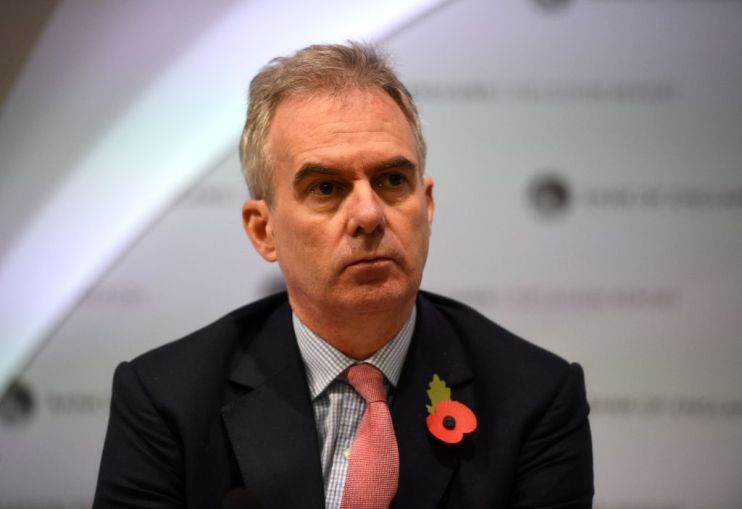
Bank of England deputy governor for monetary policy Ben Broadbent spoke to CNBC this morning

Bank of England deputy governor Ben Broadbent has raised the possibility of negative interest rates in the UK, but said the BoE would have to think hard about the challenges they pose.

Asked about negative rates on CNBC, Broadbent said it was “a question that’s been thought about on and off since the financial crisis and it’s a balanced judgment”.

The Bank of England slashed interest rates in March to 0.1 per cent, a record low, in a bid to tackle the coronavirus crash. In its meeting last week, it chose to keep them on hold.

Although once unimaginable, negative interest rates have been put in place in various central banks around the world over the last decade. The European Central Bank (ECB), for example, charges banks to hold money with it in an effort to force them to lend.

Negative rates come with pros and cons. They help spur lending by penalising banks for sitting on money. But they also limit the profits banks can make through lending and the interest on savers’ deposits.

Broadbent, who is deputy governor for monetary policy, said: “These are the balanced questions the committee has to think about and … has been thinking about for the past decade.”

However, Bank of England governor Andrew Bailey said in March that he is “actually not in favour of negative interest rates”.

Should the Bank decide to unleash more stimulus, most analysts think it will ramp up its £645 billion quantitative easing (QE) programme. Under QE, the Bank creates digital money and uses it to buy bonds – mainly government Gilts – in the secondary market.

Broadbent said it is “quite possible that more monetary easing will be needed over time”.

Read more

El Nino heatwaves to ‘fuel inflation next year’

Firefighter in helmet and uniform watching a blazing forest fire at night, red glow in the sky

Share this article

  • Facebook
  • X
  • LinkedIn
  • WhatsApp
  • Email

Similarly tagged content:

Sections

  • Markets & Economics
  • News

Categories

  • Banking
  • Economics

Trending Articles

  • Vodafone and Deliveroo look to patch up Reform ties after Yusuf prison threats

  • Trio of firms poised to quit London Stock Exchange as exodus gathers pace

  • Jaguar reveals the Type 01’s screen-free interior

  • Easyjet’s over-60s recruitment push is economically necessary

  • Jim O’Neill: Capital gains tax hike ‘looms’ as top option for Burnham

More from Morning Wire

  • El Nino heatwaves to ‘fuel inflation next year’

    Economics
    Firefighter in helmet and uniform watching a blazing forest fire at night, red glow in the sky
  • How the Treasury got ‘fed up’ with the Bank of England’s payments plan

    Fintech
    The Bank of England's Breeden argued the recent inflation bump was transitory (Photo by Chris Ratcliffe/Bloomberg via Getty Images)
  • Economists urge Bank of England to halt bond sales as borrowing costs climb

    Economics
    Bank of England headquarters with financial charts overlay, illustrating private credit stress test analysis
  • Andrew Bailey warns markets are not ready for the rise (or fall) of AI

    Markets
    Andrew Bailey, Governor of the Bank of England, in a suit and tie, looking thoughtful during a press conference.
  • Lord O’Neill declines job in Burnham government

    Economics
    Jim ONeill, economist and former Goldman Sachs chairman, sitting on a yellow sofa in front of large windows.
  • Mortgage nightmare as investors price in three interest rate hikes 

    Economics
    Bank of England building on Threadneedle Street, London, showcasing its historic architecture and financial significance
  • Inflation leaps to 2.9 per cent in blow to Burnham 

    Economics
    Burnham cityscape showcasing modern architecture, bustling streets, and vibrant community life in a thriving urban setting
  • How patient can the Bank of England be?

    AD
    Historic Royal Exchange building in London with modern skyscrapers behind, clear blue sky.
MorningWire

Independent European business, markets and political news for decision-makers.

Morning Briefing

Europe

  • Germany
  • France
  • EU Institutions
  • Europe

Business

  • Markets
  • Business
  • Economy
  • Regulation
  • Competition
  • Public Affairs

Editorial

  • Opinion
  • Editorial Policy
  • Corrections
  • Contact

Company

  • About Morning Wire
  • Privacy Policy
  • Terms of Use
  • Cookie Policy
© 2026 Morning Wire Ltd · Published by Morning Wire Media, Bahnhofstrasse 65, 8001 Zürich, Switzerland
Privacy · Terms · Cookies · Facebook