Skip to content
Saturday 29 August 2026London --:--Frankfurt --:--Zurich --:--
NewslettersSearchEN · DE · FR
MorningWire

European business, markets and politics

FTSE 100
10,824.26
+0.29%
DAX
26,569.99
+0.77%
CAC 40
8,401.18
+0.98%
STOXX 50
6,485.67
+0.95%
  • Europe
  • Markets
  • Business
  • Economy
  • Regulation
  • Politics
  • Opinion
More
GermanyFranceEU InstitutionsCompetitionPublic AffairsBankingTechnologyEnergy
  • Germany
  • France
  • Europe
  • Markets
  • Business
  • Economy
  • Regulation
  • Politics
  • Opinion
  • DE
Thursday 14 May 2020 4:56 pm  |  Updated:  Thursday 14 May 2020 4:57 pm

Bank of England ‘not contemplating’ negative interest rates, says governor Andrew Bailey

By: Harry Robertson

Add as a preferred source on Google
Bank of England 'not contemplating' negative interest rates, says governor Andrew Bailey
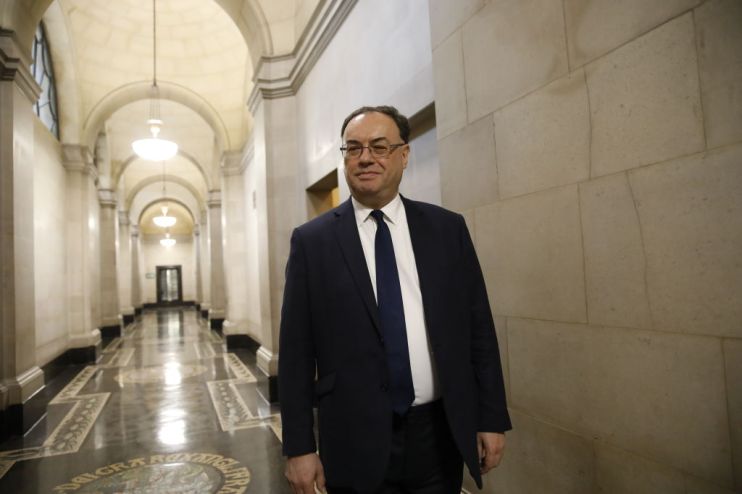
Bank of England governor Andrew Bailey has had a torrid time since he took over in March

Bank of England governor Andrew Bailey has said Threadneedle Street is not considering cutting interest rates to below zero.

The governor said that it would be unwise to rule anything out, “particularly in these circumstances,” in an online question and answer session with the Financial Times.

Yet he said: “It is not something we are currently planning for or contemplating.”

His comments come after deputy governor Ben Broadbent said the Bank was open-minded about its next steps. He said of negative interest rates: “These are the balanced questions the committee has to think about.”

Although once unimaginable, negative interest rates have been put in place in various central banks around the world over the last decade. The European Central Bank (ECB), for example, charges banks to hold money with it in an effort to force them to lend.

Negative rates come with pros and cons. They help spur lending by penalising banks for sitting on money. But they also limit the profits banks can make through lending and the interest on savers’ deposits.

The Bank of England slashed its main interest rate to 0.1 per cent, its lowest ever level, in March.

Bailey said that one of the main obstacles to cutting interest rates into negative territory would be the optics of the complex move.

“I think from a communications point of view, and therefore from a reaction and expectations point of view, it is a very big step.”

He said it must be realised that negative interest rates cause banks problems. The Eurozone’s biggest banks have long complained that the policy hurts their profits.

Should the Bank decide to unleash more stimulus, most analysts think it will ramp up its £645 billion quantitative easing (QE) programme. Under QE, the Bank creates digital money and uses it to buy bonds – mainly government Gilts – in the secondary market.

The BoE stopped short of launching more bond-buying at its last meeting but could do so in June.

Read more

Economists urge Bank of England to halt bond sales as borrowing costs climb

Bank of England headquarters with financial charts overlay, illustrating private credit stress test analysis

Share this article

  • Facebook
  • X
  • LinkedIn
  • WhatsApp
  • Email

Similarly tagged content:

Sections

  • Markets & Economics
  • News

Categories

  • Banking
  • Economics

Trending Articles

  • Pensioners to hand over bank statements in government benefits crackdown

  • Jamie Carragher: HMRC petitions for Sky Sports star to be declared bankrupt

  • Brewdog founder James Watt hits out at ‘total silence’ over new venture

  • Lloyds Bank and Halifax users unable to use app in latest outage

  • As it happened: FTSE 100 falls but Nasdaq soars after Nvidia sales boom

More from Morning Wire

  • Economists urge Bank of England to halt bond sales as borrowing costs climb

    Economics
    Bank of England headquarters with financial charts overlay, illustrating private credit stress test analysis
  • How patient can the Bank of England be?

    AD
    Historic Royal Exchange building in London with modern skyscrapers behind, clear blue sky.
  • El Nino heatwaves to ‘fuel inflation next year’

    Economics
    Firefighter in helmet and uniform watching a blazing forest fire at night, red glow in the sky
  • Lord O’Neill declines job in Burnham government

    Economics
    Jim ONeill, economist and former Goldman Sachs chairman, sitting on a yellow sofa in front of large windows.
  • On this day: the birth of press freedom

    Opinion
    Black and white illustration of the Crown v. Zenger trial, featuring lawyers and observers in a courtroom.
  • War and tax: How the UK economy could get knocked off course

    Economics
    Andy Burnham speaking at a public event, emphasizing local governance and policy changes, wearing a suit and gesturing pas...
  • Reform’s Richard Tice under parliamentary investigation

    Politics
    Reform UK leader Nigel Farage and Deputy Leader Richard Tice are set to meet with Andrew Bailey to discuss interest rates and stablecoins.
  • Inflation leaps to 2.9 per cent in blow to Burnham 

    Economics
    Burnham cityscape showcasing modern architecture, bustling streets, and vibrant community life in a thriving urban setting
MorningWire

Independent European business, markets and political news for decision-makers.

Morning Briefing

Europe

  • Germany
  • France
  • EU Institutions
  • Europe

Business

  • Markets
  • Business
  • Economy
  • Regulation
  • Competition
  • Public Affairs

Editorial

  • Opinion
  • Editorial Policy
  • Corrections
  • Contact

Company

  • About Morning Wire
  • Privacy Policy
  • Terms of Use
  • Cookie Policy
© 2026 Morning Wire Ltd · Published by Morning Wire Media, Bahnhofstrasse 65, 8001 Zürich, Switzerland
Privacy · Terms · Cookies · Facebook