Skip to content
Friday 7 August 2026London --:--Frankfurt --:--Zurich --:--
NewslettersSearchEN · DE
MorningWire

European business, markets and politics

FTSE 100
10,901.09
+0.31%
DAX
26,319.45
+0.69%
CAC 40
8,714.93
+0.17%
STOXX 50
6,523.86
+0.33%
  • Europe
  • Markets
  • Business
  • Economy
  • Technology
  • Politics
  • Opinion
More
GermanyFranceBankingAIEnergyFintechPropertyCapital Markets
  • Germany
  • France
  • Europe
  • Markets
  • Business
  • Economy
  • Technology
  • Politics
  • Opinion
  • DE
Thursday 11 December 2025 1:51 pm  |  Updated:  Thursday 11 December 2025 1:52 pm

Andrew Bailey: Private credit should have looser rules than banks

By: Ali Lyon

Add as a preferred source on Google
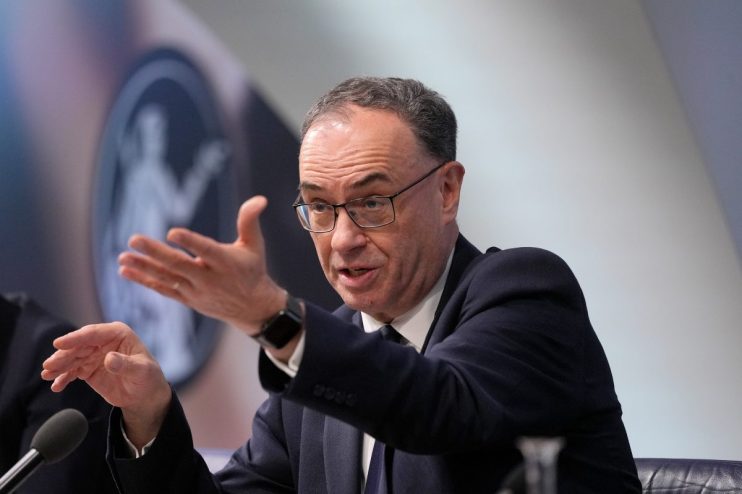
The Bank of England's Andrew Bailey will be closely monitoring movements in long-dated bonds
Interest rates are "more likely" to be cut than hiked in the next two years.

Bank of England governor Andrew Bailey has said regulation of the booming private credit sector should be more light-touch than traditional lenders despite the central bank’s fears that a blow-up of the industry remains one of the most significant threats to UK financial stability.

Bailey told an online event that the fallout from a banking collapse would have a far greater impact on the overall economic conditions of the UK than its private credit equivalent and that as result they should “regulate them differently”.

“The liability side of banks is money,” he said, meaning that in a banking crisis, households and businesses’ savings and their capacity to spend is by definition wiped out, and trust in the financial system eroded.

“Banks have money as their liability. Non-banks [private credit firms] have investment, and the two do get muddled,” he told the Financial Times’ Global Boardroom summit, adding: “I think we should be very much clearer that in the world of investment… people have to make money, but sometimes they will lose money as well.”

The comments from the central banking chief follow a period of heightened scrutiny on the private credit industry – also known as shadow banking – after a string of high-profile corporate collapses linked to the industry sparked fears of a sector-wide downturn.

Scrutiny on private credit sector grows

The sector, which has grown rapidly since the fallout from the 2008 financial crisis to become a core part of the world’s financial plumbing, has come under the gaze of central banks and regulators amid fears around their opaque lending practices.

Last week, the Bank of England announced it would carry out its first ever ‘stress test’ of the industry’s role in the UK economy, in a sign the the central bank was treating them more like traditional lenders.

Read more

Bank of England warns Burnham of UK economy’s ‘big issue’

Bank of England Governor Andrew Bailey said the future of interest rates was "more uncertain".

And in their latest Financial Stability report, Bank officials also identified a sector-wide downturn in private credit as one of the main threats to the UK economy.

The industry has long held that despite their opacity, its loans pose less of a threat to the wider financial system, because of their long-term and closed nature. This reduces the likelihood of the kind of rapid contagion common in a banking crisis.

But previously, Bailey has warned the recent collapses of First Brands, Tricolor and Primalend suggest “something more fundamental” was going on in private credit markets, equating some of its riskier practices to those that foreshadowed the 2008 financial crash.

“We certainly are beginning to see… what used to be called slicing and dicing and tranching of loan structures going on and if you were involved before the financial crisis then alarm bells start going off at that point,” he told a House of Lords committee.

Central banks and regulators appear divided on how best to regulate the sector, amid fears investors were engaging in ‘financial arbitrage’ by capitalising on the looser restrictions on non-banks. United States officials have suggested the solution lies in lowering red tape on banks to put the two sectors on a more even footing. But European Central Bank president Christine Lagarde said watchdogs need to heighten their scrutiny on private credit funds.

Bailey said: “I worry that if we start getting into this arbitrage argument too literally, we lose the fundamental difference which is important on both sides. It’s important to have trusted money, that we have an investment world that isn’t overly hampered by this idea that we’ve got to protect the value of every investment.”

Read more

Bank of England governor opens door to ‘simplifying’ financial rulebook

Bank of England Governor Andrew Bailey said cited several indicators that the labour market was softening.

Share this article

  • Facebook
  • X
  • LinkedIn
  • WhatsApp
  • Email

Similarly tagged content:

Sections

  • News

Categories

  • Business

People & Organisations

  • Andrew Bailey
  • Bank of England
  • Christine Lagarde
  • ECB
  • financial crisis
  • first brands
  • non-banks
  • Private credit
  • tricolor

Trending Articles

  • Revolut founder’s wealth set to balloon amid talks of share award at $500bn valuation

  • Rupert Lowe axes pensions triple lock and pledges tax cuts in economic plan

  • WPP slashes jobs as revenue continues to fall

  • Liverpool owners tipped to sell – but not to Amazon boss Bezos – by former CEO

  • As it happened: Stocks rise as oil fluctuates after Red Sea attack; US-Iran deal ‘being circulated’

More from Morning Wire

  • Bank of England warns Burnham of UK economy’s ‘big issue’

    Economics
    Bank of England Governor Andrew Bailey said the future of interest rates was "more uncertain".
  • Bank of England governor opens door to ‘simplifying’ financial rulebook

    Regulation
    Bank of England Governor Andrew Bailey said cited several indicators that the labour market was softening.
  • Rachel Reeves’ legacy of tinkering with the City is not enough, says Mel Stride

    Economics
    Mel Stride addressing an audience at a business conference, standing at a podium with a presentation screen behind him
  • Oxane Partners Announces Strategic Growth Investment From TA

    Business Wire
  • Bank of England to relax capital rules despite warning of economic threats

    Banking
    Bank of England building on Threadneedle Street, London, showcasing its historic architecture and financial significance
  • Rachel Reeves to unveil next steps for ring-fencing reform at Mansion House

    Banking
    Descriptive image related to a news or business article with focus on general themes and engaging visual elements.
  • The Octus MCP Connector Puts the Most Expansive, Accurate and Verified Credit Intelligence and Data Directly Inside Claude, ChatGPT and Other LLMs

    Business Wire
  • Natwest boss becomes latest City figure caught in AI social media scam

    Banking
    NatWest building exterior with logo, highlighting corporate presence and architecture on a business news website.
MorningWire

Independent European business, markets and political news for decision-makers.

Morning Briefing

Europe

  • Germany
  • France
  • Europe
  • UK & Ireland

Business

  • Markets
  • Banking
  • Technology
  • Energy
  • Property
  • Fintech

Editorial

  • Opinion
  • Editorial Policy
  • Corrections
  • Contact

Company

  • About Morning Wire
  • Privacy Policy
  • Terms of Use
  • Cookie Policy
© 2026 Morning Wire Ltd · Published by Morning Wire Media, Bahnhofstrasse 65, 8001 Zürich, Switzerland
Privacy · Terms · Cookies · Facebook