Skip to content
Monday 24 August 2026London --:--Frankfurt --:--Zurich --:--
NewslettersSearchEN · DE · FR
MorningWire

European business, markets and politics

FTSE 100
10,854.32
+0.35%
DAX
26,106.60
-0.11%
CAC 40
8,453.01
-0.37%
STOXX 50
6,447.98
-0.22%
  • Europe
  • Markets
  • Business
  • Economy
  • Regulation
  • Politics
  • Opinion
More
GermanyFranceEU InstitutionsCompetitionPublic AffairsBankingTechnologyEnergy
  • Germany
  • France
  • Europe
  • Markets
  • Business
  • Economy
  • Regulation
  • Politics
  • Opinion
  • DE
Thursday 04 February 2016 12:02 pm

Bank of England rate-setters vote unanimously to keep interest rates as record lows as Chancellor George Osborne expresses mixed feelings over low inflation

By: Chris Papadopoullos

Add as a preferred source on Google

Borrowing costs are on course to stay lower for longer as the Bank of England’s committee of rate-setters voted unanimously to keep interest rates at record lows for the first time since the Summer.

Rate-setter Ian McCafferty has been voting to increase Bank rate from 0.5 per cent to 0.75 per cent since August. His turnaround reflects a recent slowdown in workers’ pay growth, which has been flagged by a number of members of the Bank of England’s nine-strong monetary policy committee (MPC).

In the minutes of the latest MPC meeting published today, the MPC said it expects “that low realised inflation will continue to moderate the increase in wage pressure in the near term.” With lower wages to pay, businesses are less likely to begin hiking prices, resulting in lower inflation.

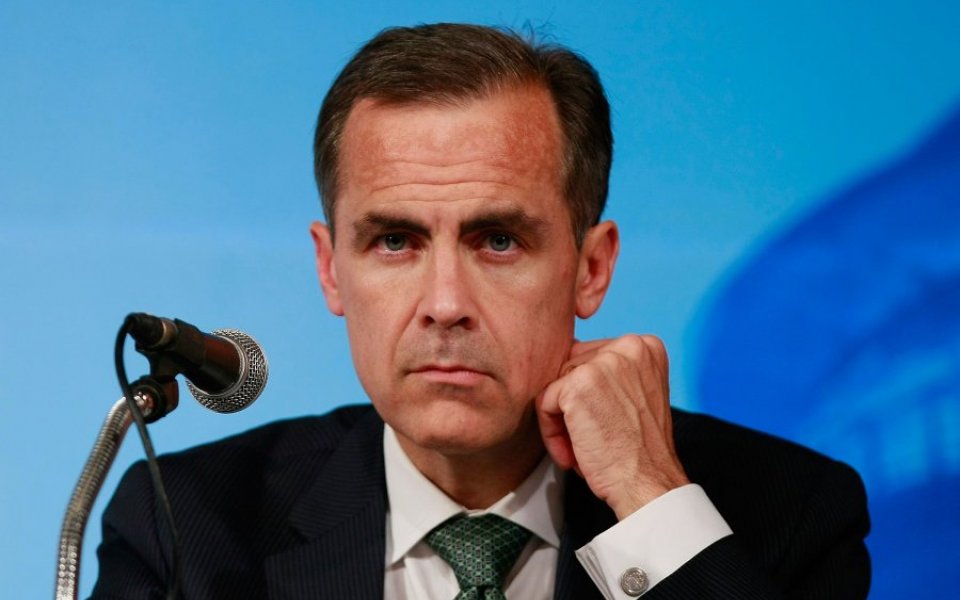
In a letter to Chancellor George Osborne, which he is required to write when inflation misses its two per cent target by more than one percentage point, Carney said: “The scale of recent commodity price falls will, however, likely mean that CPI inflation remains below one per cent until the end of the year.”

“On balance, the projections published today’s inflation report indicate the MPC’s collective view that the risks around its central forecast for inflation lie to the downside in the near time.”

Inflation was 0.2 per cent in December.

Despite the subdued outlook for inflation, the MPC said they believed rates would go up at least once in the next two years. The minutes said the MPC currently “judges it more likely than not that Bank Rate will need to increase over the forecast period [two years] to ensure inflation remains likely to return to the target in a sustainable fashion.”

In a letter to Mark Carney, chancellor George Osborne warned that low inflation may put a dent in his budget deficit reduction plans.

While saying low inflation had been “welcome news for Britiain’s households”, he said “we face the risk of a weaker outlook for nominal GDP”. Nominal GDP is real GDP with inflation added, it can also be thought of as the amount of pounds spent on goods and services in the economy.

Osborne said: “If realised this could present challenges for tax receipts in the future and reinforces the importance of delivering our plan to achieve a surplus on the public finances by the end of the parliament”.

Despite the more subdued inflation outlook, the MPC thought the economy was in generally good shape.

“The private sector remains resilient. Consumer confidence is robust, supported by a pickup in real income growth, and overall investment intentions remain firm,” the minutes said. However, the MPC trimmed its growth forecasts slightly. The economy is expected to grow 2.2 per cent this year and 2.4 per cent in 2017, down from 2.5 and 2.7 per cent, respectively.

Ignoring the recent slowdown in pay growth, the MPC said: “muted growth in world prices, the appreciation of sterling since early 2013 has pulled down in import prices more broadly.”

But the Bank remains confident that inflation will return to target over the next two years. The main reason is that believes the remaining spare capacity in the economy will be fully used up this year, putting upward pressure on labour costs.

Share this article

  • Facebook
  • X
  • LinkedIn
  • WhatsApp
  • Email

Similarly tagged content:

Sections

  • Markets & Economics
  • News

Categories

  • Business
  • Economics

Trending Articles

  • KPMG seeks financial support from parent group in wake of audit scandal

  • Greg Norman: I’d rather see LIV Golf end than wither away

  • Drive to Survive renewed by Netflix as Formula 1 docuseries gets ninth season

  • European private credit booms as private equity firms are forced to refinance

  • Burnham accused of ‘piecemeal’ business rates reform

More from Morning Wire

  • How patient can the Bank of England be?

    AD
    Historic Royal Exchange building in London with modern skyscrapers behind, clear blue sky.
  • El Nino heatwaves to ‘fuel inflation next year’

    Economics
    Firefighter in helmet and uniform watching a blazing forest fire at night, red glow in the sky
  • Soaring energy bills set to fuel inflation spike

    Economics
    Smartphone displaying an energy bill notification with British coins and a banknote nearby.
  • Public sector makes wage growth higher than expected

    Economics
    London has defied national trends as job postings in the capital rose.
  • 22 months of cuts: Jobs crisis deepens despite growth boost 

    Economics
    London has defied national trends as job postings in the capital rose.
  • Inflation leaps to 2.9 per cent in blow to Burnham 

    Economics
    Burnham cityscape showcasing modern architecture, bustling streets, and vibrant community life in a thriving urban setting
  • War and tax: How the UK economy could get knocked off course

    Economics
    Andy Burnham speaking at a public event, emphasizing local governance and policy changes, wearing a suit and gesturing pas...
  • UK economy’s rebound fails to stem two years of mass job losses 

    Economics
    LONDON, UNITED KINGDOM - JANUARY 31: The Shard is seen on the horizon as commuters cross London Bridge during the morning rush hour on January 31, 2023 in London, United Kingdom. The IMF reports that the UK economy will contract by 0.6% in 2023, as opposed to the previous prediction it might grow, and will perform worse than many other advanced economies, including Russia.The cost of living continues to hit households with grocery inflation for the first four weeks of 2023 rising to 16.7% which would add a further £788 per year to family food bills. (Photo by Leon Neal/Getty Images)
MorningWire

Independent European business, markets and political news for decision-makers.

Morning Briefing

Europe

  • Germany
  • France
  • EU Institutions
  • Europe

Business

  • Markets
  • Business
  • Economy
  • Regulation
  • Competition
  • Public Affairs

Editorial

  • Opinion
  • Editorial Policy
  • Corrections
  • Contact

Company

  • About Morning Wire
  • Privacy Policy
  • Terms of Use
  • Cookie Policy
© 2026 Morning Wire Ltd · Published by Morning Wire Media, Bahnhofstrasse 65, 8001 Zürich, Switzerland
Privacy · Terms · Cookies · Facebook