Bank of England: Downturn better than feared but UK faces longer recovery

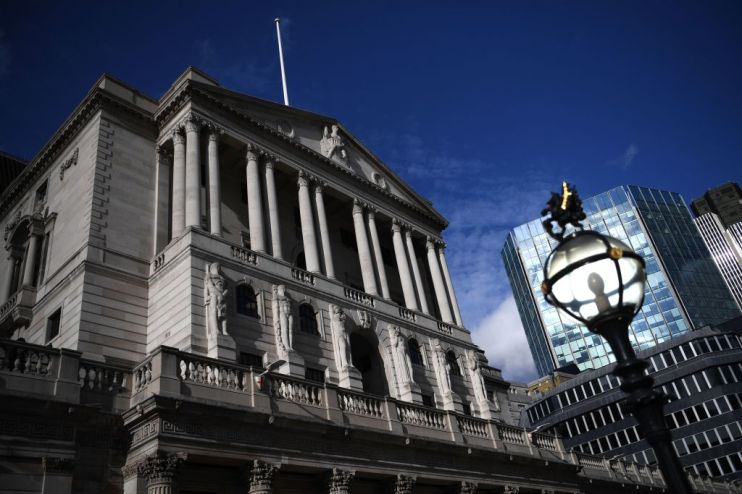
The Bank of England has significantly improved its prediction for the path of the UK economy this year, but said the recovery will take longer than initially expected.
The Bank’s projection, released today, said the UK economy was likely to shrink by 9.5 per cent this year and then grow by nine per cent in 2021.
Read more: BoA: Bank of England to cut interest rates to zero in November
It is still more optimistic than many forecasts, but predicts a slower rebound that the Bank expected in May. Then, it said GDP would shrink by 14 per cent this year and grow by 15 per cent in 2021.
Threadneedle Street’s latest monetary policy report predicted UK GDP would not recover its pre-coronavirus size until the end of 2021. It had previously expected it to recover by “the second half of 2021”.
It came as the Bank left interest rates on hold at their record low level of 0.1 per cent. And it left its bond-buying target at £745bn, both in 9-0 votes among the monetary policy committee (MPC).
The MPC flagged that rates could stay lower for longer, however. It changed its guidance to say it “does not intend to tighten monetary policy until there is clear evidence that significant progress is being made in eliminating spare capacity and achieving the two per cent inflation target sustainably”.
The pound jumped in the wake of the decision. It was last up 0.4 per cent at $1.317.
Bank of England: 2020 better than expected but 2021 worse
Bank of England governor Andrew Bailey told journalists: “We have had a strong recovery in the last few months.”
“The pace of recovery in the data that we’ve had since May puts the economy ahead of where we thought it would be in May.” This was largely due to the lockdown being eased earlier than expected, the Bank said.
It predicted that unemployment is likely to touch 7.5 per cent this year and then drop to six per cent in the fourth quarter of 2021.
That would put 2.5m people out of work but is an improvement on May’s rough estimate of eight per cent unemployment on average in 2020 and seven per cent in 2021. It means unemployment would stay lower than during the financial crisis.
But unemployment is set to stay higher for longer, at 4.5 per cent by the end of 2022 compared to May’s expectation of a fall to four per cent for the year on average.
The Bank warned that much of the economy was still suffering. “Household spending that involves high levels of interactions with others fell the furthest and has recovered only partially,” it said.
Bailey said the recent rebound in growth is not “necessarily a good guide to the immediate future”. He said elevated concerns about coronavirus are likely to constrain spending. And heightened business uncertainty would likely weigh on investment.
Read more: Bank of England’s Andrew Bailey says he’s ‘very worried about jobs’
Some analysts said the Bank was being too optimistic about the UK economy. Yael Selfin, chief economist at KPMG, said that “the cloud of a second wave and further localised lockdowns” pose a threat to the Bank’s forecasts.
Negative interest rates in ‘toolbox’ for the first time
The Bank today said that negative interest rates have been added to the ‘toolbox’ of possible measures for the first time. But Bailey said: “We’re not planning to use them at the moment.”
Negative interest rates mean banks who hold their spare money in the Bank’s virtual vaults would have to pay money to do so. The idea is that this forces them to lend their extra cash out to the benefit of the economy.
“I would say that this is, I think, the first time the Bank of England has said definitively, yes they’re in the toolbox,” Bailey said. “We don’t have a plan to use them at the moment but they are in the toolbox.”
Bailey said the Bank had concluded that they could be useful in some scenarios. It came to a different conclusion in the financial crisis, but Bailey said: “10 years is a long time in monetary policy. That was a different crisis.”
However, as negative interest rates squeeze banks’ profits, the Bank could face opposition from lenders over the move.
Analysts had expected the MPC to leave monetary policy on hold. Rain Newton-Smith, CBI chief economist, said: “It’s unsurprising that the monetary policy committee kept its powder dry this time around.”
She said there were “early signs of a recovery gathering pace”. But she added: “Downside risks to the outlook are still looming large, so a ‘wait and see’ approach seems like the right one at present.”
Samuel Tombs, chief UK economist at consultancy Pantheon Macroeconomics, said it was a “missed opportunity” to support the economy.
“The recovery in consumers’ spending could have been reinforced today by targeted action to get borrowing costs down,” he said.
Banks strong enough to take Covid hit
Britain’s lenders are strong enough to keep giving out loans and take a big hit from during coronavirus, the Bank of England said in a new financial stability report that was also published today.
It said banks are likely to lose £80bn through bad loans. But it said they “have buffers of capital more than sufficient to absorb the losses”.
Since the financial crisis exposed banks’ weak balance sheets, central banks such as the BoE have forced them to keep more cash at hand.
The Bank’s financial policy committee (FPC) said UK lenders would need to take around £120bn of credit losses to deplete their capital. And that would take a GDP hit much bigger than the Bank expects.
Capital buffers have helped banks keep lending to companies during the coronavirus pandemic.
Read more: Government must tackle £35bn corporate debt crisis, warn City bosses
The FPC said companies could well face a “cash-flow deficit” of up to around £200bn. That is more than double its normal size, than Bank said.
So far, banks have lent about £70bn to cash-strapped firms, the BoE said. Deputy government Jon Cunliffe said it was in banks’ own interests to continue to support lend to hard-hit firms.
“The financial sector needs to continue to support the economy,” he said.