Skip to content
Thursday 20 August 2026London --:--Frankfurt --:--Zurich --:--
NewslettersSearchEN · DE · FR
MorningWire

European business, markets and politics

FTSE 100
10,748.16
+0.04%
DAX
25,983.04
-0.42%
CAC 40
8,453.09
-0.57%
STOXX 50
6,422.06
-0.35%
  • Europe
  • Markets
  • Business
  • Economy
  • Regulation
  • Politics
  • Opinion
More
GermanyFranceEU InstitutionsCompetitionPublic AffairsBankingTechnologyEnergy
  • Germany
  • France
  • Europe
  • Markets
  • Business
  • Economy
  • Regulation
  • Politics
  • Opinion
  • DE
Tuesday 18 June 2024 6:01 am  |  Updated:  Tuesday 18 June 2024 7:25 am

Bank of England set for August interest rate cut – but general election means doubts linger

By: Chris Dorrell

Add as a preferred source on Google
The intervention comes as permanent staff positions in London fell at the sharpest rate in 22 months.

While the Bank is widely expected to hold rates this week, focus now turns to its August meeting. Chris Dorrell explains that while all signs are pointing towards a cut in just under two months, the outcome is far from certain

For a number of months now, economists have been expecting the Bank of England to start cutting interest rates over the summer, whether that be June or August.

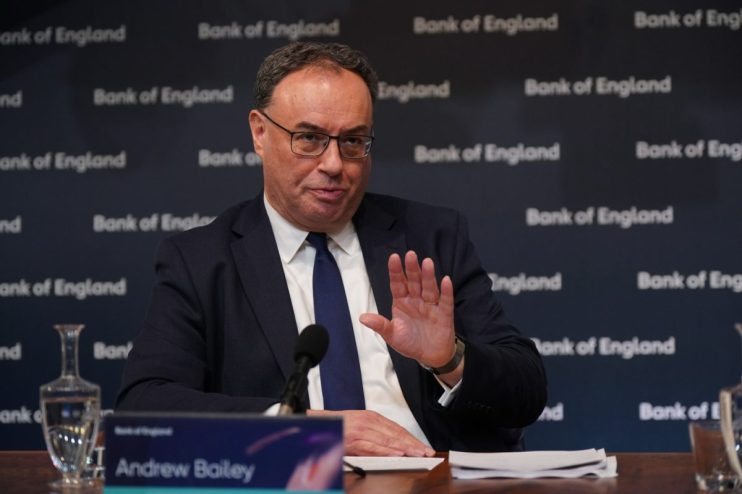
At the Monetary Policy Committee (MPC)’s last meeting in May, Andrew Bailey set the stage for a summer interest rate cut. “A change in Bank Rate in June is neither ruled out nor a fait accompli,” he said.

But that was before Rishi Sunak called the election. A June rate cut has essentially been ruled out by Sunak’s surprise announcement. Without an absolutely watertight case for cuts, the Bank of England would be sailing close to the wind by starting to ease policy just a few weeks before polling day.

The election also provides more substantive reasons to avoid cutting rates. MPC members have had to cancel their speeches given the ongoing campaign, which makes it difficult for rate-setters to prepare the ground for a potential rate cut or explain the decision after.

When the rate cut eventually comes, it’ll be the first since early 2020. Its important to explain the thinking for the decision and provide some guidance on what the next moves are likely to be. So it makes a lot of sense to wait longer in purely practical terms, but its also true that the data since May has not played ball.

Since the last MPC meeting, two rounds of labour market updates have been released as well as April’s inflation figures. The figures reveal worryingly high levels of inflationary persistence.

Annual wage growth is still running around six per cent, more than twice the level which is consistent with inflation remaining at the two per cent target. Likewise, services inflation is still around six per cent.

Read more

Interest rate cut is ‘off the table’, says Bank of England governor

Governor Andrew Bailey has launched a defence of the Federal Reserve's independence.

The two are closely connected because labour costs are the most important driver of prices in the services sector. The Bank was expecting to have seen much more progress on prices in the services sector by now.

In other words, even without the election, there are good reasons why the Bank might be unwilling to cut rates in June. Indeed, markets are increasingly nervy about an August cut with traders putting the odds at just 50/50.

May’s inflation data will be released on Wednesday, just a day before the Bank’s rate decision. Most economists expect inflation will fall back to the two per cent target for the first time since July 2021.

The figures will be crucial for determining whether the Bank is on track to cut rates in August, but the early indicators are positive.

A closely watched business survey showed that cost pressures were easing quickly in the services sector, raising hopes that April’s surprisingly strong reading was just a flash in the pan.

The survey, conducted by S&P in May, showed that the rate of input cost inflation faced by UK services companies increased at its slowest pace since February 2021. This helped output price inflation ease to its weakest level in over three years.

There has also been further good news, at least on wages. CFOs surveyed by the Bank of England in May expect wages to grow 4.1 per cent over the next year. This is the lowest level of expected wage growth since the Bank first started asking the question back in May 2022.

The Bank cannot cut rates on the basis of a few encouraging surveys, but the surveys do at least suggest that things are moving in the right direction. When the August rate decision comes around, there’s reason enough to think that the Bank of England will finally be able to start cutting interest rates. 

Read more

Bank of England to hold interest rates as oil price surge threatens UK economy

Bank of England building on Threadneedle Street, London, showcasing its historic architecture and financial significance

Share this article

  • Facebook
  • X
  • LinkedIn
  • WhatsApp
  • Email

Similarly tagged content:

Sections

  • News

Categories

  • Economics

People & Organisations

  • Andrew Bailey
  • Bank of England
  • Inflation
  • interest rates
  • UK economy

Trending Articles

  • Jobless Banquet: Youth unemployment surge ‘sends Neets to KFC’

  • City law firm sues prominent Emirati business family

  • Amanda Blanc has worked her magic at Aviva

  • House prices in wealthy London boroughs fall by up to £300,000

  • As it happened: Miners fuel FTSE 100 recovery; oil jumps as Trump claims Strait of Hormuz

More from Morning Wire

  • Interest rate cut is ‘off the table’, says Bank of England governor

    Economics
    Governor Andrew Bailey has launched a defence of the Federal Reserve's independence.
  • Bank of England to hold interest rates as oil price surge threatens UK economy

    Economics
    Bank of England building on Threadneedle Street, London, showcasing its historic architecture and financial significance
  • ‘False dawn’: June inflation falls to 2.6 per cent but analysts say rises ahead

    Economics
    Till sales growth slowed to 2.7 per cent in the last four weeks
  • Hold interest rates but ‘sound hawkish’, Morning Wire Shadow MPC tells Bank of England

    Economics
    Andrew Bailey, Governor of the Bank of England, with the Bank of England building and Union Jack flag in the background
  • Bank of England may set the stage for interest rate hikes this year

    Economics
    Bank of England recession warning
  • ‘Door is open’ to interest rate hike as inflation fears return

    Economics
    Bank of England headquarters in 2025, showcasing modern architecture and iconic London skyline in the background.
  • IMF warns Bank of England against cutting interest rates

    Economics
    IMF Chief Kristalina Georgieva issues caution to Bank of England amid economic concerns
  • Mortgage approvals inch up yet gains to be ‘retracted’

    Property
    Bank of England headquarters in 2025, showcasing modern architecture and iconic London skyline in the background.
MorningWire

Independent European business, markets and political news for decision-makers.

Morning Briefing

Europe

  • Germany
  • France
  • EU Institutions
  • Europe

Business

  • Markets
  • Business
  • Economy
  • Regulation
  • Competition
  • Public Affairs

Editorial

  • Opinion
  • Editorial Policy
  • Corrections
  • Contact

Company

  • About Morning Wire
  • Privacy Policy
  • Terms of Use
  • Cookie Policy
© 2026 Morning Wire Ltd · Published by Morning Wire Media, Bahnhofstrasse 65, 8001 Zürich, Switzerland
Privacy · Terms · Cookies · Facebook