Skip to content
Thursday 10 September 2026London --:--Frankfurt --:--Zurich --:--
NewslettersSearchEN · DE · FR
MorningWire

European business, markets and politics

FTSE 100
10,670.06
-1.31%
DAX
25,576.45
-1.66%
CAC 40
8,156.67
-1.94%
STOXX 50
6,311.56
-1.58%
  • Europe
  • Markets
  • Business
  • Economy
  • Regulation
  • Politics
  • Opinion
More
GermanyFranceEU InstitutionsCompetitionPublic AffairsBankingTechnologyEnergy
  • Germany
  • France
  • Europe
  • Markets
  • Business
  • Economy
  • Regulation
  • Politics
  • Opinion
  • DE
Monday 30 January 2023 5:15 am  |  Updated:  Tuesday 31 January 2023 11:45 am

The Bank of England is set to raise rates again and we could still face a 2008 crunch
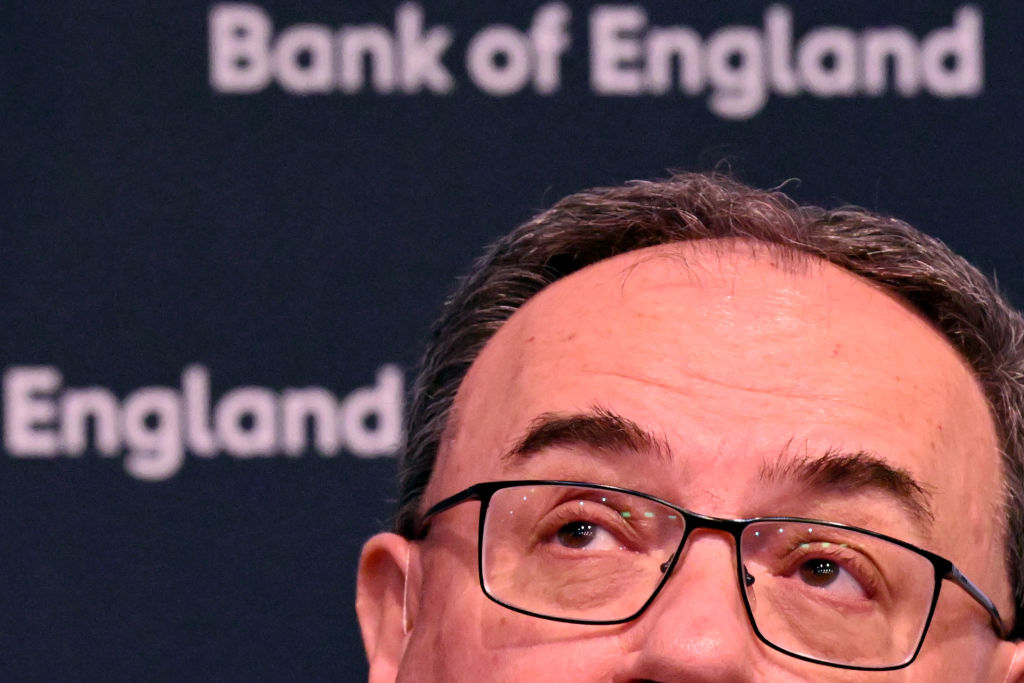
Bank Of England Holds Press Conference On Financial Stability Report
The Bank of England sharply raised interest rates in recent months to confront the UK’s double-digit inflation. (Photo by Leon Neal/Getty Images)

As the Bank of England prepares to raise interest rates again, Arif Husain looks at what this volatility does to the financial markets and consumer credit – and the opportunities for investors.

I have travelled around the world meeting issuers, strategists, and clients a lot this year. Most people agreed with me that the world has changed. But then I ask them, what have you done about it? How have you responded to a change in markets, a change in volatility, a change in the way we all work and live? And the answer is usually very little. Investors must think and act differently in 2023 and beyond.

It has been volatility that has led us to this limbo. So, let’s look at this. 

For me, volatility starts with central banks. Post-global financial crisis, when one word was changed in the statements issued by central banks, everyone would pile on to analyse what it meant, even if often the answer was nothing. 

Following this, we have gone from a period of “we are not even thinking about thinking about raising rates”, to “is it going to be 50, 75 or 100 basis points?” Uncertainty in how central banks will act leads to rate volatility, which then leads to curve volatility, and credit volatility. We’ve seen evidence of this, with the number of mortgage products on offer in the UK plummeting. This then feeds through to equity markets. This is the way I think those concentric circles of volatility flow through. For an active manager, volatility is not something to fear, it is something that produces great opportunities. 

As the concentric circles move through, volatility is certainly elevated. One of the concerns is there is an additional impact from volatility on liquidity. Just as we have gone through quantitative easing into quantitative tightening, there has been a structural change in the world that has led to higher inflation. The key thing for investors to note is that market structure is fundamentally different now, and market structure is something investors do not spend enough time thinking about. 

The moves from active management to passive, and from public markets to private, have fundamentally changed  how people invest. This is not active versus passive or public versus private debate, it is a question of fact. The changes have had a massive impact on market liquidity, which has created a feedback process that develops into further volatility, which then feeds back into liquidity again. In my mind, credit markets are at risk because the liquidity premium that is priced in is still not sufficient for the reality of public markets today.

The illiquidity of markets is something we all need to deal with. We are probably at a point over the next few months where we are going to find out the outcome of this. Using fixed income terminology, we are probably at the point of maximum convexity. This means we are in an unstable equilibrium. Something must happen. We are either going to get a meltdown in credit markets like in 2008, or we get a big, big rally. While market performance in the last quarter of last year looks like the latter so far, looking at liquidity and the quantitative tightening situation, it could still look like 2008. 

Ultimately, investors all end up becoming asset allocators. We all want to put different assets together to end up with a better combination. The important thing to remember, is that the best players do not necessarily make the best team. Doing nothing though? Think back to the returns in fixed income assets in 2022. It is a very dangerous, and conscious decision.

Read more

Mortgage nightmare as investors price in three interest rate hikes 

Bank of England building on Threadneedle Street, London, showcasing its historic architecture and financial significance

Share this article

  • Facebook
  • X
  • LinkedIn
  • WhatsApp
  • Email

Similarly tagged content:

Sections

  • Opinion

Categories

  • Opinion

Trending Articles

  • Tesco and Boots lead 100,000 jobs pledge to tackle Neets crisis

  • Airport chaos latest: Heathrow, London City ‘starting to recover’ after air traffic control failure

  • Hedge fund billionaire Chris Rokos joins UK wealth exodus 

  • Five lenders hike mortgage prices as interest rate threat looms

  • As it happened: FTSE 100 dives as oil prices surge past $100 in blow to inflation

More from Morning Wire

  • Mortgage nightmare as investors price in three interest rate hikes 

    Economics
    Bank of England building on Threadneedle Street, London, showcasing its historic architecture and financial significance
  • Inflation expectations softer than predicted ahead of interest rate decision

    Economics
    The Bank of England is expected to hold interest rates at four per cent due to stubbornly high inflation.
  • Oil hits $100 a barrel as Iran war escalates

    Economics
    Wellington statue in front of the Bank of England building with a British flag flying under a cloudy sky
  • Five lenders hike mortgage prices as interest rate threat looms

    Banking
    Barclays shares have taken a hit since Trump's tariff announcement.
  • As it happened: Vodafone leads FTSE 100 rally after TV launch; oil jumps again

    FTSE 100 Live
    Vodafone and Three company logos on a red and white sign outside a modern glass building
  • The Fed wants you to get used to higher interest rates

    Opinion
    Kevin Warsh, former Federal Reserve Governor, in a suit and tie at Jackson Hole conference
  • Bank of England’s Pill warns against ‘wait and see’ interest rates approach

    Economics
    Huw Pill, Bank of England Chief Economist, smiling in a suit and tie against a blue NABE banner.
  • Bailey warns on inflation risks as Iran war roils UK economy

    Economics
    Bank of England Governor Andrew Bailey addressing financial stability concerns at a press conference
MorningWire

Independent European business, markets and political news for decision-makers.

Morning Briefing

Europe

  • Germany
  • France
  • EU Institutions
  • Europe

Business

  • Markets
  • Business
  • Economy
  • Regulation
  • Competition
  • Public Affairs

Editorial

  • Opinion
  • Editorial Policy
  • Corrections
  • Contact

Company

  • About Morning Wire
  • Privacy Policy
  • Terms of Use
  • Cookie Policy
© 2026 Morning Wire Ltd · Published by Morning Wire Media, Bahnhofstrasse 65, 8001 Zürich, Switzerland
Privacy · Terms · Cookies · Facebook