Skip to content
Saturday 22 August 2026London --:--Frankfurt --:--Zurich --:--
NewslettersSearchEN · DE · FR
MorningWire

European business, markets and politics

FTSE 100
10,816.56
+0.64%
DAX
26,136.56
+0.59%
CAC 40
8,484.43
+0.37%
STOXX 50
6,462.22
+0.63%
  • Europe
  • Markets
  • Business
  • Economy
  • Regulation
  • Politics
  • Opinion
More
GermanyFranceEU InstitutionsCompetitionPublic AffairsBankingTechnologyEnergy
  • Germany
  • France
  • Europe
  • Markets
  • Business
  • Economy
  • Regulation
  • Politics
  • Opinion
  • DE
Thursday 21 March 2024 2:26 pm  |  Updated:  Thursday 21 March 2024 2:53 pm

Bank of England’s dovish pivot on interest rates poses a number of questions

By: Chris Dorrell

Add as a preferred source on Google
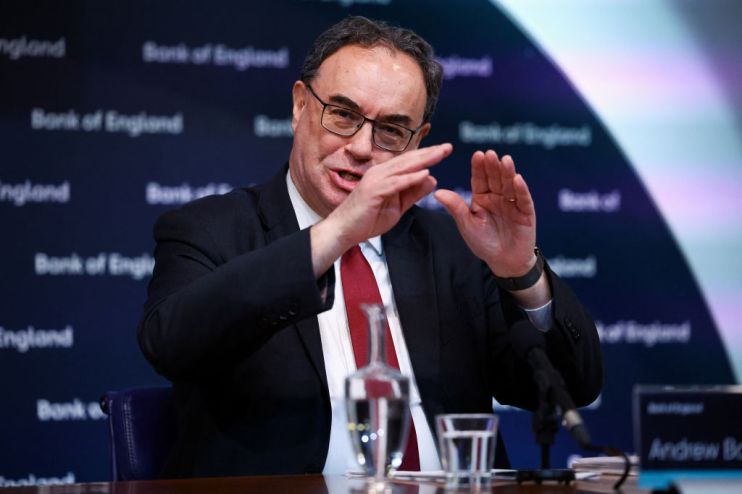
Andrew Bailey, governor of the Bank of England, gave as precise a summary as it is possible to give. "Things are moving in the right direction".

Interest rate cuts are drawing ever nearer. That’s the message today from the Bank of England.

Although rates were held, hawkish dissent within the Monetary Policy Committee (MPC) dissipated – with both Jonathan Haskel and Catherine Mann voting to leave rates where they are rather than hike.

In addition, the Bank of England said that policy would still be restrictive and, therefore, bear down on inflation, even after a rate cut.

Andrew Bailey, the Bank’s governor, gave as precise a summary as possible: “Things are moving in the right direction.”

Markets have picked up the message loud and clear. Equities, already riding high after the Fed decision last night, jumped higher. Sterling dropped 0.4 per cent against the dollar in anticipation of rate cuts, while gilt yields fell sharply too.

Traders already thought rate cuts would begin in the summer, but August was seen as a marginally more likely start date before the meeting. Now June looks more likely, with May a distant possibility.

Part of this response is due to context. Earlier this morning the Swiss National Bank unexpectedly cut interest rates, potentially signalling the starting gun on rate cuts globally.

This followed the Fed’s decision last night. Although the central bank also left rates on hold, it maintained its forecast that there will be three rate cuts in 2024 even as it lifted its forecasts on inflation.

In other words, markets have sensed a decisive change in direction over the past 12 hours. 

But this feels a little overblown because not that much has changed since February.

In February, the Bank of England moved from asking whether interest rates were too high to ask when it might be appropriate to start cutting rates.

Play Video

Since then, data has broadly matched expectations, albeit with a slight bias towards loosening policy earlier. Today, MPC members still warned that “key indicators of inflation persistence remain elevated.”

Read more

How patient can the Bank of England be?

Historic Royal Exchange building in London with modern skyscrapers behind, clear blue sky.

Commenting on the decision, Rob Wood, chief UK economist at Pantheon Macroeconomics, said: “This is a gradual evolution rather than a revolution, showing increased confidence that they can cut rates soon, but also suggesting the cut is not coming at the next meeting in May.”

So the question remains the same, and, in all honesty, the answer (i.e. summer) looks pretty similar too.

The factors which will play a part in deciding the answer also look familiar. Just look at a crucial paragraph in the meeting’s minutes.

The minutes showed that among the eight members who voted for a hold—which included both the inflation hawks and the more centrist members—there was “a range of views…on the extent to which the risk from persistent inflationary pressures had receded.”

First, there are more dovish members.

“Developments in nominal indicators, including at higher frequencies, suggested that the restrictive stance of policy and the unwinding of second-round effects associated with declining short-term inflation expectations were having a material impact in reducing the more persistent and slower-moving components of inflation”.

Then the hawks.

“At the other end of this range, wage growth remained too high and was expected to moderate only slowly, as reflected in the Agents’ latest intelligence. There were limited signs so far that services price inflation would return to a target-consistent pace sufficiently rapidly, with evidence of diminishing second-round effects still tentative”.

It’s impossible to tell how many members fell into each group, but it’s clear the first camp was more inclined to a rate cut than the other.

What will it take to convince more members to vote for a rate cut? Further progress on services inflation and wage growth.

Plus ça change.

Read more

El Nino heatwaves to ‘fuel inflation next year’

Firefighter in helmet and uniform watching a blazing forest fire at night, red glow in the sky

Share this article

  • Facebook
  • X
  • LinkedIn
  • WhatsApp
  • Email

Similarly tagged content:

Sections

  • Markets & Economics

Categories

  • Economics

People & Organisations

  • Bank of England

Related Topics

  • Bank of England
  • UK inflation
  • UK interest rates

Trending Articles

  • House prices in wealthy London boroughs fall by up to £300,000

  • As it happened: Miners fuel FTSE 100 recovery; oil jumps as Trump claims Strait of Hormuz

  • City law firm sues prominent Emirati business family

  • Amanda Blanc has worked her magic at Aviva

  • As it happened: FTSE 100 rallies after JD Sports drags on blue chips; oil jumps again

More from Morning Wire

  • How patient can the Bank of England be?

    AD
    Historic Royal Exchange building in London with modern skyscrapers behind, clear blue sky.
  • El Nino heatwaves to ‘fuel inflation next year’

    Economics
    Firefighter in helmet and uniform watching a blazing forest fire at night, red glow in the sky
  • Inflation leaps to 2.9 per cent in blow to Burnham 

    Economics
    Burnham cityscape showcasing modern architecture, bustling streets, and vibrant community life in a thriving urban setting
  • Lord O’Neill declines job in Burnham government

    Economics
    Jim ONeill, economist and former Goldman Sachs chairman, sitting on a yellow sofa in front of large windows.
  • 22 months of cuts: Jobs crisis deepens despite growth boost 

    Economics
    London has defied national trends as job postings in the capital rose.
  • War and tax: How the UK economy could get knocked off course

    Economics
    Andy Burnham speaking at a public event, emphasizing local governance and policy changes, wearing a suit and gesturing pas...
  • Starling plans to ‘come out swinging’ in diversification bid

    Fintech
    Smiling woman, potentially Starling CEO, over city skyline with STARLING branding
  • Trump suspends strikes amid new peace hopes

    Politics
    Donald Trump speaking at press conference podium, addressing media with serious expression, American flags in background
MorningWire

Independent European business, markets and political news for decision-makers.

Morning Briefing

Europe

  • Germany
  • France
  • EU Institutions
  • Europe

Business

  • Markets
  • Business
  • Economy
  • Regulation
  • Competition
  • Public Affairs

Editorial

  • Opinion
  • Editorial Policy
  • Corrections
  • Contact

Company

  • About Morning Wire
  • Privacy Policy
  • Terms of Use
  • Cookie Policy
© 2026 Morning Wire Ltd · Published by Morning Wire Media, Bahnhofstrasse 65, 8001 Zürich, Switzerland
Privacy · Terms · Cookies · Facebook