Skip to content
Monday 7 September 2026London --:--Frankfurt --:--Zurich --:--
NewslettersSearchEN · DE · FR
MorningWire

European business, markets and politics

FTSE 100
10,831.09
0.00%
DAX
26,046.40
0.00%
CAC 40
8,278.77
0.00%
STOXX 50
6,392.93
0.00%
  • Europe
  • Markets
  • Business
  • Economy
  • Regulation
  • Politics
  • Opinion
More
GermanyFranceEU InstitutionsCompetitionPublic AffairsBankingTechnologyEnergy
  • Germany
  • France
  • Europe
  • Markets
  • Business
  • Economy
  • Regulation
  • Politics
  • Opinion
  • DE
Friday 18 November 2016 11:25 am

Ben Broadbent: The weak pound and higher import prices will dampen wage growth – but the Bank of England can fix it

By: Emma Haslett

Add as a preferred source on Google

UK workers' wages are at risk as a result of weaker sterling, the Bank of England's deputy governor warned today.

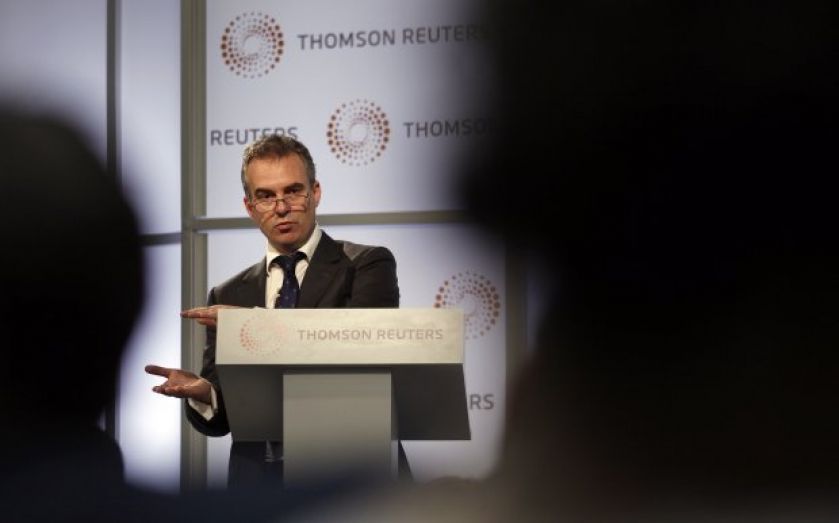
In a speech at the Society of Business Economists' annual conference, Ben Broadbent said the pound's fall against the dollar and the euro meant UK consumers face a long period of higher import prices. 

Without a significant rise in wages (and lest we forget, this month's figures showed wage growth is flat at 2.3 per cent), higher import prices will "dampen" real wage growth – and with it, consumer spending.

The good news is, Broadbent suggested the Bank's monetary policy committee might be able to do something to prevent high import prices from hitting consumers (and from pushing the rate of inflation above the Bank's two per cent target – something it is less inclined to tolerate).

Changes in the general level of sterling import prices seem to take quite a long time to feed through to the retail level – long enough, in principle, for monetary policy to do something about them. The evidence suggests that exchange rate changes have a direct bearing on inflation at horizons two to three years ahead.

But what can policymakers actually do about it? Tightening, he suggested. 

"One of the Bank’s economic models… plots the simulated paths of interest rates and unemployment required to offset in full the impact of a 10 per cent exchange rate depreciation on inflation," he said 

"The interest rate would have to rise by around half a percentage point. This dominates any expansionary impact of the lower exchange rate on demand and unemployment too goes up by close to half a per cent. As the impact of the depreciation begins to top out, a year later, interest rates and unemployment start to fall back."

Share this article

  • Facebook
  • X
  • LinkedIn
  • WhatsApp
  • Email

Similarly tagged content:

Sections

  • Markets & Economics
  • News

Categories

  • Business
  • Economics

Trending Articles

  • Iceland boss Richard Walker vows to set up shop on Falkland Islands

  • Britain ‘taxing itself to death,’ Burnham warned

  • £74m for branded condoms? UK must stop spaffing cash on foreign aid

  • Don’t underestimate the free trade agreement Britain just joined

  • Victoria Beckham owed £350,000 by Harvey Nichols

More from Morning Wire

  • How patient can the Bank of England be?

    AD
    Historic Royal Exchange building in London with modern skyscrapers behind, clear blue sky.
  • Public sector makes wage growth higher than expected

    Economics
    London has defied national trends as job postings in the capital rose.
  • House prices remain sluggish in ‘subdued’ property market 

    Property
    Real estate signs: a yellow SOLD sign and a blurred green FOR SALE sign, indicating house prices and market activity.
  • Inflation expectations softer than predicted ahead of interest rate decision

    Economics
    The Bank of England is expected to hold interest rates at four per cent due to stubbornly high inflation.
  • Bank of England’s Pill warns against ‘wait and see’ interest rates approach

    Economics
    Huw Pill, Bank of England Chief Economist, smiling in a suit and tie against a blue NABE banner.
  • Healey facing £6bn hit as UK borrowing costs reach highest point since financial crisis 

    Markets
    A smiling man in a dark suit and red tie looking slightly upwards, against a plain background.
  • Jenrick pledges to raise tax-free personal allowance to £15,000

    Politics
    Robert Jenrick speaking at a press conference, addressing current policy issues, wearing a suit and standing behind a podium
  • Inflation leaps to 2.9 per cent in blow to Burnham 

    Economics
    Burnham cityscape showcasing modern architecture, bustling streets, and vibrant community life in a thriving urban setting
MorningWire

Independent European business, markets and political news for decision-makers.

Morning Briefing

Europe

  • Germany
  • France
  • EU Institutions
  • Europe

Business

  • Markets
  • Business
  • Economy
  • Regulation
  • Competition
  • Public Affairs

Editorial

  • Opinion
  • Editorial Policy
  • Corrections
  • Contact

Company

  • About Morning Wire
  • Privacy Policy
  • Terms of Use
  • Cookie Policy
© 2026 Morning Wire Ltd · Published by Morning Wire Media, Bahnhofstrasse 65, 8001 Zürich, Switzerland
Privacy · Terms · Cookies · Facebook