Skip to content
Saturday 29 August 2026London --:--Frankfurt --:--Zurich --:--
NewslettersSearchEN · DE · FR
MorningWire

European business, markets and politics

FTSE 100
10,824.26
+0.29%
DAX
26,569.99
+0.77%
CAC 40
8,401.18
+0.98%
STOXX 50
6,485.67
+0.95%
  • Europe
  • Markets
  • Business
  • Economy
  • Regulation
  • Politics
  • Opinion
More
GermanyFranceEU InstitutionsCompetitionPublic AffairsBankingTechnologyEnergy
  • Germany
  • France
  • Europe
  • Markets
  • Business
  • Economy
  • Regulation
  • Politics
  • Opinion
  • DE
Wednesday 18 November 2020 12:01 pm  |  Updated:  Wednesday 18 November 2020 12:05 pm

BoE’s Andy Haldane: Digital currencies could cut risk and boost lending

By: Harry Robertson

Add as a preferred source on Google
The Bank of England's former chief economist said today that he would have already voted to cut interest rates given the UK's slow growth rate and progress on taming inflation.
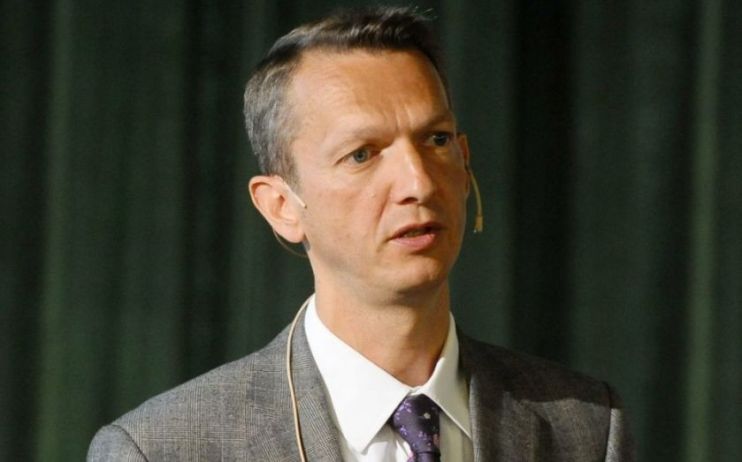
"I’d be cutting rates now, and probably would have been from the tail end of last year," Andy Haldane said.

Digital currencies could reduce risk in the financial system and aid monetary policy with interest rates close to rock bottom, Bank of England chief economist Andy Haldane has said.

Haldane also told The City UK’s annual conference that new technological infrastructure should be considered to help small and medium-sized businesses better access finance after years of difficulties.

Central banks and groups of private companies are currently looking into creating their own digital currencies.

Facebook made a splash last year when it announced Libra, a digital “stablecoin” that would be backed by assets. It would allow users to store, spend and transfer money digitally. The idea is that it would be easier to use than physical cash and could be global.

The Bank of England is currently looking into creating its own digital currency. Such a currency would let businesses, households and financial firms make payments and store value in electronic central bank money.

Regulators have been wary of digital currencies, especially ones set up by private groups. They worry that they could become unstable as they would be harder to regulate.

For example, Haldane said there could be “large, unstable flows of funds from commercial banks deposits into private sector stablecoins… especially at times of stress”.

Yet he also said that there could be advantages. In particular, digital currencies could separate payments, which are by and large safe and backed by liquid assets, from bank lending, which is more risky.

Haldane also said that digital currencies could help manage the problem of record-low interest rates.

Read more

Britain faces energy squeeze from solar eclipse

Rows of blue solar panels in a field, generating clean energy, with green trees in the background.

With UK interest rates currently at 0.1 per cent, the Bank is reluctant to cut them further, partly because it worries that they would not be passed on to lenders’ customers.

Yet Haldane said a “widely-used digital currency could mitigate” this problem as it could provide a simpler way for interest rates to be levied on assets.

Tech could help boost SME lending

Haldane also said technology could help solve the shortfall of lending to smaller businesses.

Small and medium-sized enterprises (SMEs) have historically found it more difficult to access finance than bigger firms. The public spending watchdog has estimated that smaller firms could face a “funding gap” of around £20bn.

Haldane said this was largely due to the fact that lenders have less information about smaller companies than bigger ones. This means they charge more for the more uncertain lending. And it also makes it more difficult for smaller firms to shop around.

To solve this problem, Haldane advocated the Bank’s proposals for an “open data platform” for SMEs. The platform would be a place where data about companies could be more easily shared, hopefully increasing their access to different banks.

It could also include “data from insurance and utilities companies, credit rating and social media data companies, and government sources such as the Passport Office, DVLA, HMRC and Companies House,” Haldane said.

Haldane said the coronavirus crisis had “materially strengthened the case” for such a system. After around £60bn of Covid lending, many companies are likely to need “some debt remediation or re-profiling,” he said.

“The open platform could reduce significantly those information frictions, lubricating the process of corporate debt workout and recovery.”

Read more

Top economists shun Burnham over wealth taxes

Andy Burnham speaking at a press conference, expressing confidence despite challenges, highlighting leadership and resilie...

Share this article

  • Facebook
  • X
  • LinkedIn
  • WhatsApp
  • Email

Similarly tagged content:

Sections

  • Markets & Economics
  • News

Categories

  • Banking
  • Business
  • Economics

Related Topics

  • Bank of England
  • Digital economy

Trending Articles

  • Pensioners to hand over bank statements in government benefits crackdown

  • Jamie Carragher: HMRC petitions for Sky Sports star to be declared bankrupt

  • Brewdog founder James Watt hits out at ‘total silence’ over new venture

  • Jamie Vardy bags Bundesliga rights as he steps up streaming war with Neville and Lineker

  • Lloyds Bank and Halifax users unable to use app in latest outage

More from Morning Wire

  • Britain faces energy squeeze from solar eclipse

    Energy
    Rows of blue solar panels in a field, generating clean energy, with green trees in the background.
  • Top economists shun Burnham over wealth taxes

    Politics
    Andy Burnham speaking at a press conference, expressing confidence despite challenges, highlighting leadership and resilie...
  • Aston Villa commercial status a tonic for Premier League in big-spending era

    Sport Business
    Unai Emery, Aston Villa manager, shouts with intensity during a football match, gesturing with his right arm.
  • What are we to make of John Healey? Time will tell.

    Economics
    John Healey - Chancellor
  • War and tax: How the UK economy could get knocked off course

    Economics
    Andy Burnham speaking at a public event, emphasizing local governance and policy changes, wearing a suit and gesturing pas...
  • Where are Andy Burnham’s economic advisers?

    Politics
    Andy Burnham and John Healey at Number 10 North, both wearing suits and ties, with a microphone in the foreground.
  • Bingo halls at risk if Burnham hikes taxes, Mecca Bingo owner warns

    Hospitality
    Smiling female receptionist with glasses handing a card to a customer at a bright reception desk.
  • Government pushes Bank of England to innovate on payments and digital currencies

    Regulation
    Bank of England building on Threadneedle Street, London, showcasing its historic architecture and financial significance
MorningWire

Independent European business, markets and political news for decision-makers.

Morning Briefing

Europe

  • Germany
  • France
  • EU Institutions
  • Europe

Business

  • Markets
  • Business
  • Economy
  • Regulation
  • Competition
  • Public Affairs

Editorial

  • Opinion
  • Editorial Policy
  • Corrections
  • Contact

Company

  • About Morning Wire
  • Privacy Policy
  • Terms of Use
  • Cookie Policy
© 2026 Morning Wire Ltd · Published by Morning Wire Media, Bahnhofstrasse 65, 8001 Zürich, Switzerland
Privacy · Terms · Cookies · Facebook