Boris won the keys to Number 10 – now can he win an election?

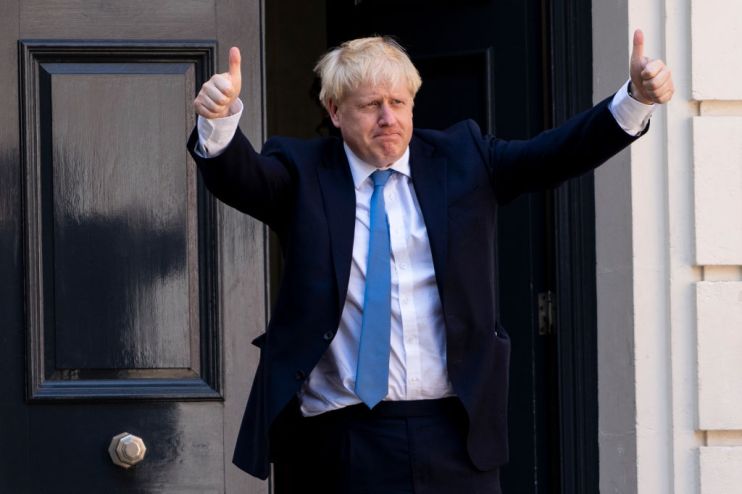
If it wasn’t clear before yesterday’s conclusion of the Tory leadership race, it sure is now: Britain is facing a General Election, and sooner rather than later.
Every incoming Prime Minister is greeted with trepidation, sometimes edging into scepticism. That is normal in a country which has traditionally frowned on cults of personality. But the “Gaukward squad” of recalcitrant Tory MPs isn’t just sceptical – it is baying for Boris Johnson’s blood. And he hasn’t even walked through the door yet.
On Monday, former Foreign Office minister Sir Alan Duncan launched a blistering preemptive attack on the new Tory leader, saying that he feared Boris was going to go “smack into a crisis of government”.
Then yesterday, Anne Milton resigned as skills minister, citing “grave concerns” about the impact of a no-deal Brexit.
While Boris is taking measurements for the curtains of Number 10, it is quite possible that this dissatisfaction from the Remainer wing of his own party will bubble over during the course of the summer, leading to a vote of no confidence in the government, and a General Election in the autumn.
If, on the other hand, the giddy excitement generated by the new PM in the other factions of the party (Priti Patel could hardly contain herself on the BBC yesterday) proves more powerful than the negativity, Boris may be able to ride the wave of optimism and succeed where Theresa May failed in getting a Brexit deal through parliament by 31 October.
In that case, could the new Prime Minister – a man who craves popularity, loves to be loved, and barely has a working majority in the House of Commons – really resist the temptation to capitalise on his victory and call a General Election in the spring?
If his gung-ho speech yesterday is anything to go by, the new Prime Minister – fresh from his pulverisation of Jeremy Hunt (whom he beat with 66 per cent of the vote) – is pretty confident that he can win another popularity contest against another Jeremy.
The problem, though, is that General Elections aren’t the same as popularity contests.
Yes, a Brexit-supporting Conservative party might well win a slightly higher share of the vote than a Remain-supporting Labour (if indeed that is Labour’s new policy). But translating those votes into the kind of thumping parliamentary majority necessary to push through a controversial Brexit policy would prove very tricky indeed.
As we learnt in 2017, a Conservative party which caters for “citizens of somewhere” – rural, elderly, Brexit voters – is capable of making big dents in Labour heartland strongholds, but if it can’t also appeal to young urban liberals in places like Battersea – or, indeed, the new Prime Minister’s own constituency of Uxbridge & South Ruislip – it will get egg on its face in parliament.
In order to achieve a majority, Boris will have to win back metropolitan liberals for whom “Tory” is, once again, a dirty word. And he needs to do it with policies based on something other than Brexit.
Obviously, given the tight time frame, any promises made now will be little more than just that: promises. But for Boris – a natural social liberal despite how certain sections of the media have painted him as a dangerous, right-wing, Trumpian populist – policy vows which remind young people of the London mayor they knew and loved could go a very long way.
One option he may consider is putting his weight behind the legalisation of recreational cannabis.
Since the partial legalisation of medical cannabis last year, the drug has been in the news pretty much every week, and the middle-class, metropolitan graduates the Tories should be targeting are yearning for more reform.
From his own Telegraph columns, it’s clear that Boris would like to be a big-spending Prime Minister – and according to a report by the Institute of Economic Affairs, legalising the cannabis industry could bring in a very handy £1bn a year in tax revenues to fund all those tax cuts and public spending promises.
Another option would be proposing sweeping reforms to animal welfare laws. As Theresa May learnt to her cost in 2017 when she professed her support for fox hunting, animal welfare is a hot-button issue, and in London in particular – where veganism is in vogue – any policy which capitalises on this sentiment would be an easy (and inexpensive) way to signal that the Conservatives aren’t just an old-fashioned party for rural England.
Brexit is, of course, the headline headache for the incoming Downing Street team. But given the precarious parliamentary position and the near inevitability of an imminent General Election, building a broader coalition of Conservative supporters might well turn out to be the trickier of the challenges facing our new Prime Minister.
Boris has spent the last 40 years itching to get hold of the keys to Number 10. If he wants to hold onto them for longer than a few months, he must offer a carrot or two to metropolitan liberals – and fast.