Skip to content
Tuesday 18 August 2026London --:--Frankfurt --:--Zurich --:--
NewslettersSearchEN · DE · FR
MorningWire

European business, markets and politics

FTSE 100
10,710.66
-0.09%
DAX
26,217.82
-0.46%
CAC 40
8,530.37
-0.57%
STOXX 50
6,488.70
-0.64%
  • Europe
  • Markets
  • Business
  • Economy
  • Regulation
  • Politics
  • Opinion
More
GermanyFranceEU InstitutionsCompetitionPublic AffairsBankingTechnologyEnergy
  • Germany
  • France
  • Europe
  • Markets
  • Business
  • Economy
  • Regulation
  • Politics
  • Opinion
  • DE
Tuesday 15 November 2022 11:11 am  |  Updated:  Wednesday 16 November 2022 10:32 am

Workers’ real pay erodes at historic pace despite huge wage rises
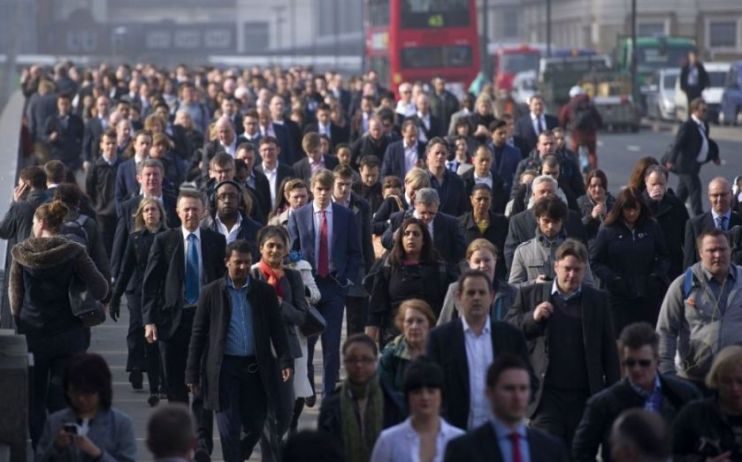
Do you have a job? Are you in work? You might be one of Labour's "working people." Then again, you might not be.

Workers’ pay is still being eroded at a historic pace by rampant inflation despite employers hiking wages by one of the greatest amounts since records began, official figures revealed today.

When taking off the Office for National Statistics’ (ONS) preferred measure of inflation, pay excluding bonuses dropped 2.7 per cent over the last three months, one of the biggest falls since the organisaiton started tracking the data in 2001.

The sharp fall came despite employers hiking pay 5.7 per cent over the three months to September, the biggest rise outside of the Covid-19 crisis, which muddied the numbers.

The new figures underscore how badly households are being squeezed by rising prices. On some measures, wages have now trailed inflation for 11 months.

Economists and the Bank of England have predicted the UK economy is on course to plunge into the longest recession on record, at two years, driven by consumers and businesses cutting spending in response to high inflation.

The Bank reckons the economy could contract nearly three per cent over the course of the slump, but only if interest rates top five per cent. 

They are currently three per cent after eight successive rises to tame rising inflation, which is running at a 40 year high of 10.1 per cent.

The Bank has been lifting interest rates to curb future price rises caused by workers demanding pay rises to protect their spending power and businesses hiking prices to maintain margins.

Analysts cast doubt over whether such an inflationary spiral is building in the UK economy.

Martin Beck, chief economic advisor to the EY Item Club, said: “Workers’ bargaining power… still looks a long way from being able to generate a sustainable wage-price spiral. The odds of that happening are also expected to recede as the weak economy cuts demand for workers.”

Read more

Public sector makes wage growth higher than expected

London has defied national trends as job postings in the capital rose.

But, others highlighted the 6.6 per cent pay growth in the private sector risks keeping inflation above the Bank’s two per cent target.

Thomas Pugh, economist at RSM UK, said wage expansion needs to hover around three per cent to ensure Threadneedle Street hits its target.

Chancellor Jeremy Hunt, who on Thursday is likely to announce £55bn of spending cuts and tax hikes, said curbing inflation is his “absolute priority”. Tightening fiscal policy will help ease inflation by cooling demand, but will likely worsen a recession.

New cost of living figures out tomorrow are expected to climb to around 11 per cent.

Joblessness fell over the last quarter, but mainly driven by workers pouring out of the labour market altogether, likely fuelled by long-term sickness caused by Covid-19 and people retiring early.

The unemployment rate fell to 3.6 per cent, down from 3.8 per cent. But, the number of people without a job and not looking for one climbed over 100,000 over the same period.

The ONS does not include economically inactive people in its unemployment estimate, meaning when more people stop looking for a job, it can push down the jobless rate.

Economic inactivity has soared since the start of the pandemic
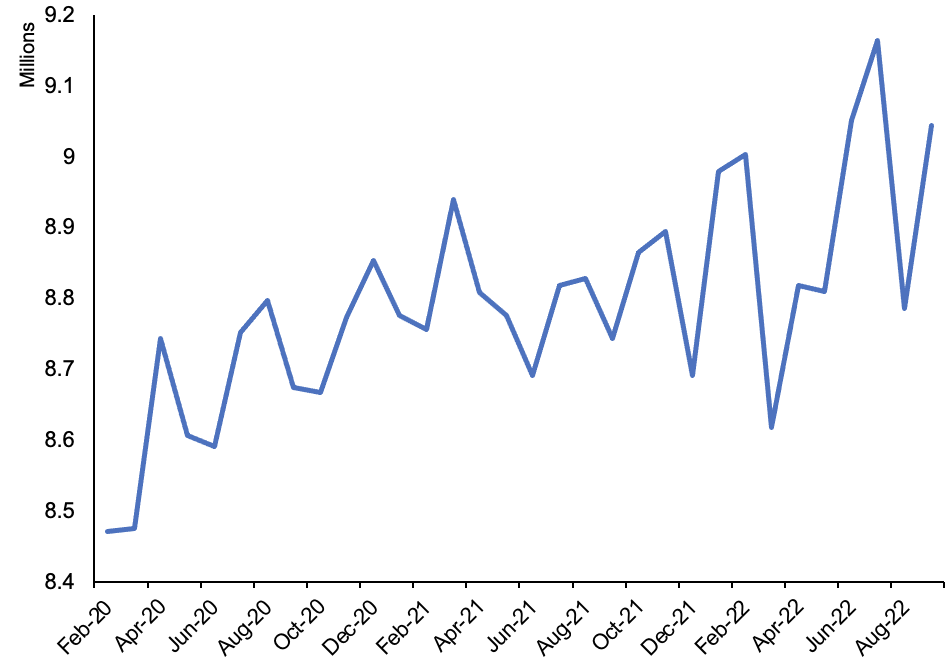
Higher economic inactivity rates in the UK has engineered a worker shortage, putting upward pressure on pay
Source: Monthly measure of economic inactivity from the ONS

Unemployment has held low despite the economy wilting under the weight of high inflation, worker shortages and rising borrowing costs.

However, the ONS’s figures showed vacancies dropped over the last quarter, indicating employers are bracing for the coming recession by mothballing hiring.

Read more

How patient can the Bank of England be?

Historic Royal Exchange building in London with modern skyscrapers behind, clear blue sky.

Share this article

  • Facebook
  • X
  • LinkedIn
  • WhatsApp
  • Email

Similarly tagged content:

Sections

  • News
  • Jobs and Money
  • Markets & Economics

Categories

  • Economics

Related Topics

  • Bank of England
  • UK inflation
  • UK interest rates
  • UK jobs
  • UK jobs, employment and wages

Trending Articles

  • As it happened: FTSE 100 drops as oil prices rise after Trump makes Hormuz threat

  • US bond market jitters spark UK economy recession warning

  • Aldi boss wades into supermarket ‘price-gouging’ row

  • Monzo chair makes early exit after boardroom rift

  • New Premier League rules could see £11bn invested into new stadiums

More from Morning Wire

  • Public sector makes wage growth higher than expected

    Economics
    London has defied national trends as job postings in the capital rose.
  • How patient can the Bank of England be?

    AD
    Historic Royal Exchange building in London with modern skyscrapers behind, clear blue sky.
  • Bank of England to hold interest rates as oil price surge threatens UK economy

    Economics
    Bank of England building on Threadneedle Street, London, showcasing its historic architecture and financial significance
  • Burnham facing calls to cut employment red tape as job seekers grow for 41 months

    Economics
    Office for National Statistics
  • Hold interest rates but ‘sound hawkish’, Morning Wire Shadow MPC tells Bank of England

    Economics
    Andrew Bailey, Governor of the Bank of England, with the Bank of England building and Union Jack flag in the background
  • M&S chair: Tax and employment costs holding back Britain

    Retail
    Archie Norman, business leader, speaking at a corporate event wearing a suit and tie, engaging with the audience.
  • Jenrick: Welfare cuts worth £50bn allows us to ‘sustainably pay’ triple lock pension

    Politics
    Robert Jenrick speaking at a podium with BRITAIN NEEDS REFORM sign, delivering a speech.
  • Staff would turn down promotion to keep flexibility at work

    Retail
    Keir Starmer is heading to China
MorningWire

Independent European business, markets and political news for decision-makers.

Morning Briefing

Europe

  • Germany
  • France
  • EU Institutions
  • Europe

Business

  • Markets
  • Business
  • Economy
  • Regulation
  • Competition
  • Public Affairs

Editorial

  • Opinion
  • Editorial Policy
  • Corrections
  • Contact

Company

  • About Morning Wire
  • Privacy Policy
  • Terms of Use
  • Cookie Policy
© 2026 Morning Wire Ltd · Published by Morning Wire Media, Bahnhofstrasse 65, 8001 Zürich, Switzerland
Privacy · Terms · Cookies · Facebook