Britain’s biggest banks in higher interest rate profit boost as earnings season kicks off
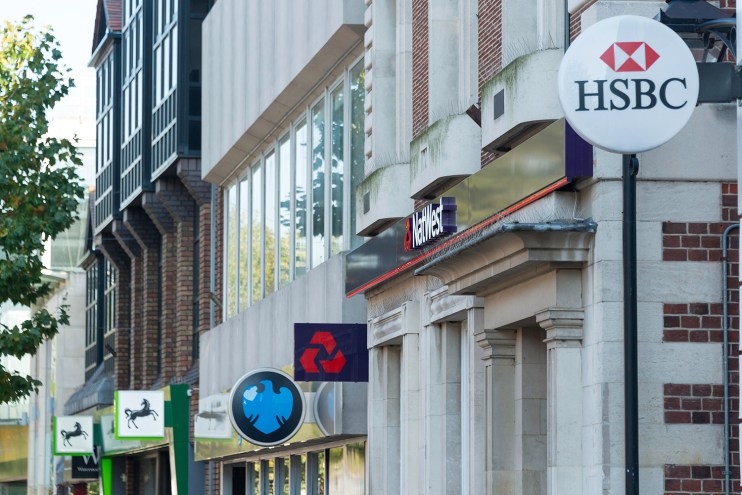
Profits at Britain’s biggest high street lenders have been boosted by the Bank of England hiking interest rates to tame historic high inflation.
That’s according to top City analysts who are forecasting the UK’s largest banks to have reaped the rewards of being able to charge borrowers more for loans.
A higher interest rate environment benefits banks as it tends to widen their net interest rate margin – the difference between what they charge borrowers and what they pay out to depositors – which is a crucial source of income for the sector.
The Bank has hiked rates at each of its last three meetings, taking them to pre-pandemic levels of 0.75 per cent. It is expected to lift them again at its next meeting on 5 May, possibly by 50 basis points, breaking with its tradition of moving them in 25 basis point increments.
But, a cooling in listing and deal making activity as a result of greater geo-political risks triggered by Russia’s invasion of Ukraine, compounded by swelling costs caused by a global inflation crunch is likely to result in shareholders being left open handed by banks, analysts are predicting.
The end of Covid-19 restrictions during the middle of the first quarter is also expected to have boosted income from traditional banking activities.
The “tailwind from rising interest rates and increased activity” is forecast to make banks an attractive sector for investors, according to Shore Capital.
Lenders’ first quarter earnings season begins on Tuesday when Britain’s biggest bank, HSBC, updates the City.
The bank, which generates a large proportion of its profits in Hong Kong and China, has been one of the sector’s shining lights due its heavy exposure to US interest rates, which have climbed in recent weeks as a result of an anticipated rapid tightening in policy from the US Federal Reserve.
Lloyds, the UK’s largest mortgage lender, posts results on Wednesday. The ongoing strength of the UK housing market throughout the first three months of the year despite higher interest rates and a cost of living squeeze is expected to have boosted the firm’s bottom line.
However, strong competition in the mortgage market will have kept a line on Lloyds’ earnings.
A sudden and sharp retraction in listing activity amid greater geo-political uncertainty caused by Russia’s invasion of Ukraine is expected to have weighed on investment banking revenue.
Barclays, which reports on Thursday, is the only UK lender with a large presence in the investment banking sector, meaning it will absorb the heaviest blow from the weaker listing and deal making environment.
The release of a stream of loan loss reserve set aside to deal with an expected wave of Covid-19 defaults which has artificially strengthened banks’ profits for around a year is forecast to dry up as the UK economy shakes off the effects of the pandemic.
But, the worsening inflation crunch will result in the release of loss provisions being “recycled into new cost of living provisions,” according to Shore Capital.
Living standards in the UK are projected to fall at the quickest rate in 66 years as a result of wages failing to keep pace with an average annual inflation rate of over seven per cent.
The cost of living is already running at a 30-year high of seven per cent and could even reach double-digits later this year.
NatWest, which is now majority privately owned for the first time since the government bailed the bank out during the financial crisis in 2008, rounds off UK banks’ earnings season on Friday.
On the Continent, embattled lender Credit Suisse posts first quarter earnings on Wednesday. Analysts are expecting the firm to have taken a blow from high legal costs to deal with a series of crises that have dragged it into litigation proceedings.