Britain’s economic adjustment only ends in one way
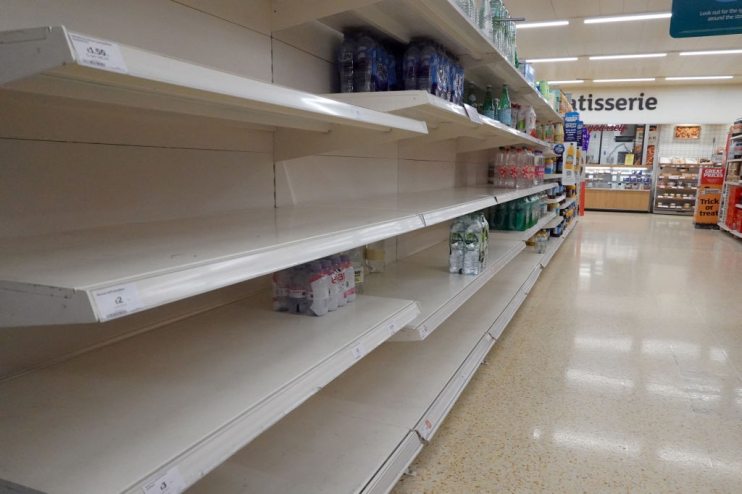
The ails of the nation’s favourite sausage roll maker are a microcosm of the problems afflicting the UK economy.
In a trading update yesterday, high street baker Greggs warned it is suffering from a “supply of ingredients.” A couple months back, it pulled its iconic chicken bite for similar reasons.
Severe shortages plaguing the British economy are primarily the result of higher costs seeping into every corner of businesses’ supply chains. Prices for things used by almost every firm have skyrocketed.
Oil rose to its highest clip in seven years this week, driven by a resurgence in global demand as countries rush to get their economies back to pre-pandemic strength. Gas prices have never been higher, triggered by a combination of Russia limiting flows of the resource and a fire at one of the UK gas network’s main arteries.
Shipping costs have followed an almost absolute vertical trajectory since the onset of Covid-19, mainly because vessels are moored at critical global trade hubs and productivity is still being choked by ongoing pandemic issues in Asia.
Looming national insurance hikes. Having to increase pay for HGV drivers. Even elevated borrowing costs are entering the fray as the Bank of England mulls raising rates.
Everywhere businesses look, costs are swelling to eye watering levels, and they are responding by slashing supply, which is exacerbating shortages and putting even more upward pressure on prices.
One in three small and medium sized firms in Britain have cut service lines amid shortages of workers and key inputs, according to accountancy firm BDO.
“The spike in energy prices caused some industrial firms to limit production,” Tom Pugh, economist at RSM UK, warned.
Tim Moore, economics director at IHS Markit, shares Pugh’s concerns: “Shortages of staff, raw materials and transport ha[s] resulted in lost business opportunities.”
What typically happens when market prices are not aligned to cover firms’ costs is the number of goods produced shrinks and prices increase, unless demand expands to cancel out hesitancy among firms to produce at the old price.
Firms can still make enough products to clear shortages, but consumers would not buy all the goods supplied at a higher price. So, it is not rational to maintain the same level of production.
Prime Minister Boris Johnson said this week “supply will match demand” after a period of post-Covid adjustment. This will only happen when prices settle on a higher plane.
What is difficult to judge is just how much businesses’ costs will continue to increase. Rising costs tend to raise firms’ inflation expectations, which prompts them to hike prices in the present to offset future pressure on margins.
“Given the strains that business is being placed under, it is almost inevitable that many will have to raise their prices to remain viable,” James Martin, director of policy at the British Chambers of Commerce said.
Research by IHS Markit found businesses’ willingness to sit on their hands and wait to book losses later is fading. The latest PMI for the UK services industry shows they jacked prices at the quickest rate on record last month.
THE COST OF LIVING CRISIS IS VERY REAL
Households are now facing a cost of living crisis due to shortages raising prices for everything from energy to food.
This is not good news for the economic recovery.
Lower optimism breeds weaker demand as households rein in spending to offset expectations their future financial position will deteriorate. “Consumers [are] slamming on the brakes,” Joe Staton, client strategy director at GfK, whose latest confidence index dropped five points, put it.
Existing data indicates demand is already retreating. Retail sales fell unexpectedly by 0.9 per cent in August, according to the Office for National Statistics (ONS).
But, what about rising wages?
As former external member of the Bank’s rate setting committee, Andrew Sentance, highlights: “It’s an economic fallacy that a rise in money wages makes people better off. It is real wages (money wage adjusted for price inflation) which matters.”
This is because if someone cannot buy the same quantity or quality of things with £1 than they could before, their living standards deteriorate.
This is the main criticism levelled at Johnson for insisting wages are increasing.
ONS figures suggest real wages will turn negative if inflation reaches the Bank of England’s forecasts of above four per cent by the end of the year.
CRISIS? WHAT CRISIS?
Chancellor Rishi Sunak’s speech this week at the Tory Party conference was notable for an absence of announcements tackling the cost of living crisis. “Crisis? What crisis?” This paper asked.
Former Labour Prime Minister Jim Callaghan did not actually say those words, but the sentiment sums up the predicament the UK economy finds itself in now.
It is buckling under the weight of a series of crises, not one single crisis, triggered by the cost of everything soaring – the same scenario that led to the winter of discontent at the end of the 1970s.
Predictions that we are headed for a similar fate are becoming commonplace. Data from Bloomberg shows mentions of “stagflation” across several sources have hit their highest level in over a decade.
The reason why stagflation ravaged the UK economy in the 70s was that prices were not able to adjust because unions had a stranglehold on wages. Firms had to offer pay they could not afford, meaning they increased prices, incentivising workers to demand higher wages to offset future increase in the cost of living, resulting in an inflationary doom loop.
Sound familiar?