Build me up: make ‘retrofit first’ a legal requirement to save London’s skyline

Developers buying historic buildings should first be asked to try and restore it with a modern twist before they go full steam-ahead with demolition, writes Graham Clemett.
London is a city of constant reinvention. Even with our evolving skyline, our capital prides itself on retaining a patchwork of historic buildings that have proven themselves still fit for a modern world thanks to ongoing retrofitting, which allows age-old buildings to be reinvented for modern purposes. But historic buildings could still face demolition if the government fails to implement a planning policy that prioritises retrofitting as the most important consideration when undertaking redevelopments.
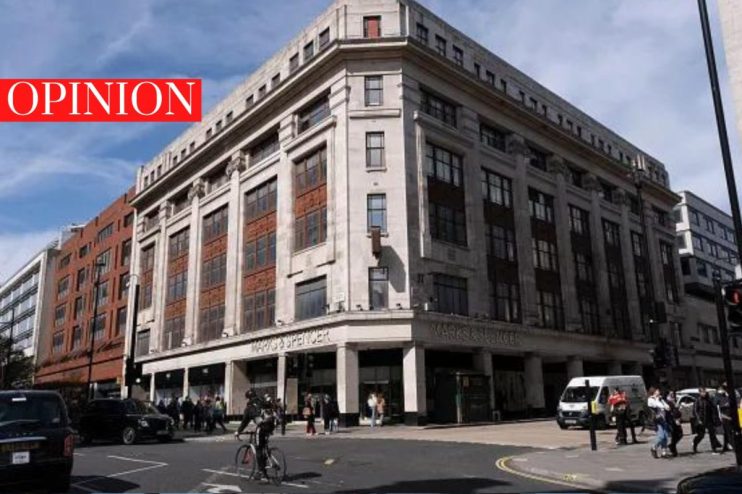
The subject of retrofitting re-entered the public sphere this summer after Marks & Spencer’s flagship store at Orchard House on Oxford Street was barred from demolition; a move that sparked an ongoing debate around the virtues of preserving old buildings versus redeveloping them.
The immediate response to the government’s move from some commentators was that it was “anti-business”. The suggestion was that demolishing Orchard House to construct a modern mixed-use space was the only viable way to attract shoppers and office tenants, which would thus fight the growing tide of vacancy rates and candy stores on Oxford Street. The issues facing the area are very real, but it should not be assumed that the only way to solve them is through tearing down a historic building to erect a new one.
Consider the merits of preserving such a building: historically significant, the 1930s Neo-Grec Orchard House is one of a few remaining buildings that embodies London’s interwar architecture, much of which has already been lost. Retrofitting also typically results in up to 75 percent less carbon emissions than constructing new buildings, making it the strongest tool in a developer’s arsenal to cut its emissions. In the case of Orchard House, some 40,000 tonnes of carbon that would have been emitted through constructing a new building have now been saved.
If buildings are to be preserved, they of course have to be adapted to meet modern needs. London has countless success stories of historic buildings that have been repurposed to meet the expectations and needs of today’s office workers and shoppers. Battersea Power Station is perhaps the most famous example. Workspace has rescued many character buildings across London and transformed them into flexible spaces fit for thriving London businesses including China Works in Vauxhall, Metal Box Factory in Bankside and The Leather Market in London Bridge, which could otherwise have been lost at the hands of another developer. Preservation and innovation should not be considered incompatible but mutually beneficial.
Currently, developers are not compelled by law to consider retrofitting as an option first, meaning the government’s decision was deemed by critics to be “arbitrary”. In this instance, they are not wrong. The only way the government can avoid this situation in future is by mandating a “retrofit first” approach through planning policy reform.
I have argued before that a Grade III listing status would help to preserve London’s heritage. But a retrofit first policy would have a similar impact and even go further to avoid unnecessary demolition across all buildings and recognise the value held in embodied carbon. In our own decision making, we already implement this thinking and look first to see where we can preserve the integrity of a building, rather than tear it down. The same cannot be said for all developers across London that see greater value in newbuilds when retrofits are perfectly possible.
Michael Gove has positioned the government on the right side of the debate, and making this decision on a flagship property is the right way to signal new priorities and spur action. It now needs to consolidate the support for its recent decision and take the opportunity to introduce clear policy change that puts retrofitting first and ensures greater predictability and transparency in future decisions.
Retrofitting enables opportunity, it does not stifle it. London needs a retrofit first policy now that will preserve our rich architectural heritage, accelerate the transition to net zero, while also meeting the ever-changing needs of the modern London business.