Skip to content
Sunday 6 September 2026London --:--Frankfurt --:--Zurich --:--
NewslettersSearchEN · DE · FR
MorningWire

European business, markets and politics

FTSE 100
10,831.09
0.00%
DAX
26,046.40
+0.17%
CAC 40
8,278.77
-0.09%
STOXX 50
6,392.93
+0.16%
  • Europe
  • Markets
  • Business
  • Economy
  • Regulation
  • Politics
  • Opinion
More
GermanyFranceEU InstitutionsCompetitionPublic AffairsBankingTechnologyEnergy
  • Germany
  • France
  • Europe
  • Markets
  • Business
  • Economy
  • Regulation
  • Politics
  • Opinion
  • DE
Tuesday 20 May 2014 6:34 pm

Carney’s football talk masks a transparency issue: Income targeting could solve it

By:

Add as a preferred source on Google

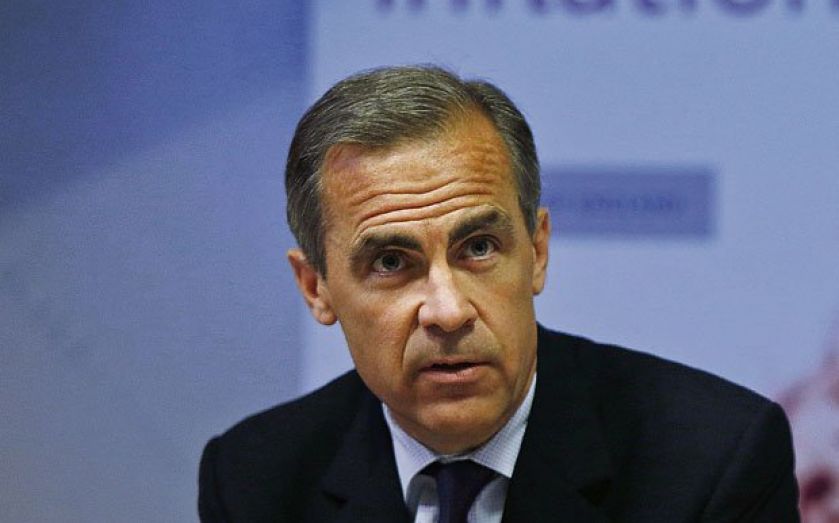
SINCE joining the Bank of England last July, Mark Carney has been keen to talk a good game on central bank transparency.

He has even made a few fledgling steps in the right direction. Many of the interviews the governor gives are with regional media operations. A cynic might suggest that he prefers the softer questions fielded by reporters less used to quizzing the heads of central banks. But there has been a clear intensification of effort at the Bank to reach outside of London in order to get its message across.

When tasked with the mission of communicating some of monetary policy’s trickier nuances, Carney has fallen back on the one area on which he can be sure to capture the public’s attention: football.

The story of the UK’s economic recovery has been akin to the England squad making it through the qualifying rounds of the World Cup, Carney told us at last week’s Inflation Report press conference. This Sunday, the analogy was continued, as Carney expressed economics headwinds in terms of the sides England will face during this year’s group stages. We are in a tough group, according to the governor.

And while he might not want to admit it, the policies Carney has enacted since moving into Threadneedle Street have in some ways made understanding the recovery even harder. The somewhat arcane process of deciphering the intentions of the Monetary Policy Committee (MPC) seemed a little clearer for a moment last August. Forward guidance clarified that the Bank would consider a rate rise when unemployment fell below a given level.

But things were not to last. By February this year, the goalposts were moved again when the original version of guidance was swapped for the yardstick of spare capacity. That measure, the so-called output gap, was originally rejected by the Bank in August as being “unobservable and difficult to explain”. By its own admission, the Bank recognised that using slack as an indicator “would make it hard for the public to understand the guidance”.

Assessing the chance of a rate rise has again become a matter of watching the Bank’s internal politics for signs of disunity. The arrival of new MPC members this summer means that a majority on the committee will have served for less than a year, making the guessing game harder still.

It could all be much easier. Carney should turn back to an idea he floated in 2012 – nominal GDP targeting. The switch from an inflation targeting regime would be a radical step, but one with the support of a wealth of academics. Incomes would serve as a well-understood target, giving markets and the public much needed clarity. It’s an open goal should the Bank wish to take it.

Peter Spence is a liveblogger at Morning Wire

Share this article

  • Facebook
  • X
  • LinkedIn
  • WhatsApp
  • Email

Similarly tagged content:

Sections

  • Opinion

Categories

  • Opinion

Trending Articles

  • Victoria Beckham owed £350,000 by Harvey Nichols

  • Iceland boss Richard Walker vows to set up shop on Falkland Islands

  • Don’t underestimate the free trade agreement Britain just joined

  • £74m for branded condoms? UK must stop spaffing cash on foreign aid

  • My stressful night at London’s ultra luxe £1k a night hotel where I found glass in my food

More from Morning Wire

  • Economists urge Bank of England to halt bond sales as borrowing costs climb

    Economics
    Bank of England headquarters with financial charts overlay, illustrating private credit stress test analysis
  • Andrew Bailey: Populism a threat to global economy

    Economics
    Andrew Bailey, Bank of England governor, discusses economic policy during a press conference at the central bank headquart...
  • Government pushes Bank of England to innovate on payments and digital currencies

    Regulation
    Bank of England building on Threadneedle Street, London, showcasing its historic architecture and financial significance
  • Bank of England’s Pill warns against ‘wait and see’ interest rates approach

    Economics
    Huw Pill, Bank of England Chief Economist, smiling in a suit and tie against a blue NABE banner.
  • How the Treasury got ‘fed up’ with the Bank of England’s payments plan

    Fintech
    The Bank of England's Breeden argued the recent inflation bump was transitory (Photo by Chris Ratcliffe/Bloomberg via Getty Images)
  • How patient can the Bank of England be?

    AD
    Historic Royal Exchange building in London with modern skyscrapers behind, clear blue sky.
  • Elavon renews partnership with Sage to simplify payments for growing businesses

    Business Wire
  • Commonwealth Gold Medallists Return to the Court That Helped Inspire London

    Partner
    Team England athletes and dignitaries celebrate the Kings Baton Relay for Glasgow 2026 at a London sports festival.
MorningWire

Independent European business, markets and political news for decision-makers.

Morning Briefing

Europe

  • Germany
  • France
  • EU Institutions
  • Europe

Business

  • Markets
  • Business
  • Economy
  • Regulation
  • Competition
  • Public Affairs

Editorial

  • Opinion
  • Editorial Policy
  • Corrections
  • Contact

Company

  • About Morning Wire
  • Privacy Policy
  • Terms of Use
  • Cookie Policy
© 2026 Morning Wire Ltd · Published by Morning Wire Media, Bahnhofstrasse 65, 8001 Zürich, Switzerland
Privacy · Terms · Cookies · Facebook