China will get old before it gets rich and a waning Beijing is a more direct threat

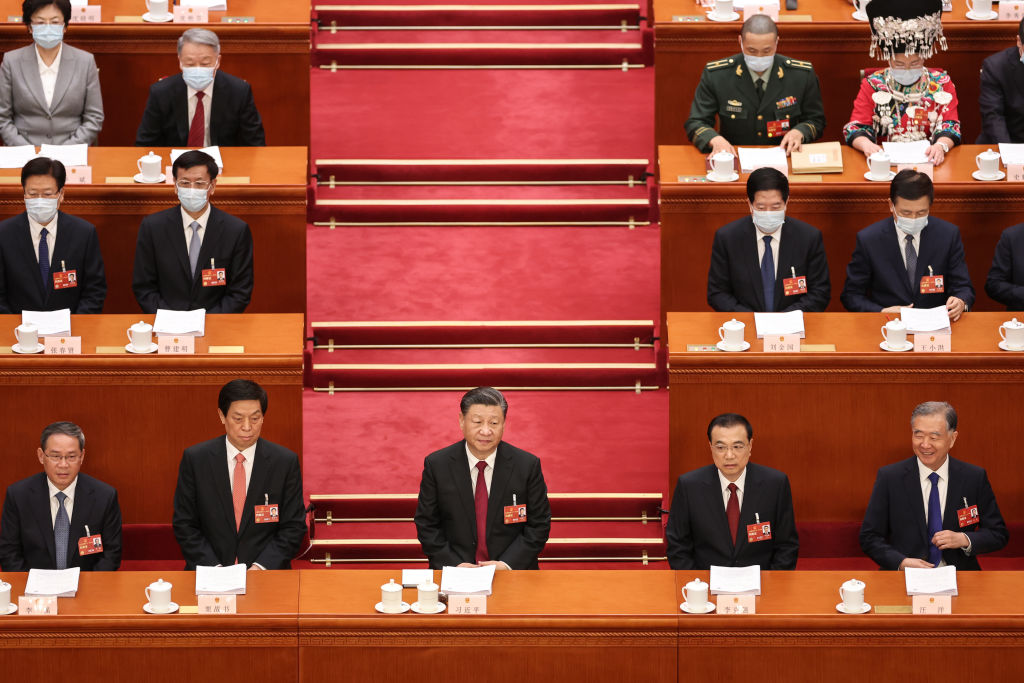
China faces an ageing population and a western world increasingly alive to the threat it poses; Beijing isn’t dangerous because it will outpace the US, it’s as China falls behind, Xi Jinping is more likely to lash out, writes John Hulsman.
For the past generation, China-watchers in the West have not covered themselves with glory in terms of political risk analysis. Rather, a series of depressing intellectual fads have taken the place of actual thinking.
First, up was the Barrington Moore hypothesis. Named after a notable Harvard sociologist, this view held that, in the words of the American philosopher, Ralph Waldo Emerson, every man is a conservative after dinner. The policy goal must be to integrate China into the global economy as much as possible, and then watch it flourish.
Such a booming country, so the thinking went, would never dare challenge the American-established order in the Indo-Pacific, as that system had made it rich. Even better, a nascent middle-class was bound to form, which would push China’s heretofore authoritarian rulers toward a more humane pluralism internally.
Obviously, this hypothesis—beloved by the global business community—has come to nothing in the real world with the rise of the increasingly dictatorial Xi Jinping, who has made a mockery of its assumptions.
A second far gloomier intellectual fad, a direct reaction to the obvious failure of the first, was propagated by the able Graham Allison. It held that China and the US were likely to go to war, following the historical examples set for them – since the days of Athens and Sparta – of an established superpower coming to blows with a rising one. Though Allison wrote this as a policy warning, rather quickly his mischaracterized views morphed into a sort of bleak historical determinism, which held that not only that war was inevitable in the Indo-Pacific, but that China was more than likely to win.
Finally, recently, there has been a new intellectual synthesis which actually matches the real political risk world we are living in: a China that is a peaking power and all the more dangerous for it.
Rather than effortlessly ascending to superpower dominance, instead Beijing finds itself beset by intractable problems which mean it will never quite catch up to the established ordering power – the United States.
As was the case with both the Kaiser’s Germany of 1914 and the Imperial Japan of the 1930s, this leaves the peaking power highly dangerous in the immediate term, precisely because its drive to dominance has been thwarted.
As if to prove our point, this week, Beijing has laid out plans for China’s military spending to grow at its fastest pace in the last four years as it pours money into defence. Expenditure will rise by 7.2 per cent, compared to 5.7 general spending, according to a draft budget. Simply the latest example of President Xi’s aggressive jostling for influence.
Historically, in the case of pre-1914 Germany, the Kaiser ruled a country that had not caught up to Imperial Britain, both in terms of naval power or geostrategic position in the world. At the same time, Tsarist Russia was economically gaining on it from a low base. Stuck somewhere short of dominance, the Kaiser chose to risk it all in 1914, precisely because political risk conditions for Germany were looking increasingly bleak.
In the 1930s, Japan was in a similar fix. A decade earlier, Tokyo had grown at over 6 percent. This economic boom subsequently evaporated, with growth slowing to an unacceptable 1.6 percent. Given the US oil embargo, the militarists running the Japanese government were confronted with a stark choice by 1941: either lunge for their American tormentors, taking over Asia to make good on their economic deficiencies, or meekly wind up their dreams of colonising China. For a warrior honor culture, the choice was as clear as it proved to be disastrous.
This peaking power malady is what confronts us in China today. China’s relative economic slowdown is not about to abate. Geostrategically, Beijing’s recent bullying has scared the horses, throwing India, Australia, the Philippines, South Korea, and Japan into America’s arms. Perhaps worst of all, due to its ruinous one child policy implemented over generations, Beijing stands to get old before it gets rich.
In each case—economically, geostrategically, and demographically—it is almost impossible to see how Xi turns things around in policy terms. No, China is heading headlong toward peaking power status.
This is what should worry us all. The Indo-Pacific region is the most important in our new era, where most of the world’s future economic growth and much of its future political risk are located. A peaking China must either escalate its claim against Taiwan in the next few years, or it will lose the ability to do so. While the West is fixated on Ukraine, policymakers should be looking to increasing deterrence in the Indo-Pacific, so yet another peaking power does not plunge us into the carnage of a new war and make a sideshow out of Russia’s aggression.