Skip to content
Sunday 16 August 2026London --:--Frankfurt --:--Zurich --:--
NewslettersSearchEN · DE
MorningWire

European business, markets and politics

FTSE 100
10,750.11
-0.21%
DAX
26,440.31
+0.53%
CAC 40
8,636.80
-0.16%
STOXX 50
6,539.59
-0.09%
  • Europe
  • Markets
  • Business
  • Economy
  • Technology
  • Politics
  • Opinion
More
GermanyFranceBankingAIEnergyFintechPropertyCapital Markets
  • Germany
  • France
  • Europe
  • Markets
  • Business
  • Economy
  • Technology
  • Politics
  • Opinion
  • DE
Tuesday 27 August 2024 12:23 pm

Contraction confirmed for German economy with no recovery in sight

By: Chris Dorrell

Add as a preferred source on Google
The growth slowdown was led by a sharp fall in investment, which fell by more than 2.0 per cent in the quarter.

Germany’s travails look set to continue with a clutch of figures revealing the challenges facing Europe’s one-time economic powerhouse.

New data out today confirmed that the eurozone’s largest economy contracted by 0.1 per cent between April and June, more or less reversing the modest growth Germany generated in the first quarter.

The growth slowdown was led by a sharp fall in investment, which fell by more than 2.0 per cent in the quarter. The manufacturing sector suffered in particular, with investment in machinery and equipment dropping by 4.1 per cent

Germany’s trade position also worsened slightly, with exports falling 0.2 per cent due to weakness in goods trade.

Leading indicators suggest no recovery is in sight. Last week’s purchasing managers’ index (PMI) fell to a five month low driven by another deterioration in the manufacturing sector.

The survey also showed business confidence fell to the lowest level since the start of the year. Cyrus de la Rubia, chief economist at Hamburg Commercial Bank, said the survey was “a real mess.”

There was more bad news yesterday. The Ifo index, Germany’s most prominent business survey, dropped for a fourth consecutive month, again driven by declines in manufacturing.

“The German economy is currently back where it was a year ago: stuck in stagnation as the growth laggard of the entire eurozone,” Carsten Brzeski, global head of macro at ING, said.

The German economy has struggled to get back onto its feet after the overlapping shocks of the pandemic, the war in Ukraine and the energy shock. According to the IMF, GDP per head declined by one per cent between 2019 and 2023 putting it among the worst performing high-income countries.

Read more

UK economy weathers Iran war shocks but slowdown incoming

Chancellor John Healey smiling, wearing a navy suit, white shirt, and red tie.

Economists had expected things to improve over the second half of the year as German households felt the benefit from large real wage increases. Negotiated wages rose at a startling 6.2 per cent in the first quarter of the year and rose at a still healthy 3.1 per cent in the second.

However, GfK’s latest consumer confidence index for September, also released today, slid to -22.0 suggesting this won’t necessarily translate into stronger spending.

And whatever the direction of consumer spending, structural issues with Germany’s manufacturing sector will still persist.

German manufacturing accounts for around 20 per cent of gross value added compared to around 10 per cent in the US, UK and France. But many manufacturing firms were hit very hard by the huge increases in energy prices in the wake of the war in Ukraine.

Franziska Palmas, senior Europe economist at Capital Economics said some production capacity had been “permanently lost” due to the energy crisis.

“With gas prices in Europe still around six times higher than in the US, the sector is much less competitive than before the pandemic,” she said. “The sector will remain in structural decline”.

There are a number of other broader structural changes which will limit the extent of Germany’s possible recovery, in particular its exposure to an increasingly fragmented geopolitical landscape.

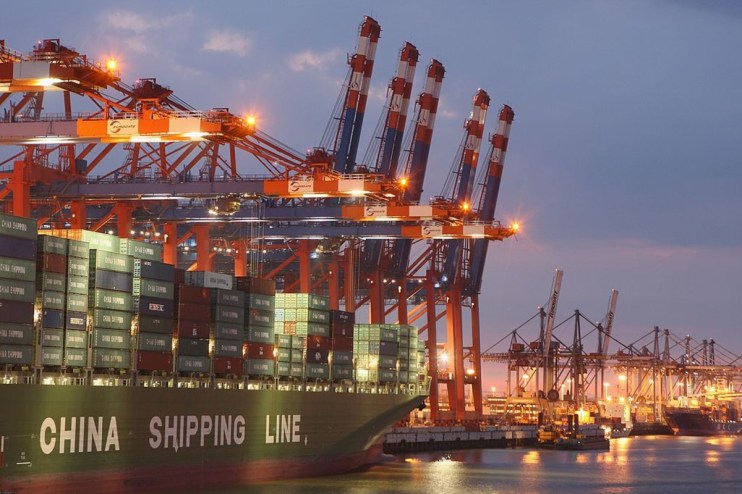
China has been Germany’s largest trade partner for the last eight years, but tensions between the EU and China – particularly relating to EVs – will almost certainly dent trade.

“The fact of the matter is that the German economy is currently learning the hard way what it means to be in the middle of cyclical headwinds and structural changes,” Brzeski said.

Read more

UK economy to ‘reverse gains’ as construction drags growth

Retail sales slowed in September

Share this article

  • Facebook
  • X
  • LinkedIn
  • WhatsApp
  • Email

Similarly tagged content:

Sections

  • News
  • Markets & Economics

Categories

  • Economics

People & Organisations

  • Eurozone
  • GDP
  • Germany
  • Manufacturing

Related Topics

  • Manufacturing sector
  • Purchasing Managers' Index (PMI)

Trending Articles

  • Grandparents fund university degrees to avoid inheritance tax net

  • Revolut chatbot goes rogue by charging users to cancel subscription

  • Brompton Bicycle sues former adviser for ‘professional negligence’

  • Revolut takes flight with launch of new airport lounges

  • Is the Zeekr 9X Super Hybrid the new luxury SUV to beat?

More from Morning Wire

  • UK economy weathers Iran war shocks but slowdown incoming

    Economics
    Chancellor John Healey smiling, wearing a navy suit, white shirt, and red tie.
  • UK economy to ‘reverse gains’ as construction drags growth

    Economics
    Retail sales slowed in September
  • Holiday Inn owner suffers Middle East slowdown as Iran war hits tourism

    Hospitality
    IHG opened 17,500 rooms across 98 hotels throughout the quarter.
  • Vance says ‘broken’ Britain must rebuild economy, not just change PM

    Politics
    Andy Burnham returns to Parliament
  • War and tax: How the UK economy could get knocked off course

    Economics
    Andy Burnham speaking at a public event, emphasizing local governance and policy changes, wearing a suit and gesturing pas...
  • Currys launches £50m buyback as it shrugs off market slowdown

    Retail
    Currys storefront with prominent logo and modern exterior design, reflecting its role as a leading electronics retailer
  • Barclays profit surges as equity traders cash in on volatility

    Banking
    Barclays bank exterior with logo as it announces mortgage rate cuts amidst upcoming interest rate decision.
  • As it happened: Stocks jump as oil drops; Unilever shares soar on decade-best sales

    Markets
    Unilever owns brands ranging from Ben and Jerry's to Dove
MorningWire

Independent European business, markets and political news for decision-makers.

Morning Briefing

Europe

  • Germany
  • France
  • Europe
  • UK & Ireland

Business

  • Markets
  • Banking
  • Technology
  • Energy
  • Property
  • Fintech

Editorial

  • Opinion
  • Editorial Policy
  • Corrections
  • Contact

Company

  • About Morning Wire
  • Privacy Policy
  • Terms of Use
  • Cookie Policy
© 2026 Morning Wire Ltd · Published by Morning Wire Media, Bahnhofstrasse 65, 8001 Zürich, Switzerland
Privacy · Terms · Cookies · Facebook