Skip to content
Sunday 6 September 2026London --:--Frankfurt --:--Zurich --:--
NewslettersSearchEN · DE · FR
MorningWire

European business, markets and politics

FTSE 100
10,831.09
0.00%
DAX
26,046.40
+0.17%
CAC 40
8,278.77
-0.09%
STOXX 50
6,392.93
+0.16%
  • Europe
  • Markets
  • Business
  • Economy
  • Regulation
  • Politics
  • Opinion
More
GermanyFranceEU InstitutionsCompetitionPublic AffairsBankingTechnologyEnergy
  • Germany
  • France
  • Europe
  • Markets
  • Business
  • Economy
  • Regulation
  • Politics
  • Opinion
  • DE
Monday 21 April 2014 10:56 pm

The cost of living crisis isn’t over – but Ed Miliband still won’t solve it

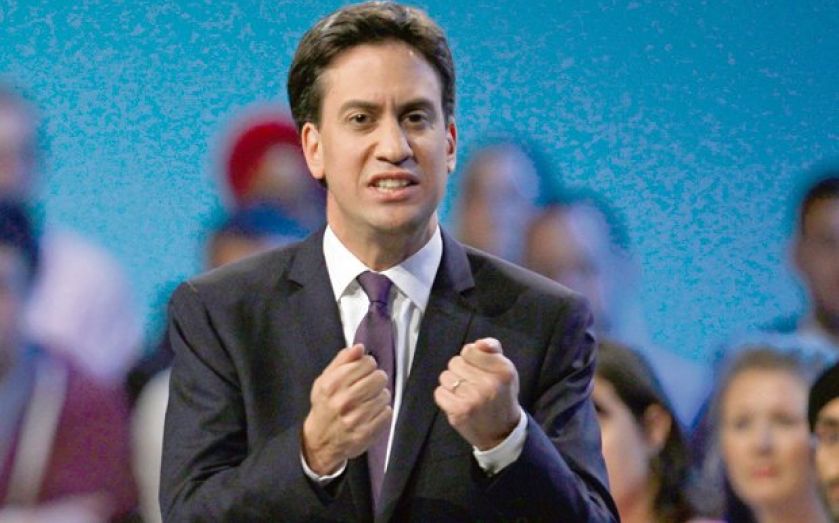
By: Express KCS

Add as a preferred source on Google

PAY GROWTH at 1.7 per cent, inflation at 1.6 per cent on the consumer price index (CPI), real wages increasing. One commentator stated this was the coalition’s “mission accomplished” moment. People are starting to get better off after years of falling real wages, so the argument goes. Surely this is proof that the government’s “long-term economic plan” is working, while Labour has bet its house on the resonance of a “cost of living crisis” that is now defunct.

I’m not so sure. Labour’s message is indeed confusing. The party spent three years telling us we needed more government spending. Even under its own assumptions, this would have led to higher prices and, given the existence of sticky nominal wages, lower real wages and squeezed living standards. Yet now the party’s argument is that inflation, representing increases in the cost of living, is bad. Given that Labour seemingly supports the Bank of England’s monetary policy stance, there’s nowhere to go but to suggest that government tries to control prices directly, as attempted disastrously in the 1970s.

Nevertheless, Labour surely has a point about living standards. There has been a huge real wage squeeze since 2009. Real average weekly earnings are 10 per cent below their peak – taking us back to the levels seen in 2004. We are unlikely to get back to pre-crisis levels in this decade. While average total pay has risen by just over 6 per cent in the last four years, CPI inflation has risen by 13 per cent.

Even now, the headline figures that suggest pay is growing faster than CPI don’t tell the full story. Other measures of inflation, which include housing, still see prices growing faster than pay. Bonuses have also been a big contributor to pay growth – strip them out and regular pay is rising at 1.4 per cent. Productivity growth – ultimately needed for wages to rise sustainably – is slow at 0.7 per cent over the past year.

Nevertheless, it looks as if wages will outstrip pay in the near future. How might this play out politically? If wages continue to grow faster than prices, Labour will likely shift its “cost of living crisis” narrative away from real wages to particular sectors that are of great expense to many: energy, housing and childcare. This is more fertile territory. Scary house price inflation – 17.7 per cent growth in London in the year to February 2014 – looks like a price bubble. UK energy prices have increased significantly in recent years, and the Resolution Foundation estimates that childcare can cost up to 40 per cent of net family income.

In all of these areas, however, prices are structurally higher because of misguided government interventions. Overwhelming academic evidence suggests the key reason for high house prices is our planning system (though cheap money and Help to Buy are playing a shorter-term role). Energy prices are inflated by the green agenda, and the regulation of childminders makes childcare more expensive. Yet Ed Miliband’s proposed solutions are more subsidies, government control of prices and state-directed house building.

If you think about the “cost of living crisis” by just examining real wages, the data suggest the crisis is coming to an end. But there is a “cost of living crisis” for many of the poorest in the UK due to the high price of housing, energy and childcare. Unfortunately, Miliband’s state-centric responses are not solutions to these problems.

Ryan Bourne is head of public policy at the Institute of Economic Affairs. @MrRBourne

Share this article

  • Facebook
  • X
  • LinkedIn
  • WhatsApp
  • Email

Similarly tagged content:

Sections

  • Opinion

Categories

  • Opinion

Trending Articles

  • Victoria Beckham owed £350,000 by Harvey Nichols

  • Iceland boss Richard Walker vows to set up shop on Falkland Islands

  • Don’t underestimate the free trade agreement Britain just joined

  • As it happened: FTSE 100 wavers as weak housebuilding drives faster construction downturn

  • My stressful night at London’s ultra luxe £1k a night hotel where I found glass in my food

More from Morning Wire

  • How patient can the Bank of England be?

    AD
    Historic Royal Exchange building in London with modern skyscrapers behind, clear blue sky.
  • ‘We’d love an apprentice – but the government has made it too expensive’

    Economics
    Technician in blue shirt operating a large metal lathe machine, industrial manufacturing process
  • Bingo giant takes hit from rising employment costs 

    Leisure
    Buzz Bingo hall with players, a large screen displaying WINNER and FULL HOUSE for ticket 506710
  • Aldi boss wades into supermarket ‘price-gouging’ row

    Retail
    Giles Hurley, Aldi UK CEO, stands in a supermarket produce aisle with fresh fruits and vegetables.
  • Burnham bounce: PM gets popularity boost – at Farage’s expense

    Politics
    Andy Burnham laughing outdoors in a candid moment, May 2026, capturing a lighthearted political event atmosphere.
  • Inflation leaps to 2.9 per cent in blow to Burnham 

    Economics
    Burnham cityscape showcasing modern architecture, bustling streets, and vibrant community life in a thriving urban setting
  • Burnham is wrong. Devolution will only grow Whitehall

    Opinion
    Whitehall SW1 street sign in the City of Westminster, London, mounted on a white stone wall with decorative trim.
  • Inflation expectations softer than predicted ahead of interest rate decision

    Economics
    The Bank of England is expected to hold interest rates at four per cent due to stubbornly high inflation.
MorningWire

Independent European business, markets and political news for decision-makers.

Morning Briefing

Europe

  • Germany
  • France
  • EU Institutions
  • Europe

Business

  • Markets
  • Business
  • Economy
  • Regulation
  • Competition
  • Public Affairs

Editorial

  • Opinion
  • Editorial Policy
  • Corrections
  • Contact

Company

  • About Morning Wire
  • Privacy Policy
  • Terms of Use
  • Cookie Policy
© 2026 Morning Wire Ltd · Published by Morning Wire Media, Bahnhofstrasse 65, 8001 Zürich, Switzerland
Privacy · Terms · Cookies · Facebook