What is the CPTPP trade bloc, why has Britain joined it, and is it really about ‘post Brexit freedoms’? The jury’s out
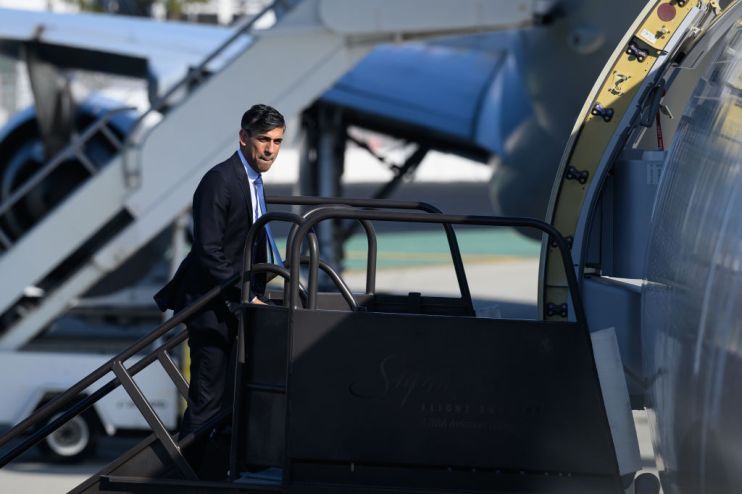
Britain has formally joined a major Indo-Pacific trade bloc as prime minister Rishi Sunak said it allowed the UK to take advantage of “post-Brexit freedoms”.
But does it really allow the UK to become a global player once again? The jury is out.
The PM hailed the UK accession to the Comprehensive and Progressive Agreement for Trans-Pacific Partnership (CPTPP), saying it put the UK in a “prime position” to be a global player.
It was formally confirmed in a telephone call between Trade Secretary Kemi Badenoch and counterparts from the group.
What is CPTPP, anyway?
It represents Britain’s biggest trade deal since leaving the EU, cutting tariffs for UK exporters to a group of nations which – with Britain’s accession – will have a total gross domestic product (GDP) of £11 trillion, accounting for 15 per cent of global GDP, according to UK officials.
The Prime Minister said it demonstrated how the UK is able to take advantage of its “post-Brexit freedoms” to strike agreements that were impossible when it was in the EU which will drive economic growth across the country.
Britain is the first new member, and first European nation, to join the bloc – comprising Australia, Brunei, Canada, Chile, Japan, Malaysia, Mexico, New Zealand, Peru, Singapore and Vietnam – since its formation in 2018.
It follows nearly two years of negotiations, culminating in intensive talks in Vietnam earlier this month, when representatives of all 11 existing members agreed to the UK joining.
Will it really benefit Britain?
Critics have said the impact will be limited, with official estimates suggesting it will add just £1.8 billion a year to the economy after 10 years, representing less than one per cent of UK GDP.
While Britain already has trade agreements with most of the CPTPP members, apart from Malaysia, officials said it would deepen existing arrangements, with 99 per cent of UK goods exported to the bloc now eligible for zero tariffs.
Key UK exports to the region, including cheese, cars, chocolate, machinery, gin and whisky, will be among those to benefit, while officials said the services industry would also enjoy reduced red tape and increased market access.
At the same time, they said vital UK sectors, including agriculture and the NHS, will be protected, while existing animal welfare and food safety standards will be maintained.
It represents a continuation of the post-Brexit policy “tilt” towards the Indo-Pacific region first initiated by Boris Johnson.
Mr Sunak said it would put the UK at the centre of a “dynamic” group of Pacific economies, giving British businesses “unparalleled access to markets from Europe to the south Pacific”.
“We are at our heart an open and free-trading nation, and this deal demonstrates the real economic benefits of our post-Brexit freedoms,” he said.
“As part of CPTPP, the UK is now in a prime position in the global economy to seize opportunities for new jobs, growth and innovation.”
‘Momentous’ or ‘not really shifting the dial’?
The Confederation of British Industry (CBI) welcomed the agreement as a “milestone” for British industry, reinforcing the UK’s commitment “to building partnerships in an increasingly fragmented world”.
Interim director-general Matthew Fell said: “CPTPP countries and business need to work together to future proof the rules-based trading system and stimulate growth with a focus on digital, services and resilient supply chains.”
The move was also backed by Ian Stuart, Chief Executive of HSBC UK welcomed the agreement saying “this landmark new trade deal will help the UK enhance its links with a big trading bloc worth £11 trillion and strengthen our ties with some of the fastest growing markets in the world.
“HSBC has a presence across these markets and we stand ready to help British businesses open up a world of opportunity on the back of this new agreement.”
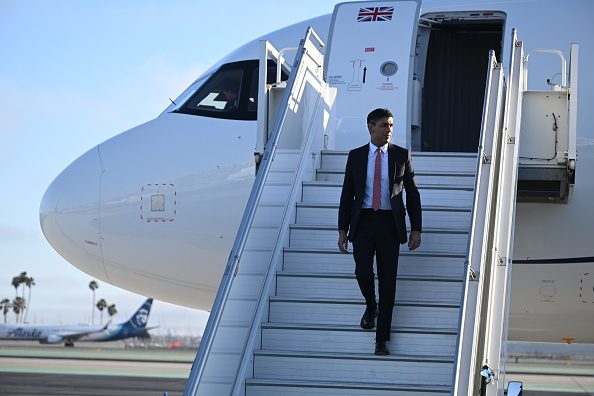
Meanwhile Emma Rowland, a policy advisor for trade at the Institute of Directors, called the Indo-Pacific “an area of dynamic emerging economies where exponential growth will occur over the next decade, an environment that will be very attractive to UK businesses.”
“Accession to CPTPP is a win for the UK. This deal will offer UK firms new opportunities to compete in markets with growing consumer demand, high standards on free and fair trade, and strong commitments to services trade. Anything that makes it easier for British businesses to export is good news.
“However, for many businesses, Free Trade Agreements generally do not shift the dial.”
“IoD members have told us that, while they tend to view trade deals as good optics for the UK, they do not have too much sway over firms’ exporting strategies. Customer demand for a firm’s products in the country in question is much more important than whether or not there is a trade deal in place.”
“Canada, Japan and Singapore are already important export markets for UK businesses, and three of the biggest economies within the bloc. Similarly, with bilateral deals already in place, or in the process of being signed, with 9 of the 11 members, the economic gains to the UK will likely be quite low.
“So, while flying the flag for ‘Global Britain’ is good for our post-Brexit political standing, the long-term strategic benefits of the deal will really depend on the extent to which emerging markets and future members will contribute to rising demand for UK products and services, and thus the value of the bloc to our economy.”
..for many businesses, Free Trade Agreements generally do not shift the dial.
Emma Rowland, a policy advisor for trade at the Institute of Directors,
Mark Littlewood, director general at free market think tank the Institute of Economic Affairs, called the move a “momentous economic and strategic moment.”
“This partnership serves as an important bulwark of free exchange at a time when protectionism and trade wars are on the rise across the globe.
“Accession opens up markets for British companies by cutting tariffs for exporters like the Scottish whisky industry, slashing red tape for trade in services and enabling greater data flows for digital trade. It also means cheaper imports for British consumers, including fruit from Peru and confectionary from Mexico.
“The benefits to Britain will likely be significantly greater than some official estimates driven by static economic models.”
Labour cautiously welcome the move
Labour said that while the agreement represented “encouraging” progress, it needed to see the details.

Shadow trade secretary Nick Thomas-Symonds said: “The Conservative Government’s track record in striking good trade deals is desperately poor.
“Other countries joining CPTPP arrangements have secured important safeguards and put in place support for their producers: it is vital that ministers set out if they plan to do the same.”
Liberal Democrat trade spokeswoman Sarah Green said: “This Conservative Government is responsible for some shocking trade deals that fail to add economic benefit to the UK.
“The Conservatives have trashed the British economy with GDP stagnant and this announcement will not even repair a fraction of their damage.”
Pat McFadden, the shadow chief secretary to the Treasury, said Labour gives the UK accession to the CPTPP a “cautious” welcome.
He also said that if Labour wins the next general election, it will keep the UK in the Indo-Pacific trade bloc.
Mr McFadden told Sky News: “We give this a welcome but also a cautious welcome, because what we’ve experienced over the past few years is that when the Government has signed trade deals, they often – once you to look at the detail – they’re not quite as advantageous as the Government has first claimed.”
Press Association – Gavin Cordon