Skip to content
Sunday 13 September 2026London --:--Frankfurt --:--Zurich --:--
NewslettersSearchEN · DE · FR
MorningWire

European business, markets and politics

FTSE 100
10,650.44
+0.39%
DAX
25,568.56
+0.82%
CAC 40
8,179.77
+0.78%
STOXX 50
6,325.13
+0.90%
  • Europe
  • Markets
  • Business
  • Economy
  • Regulation
  • Politics
  • Opinion
More
GermanyFranceEU InstitutionsCompetitionPublic AffairsBankingTechnologyEnergy
  • Germany
  • France
  • Europe
  • Markets
  • Business
  • Economy
  • Regulation
  • Politics
  • Opinion
  • DE
Tuesday 10 March 2020 4:08 am  |  Updated:  Monday 09 March 2020 6:12 pm

DEBATE: Should the chancellor bend the fiscal rules to increase spending in his first Budget?
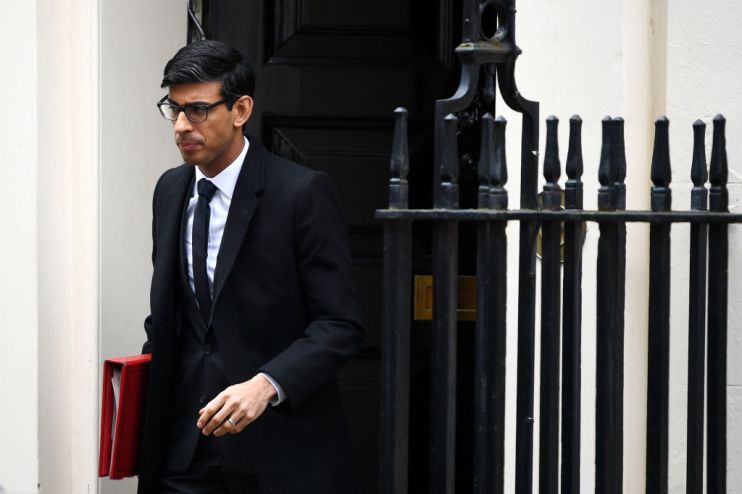
By: Will Tanner and Julian Jessop

Add as a preferred source on Google
Boris Johnson Holds Emergency Cobra Meeting Over COVID-19 Response
The costs of servicing the UK’s debt have halved, to two per cent of GDP

Should the chancellor bend the fiscal rules to increase spending in his first Budget?

Will Tanner, director of Onward, says YES.

It is the prerogative of a twenty-first century chancellor to set the rules of your own tenure. Gordon Brown, George Osborne, Philip Hammond and Sajid Javid (who never delivered a Budget) all established the tramlines by which markets could judge their management of the public finances. Rishi Sunak will be unusual if he does not do the same this week.

The case for loosening is twofold. First, coronavirus may necessitate some kind of economic stimulus to mitigate a downturn or prop up the NHS.

Second, while the UK’s debt stock is double what it was in the mid-1980s, it has stabilised, and the costs of servicing that debt have halved, to two per cent of GDP.

The chancellor could use that flexibility to fund not just hard infrastructure, as currently permitted, but human capital, digital, and other growth-enhancing spending.

In either case, there is no reason to believe markets would not react with approval. Far better to establish rules you plan to stick to than adhere blindly to rules you are bound to break.

Julian Jessop, economics fellow at the Institute of Economic Affairs, says NO.

It would, of course, be right to target some additional spending and tax breaks on dealing with coronavirus and its economic impact. But a proportionate response to a temporary shock should not be used as an excuse to abandon fiscal discipline altogether.

Lest we forget, the Conservative manifesto promised to borrow only to invest, and to limit public investment to three per cent of GDP. There is already plenty of wriggle room here to respond to coronavirus without bending these rules: Sajid Javid’s deadline for balancing the current budget was 2023, not 2020, and the three per cent is an “average” that could apply over a number of years.

Loosening the rules any further could backfire. The reduction in annual deficits has been too slow to prevent the stock of debt from rising to uncomfortably high levels, even when borrowing costs are exceptionally low.

A pound spent by the government is also still a pound that cannot be spent by someone else — probably more wisely.

Main image credit: Getty

Read more

Government debt repayment ‘could rise to half’ of total taxes

UK public finances and sovereign debt crisis

Share this article

  • Facebook
  • X
  • LinkedIn
  • WhatsApp
  • Email

Similarly tagged content:

Sections

  • Markets & Economics
  • News
  • Opinion

Categories

  • Economics
  • Opinion
  • Politics

Trending Articles

  • Wetherspoon boss: ‘Not up to Burnham’ to choose who is on the high street 

  • Badger Beer maker Hall & Woodhouse doubles profit ahead of tie-up with James May

  • Four interest rate hikes loom despite surprise economic growth

  • Primark sales slip as owner dresses up retailer for demerger

  • As it happened: FTSE 100 rallies as economy beats forecasts; oil falls back

More from Morning Wire

  • Government debt repayment ‘could rise to half’ of total taxes

    Economics
    UK public finances and sovereign debt crisis
  • Healey oversees unexpected rise in borrowing in first month as Chancellor 

    Economics
    Man in suit and red tie speaking at a podium to an audience in a modern building.
  • UK poised to pay highest borrowing costs since 1998

    Economics
    Treasury Department building with government bonds signage, representing financial management and bond issuance responsibi...
  • Investors ‘may be less than impressed’ by John Healey’s £9bn borrowing plans 

    Economics
    Man in suit and red tie speaking at a podium to an audience in a modern building.
  • Burnham refuses to rule out more borrowing and blames Tories for debt crisis

    Politics
    Andy Burnham, wearing a dark suit and glasses, speaks outdoors with trees in the background.
  • Services sector cuts jobs for nearly two years under cost pressures

    Economics
    Bald man in suit and red tie gesturing with open hands, small scab visible on his forehead
  • Treasury ‘tells Healey’ to consider tax on banks and oil

    Politics
    Chancellor John Healey smiling, wearing a navy suit, white shirt, and red tie.
  • Burnham predicted to raise taxes for ‘fundamental’ cost of living support

    Economics
    Andy Burnham, Mayor of Greater Manchester, in a dark jacket and glasses, standing before a large pile of waste.
MorningWire

Independent European business, markets and political news for decision-makers.

Morning Briefing

Europe

  • Germany
  • France
  • EU Institutions
  • Europe

Business

  • Markets
  • Business
  • Economy
  • Regulation
  • Competition
  • Public Affairs

Editorial

  • Opinion
  • Editorial Policy
  • Corrections
  • Contact

Company

  • About Morning Wire
  • Privacy Policy
  • Terms of Use
  • Cookie Policy
© 2026 Morning Wire Ltd · Published by Morning Wire Media, Bahnhofstrasse 65, 8001 Zürich, Switzerland
Privacy · Terms · Cookies · Facebook