Skip to content
Monday 24 August 2026London --:--Frankfurt --:--Zurich --:--
NewslettersSearchEN · DE · FR
MorningWire

European business, markets and politics

FTSE 100
10,816.56
+0.64%
DAX
26,136.56
0.00%
CAC 40
8,484.43
0.00%
STOXX 50
6,462.22
0.00%
  • Europe
  • Markets
  • Business
  • Economy
  • Regulation
  • Politics
  • Opinion
More
GermanyFranceEU InstitutionsCompetitionPublic AffairsBankingTechnologyEnergy
  • Germany
  • France
  • Europe
  • Markets
  • Business
  • Economy
  • Regulation
  • Politics
  • Opinion
  • DE
Tuesday 25 April 2023 1:13 pm

Did pumping cash into the economy fuel inflation surge? Bank top official says claim ‘not well supported by evidence’
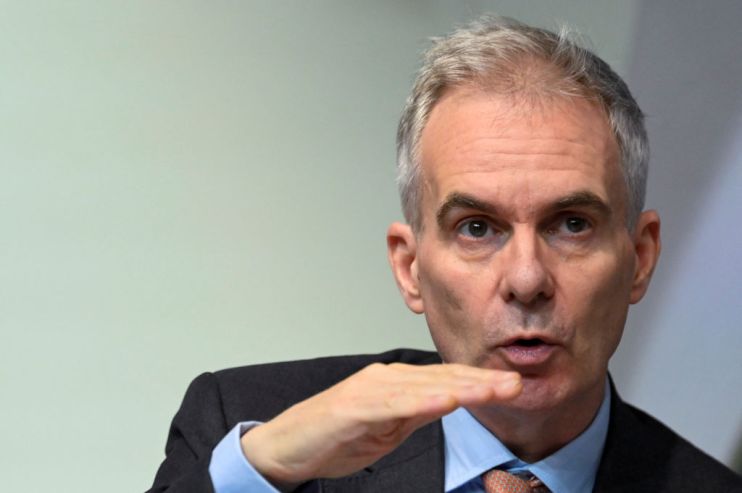
Bank Of England Monetary Policy Report Press Conference
Ben Broadbent, a deputy governor at the Bank, hit back at critics in a speech at Britain’s oldest economic think tank, the National Institute of Economic and Social Research (NIESR), who argue that pumping into the economy via bond buying has pushed inflation higher (Photo by Toby Melville - WPA Pool/Getty Images)

Claims the Bank of England caused the worst inflation surge in the UK for more than 40 years by printing money are “not well supported by the evidence,” one of its top officials said today.

Ben Broadbent, a deputy governor at the Bank, hit back at critics in a speech at Britain’s oldest economic think tank, the National Institute of Economic and Social Research (NIESR), who argue that pumping into the economy via bond buying has pushed inflation higher.

He pointed out that “broad money grew more than twice as rapidly” in the years leading up to the global financial crisis in 2008 “than in the decade or so after”.

“Average inflation, in both periods, was close to two per cent,” he added.

Critics of the central bank – who tend to come from the monetarist strain of economics – say it left its bond buying programme switched on for too long and that it was too generous.

The Bank held nearly £900bn of government and corporate debt at the programme’s – known as quantitative easing – peak.

They argue that injecting cheap cash into banks enabled them to lend to businesses and households at low interest rates, stimulating spending and pumping up prices.

Broadbent criticised that argument for ignoring consumers’ demand to hold money at their bank – essentially saving cash instead of spending it – was quite high, meaning the additional money didn’t entirely reach the real economy.

Read more

How patient can the Bank of England be?

Historic Royal Exchange building in London with modern skyscrapers behind, clear blue sky.

Instead, he thinks “the more plausible cause [of keeping demand high] is the combined impact of severe restrictions on spending and, thanks in part to fiscal support (in the shape of the furlough scheme), continuing growth in household income”. 

“At least in the first instance the resulting jump in saving had nowhere to go but into household deposits,” he added.
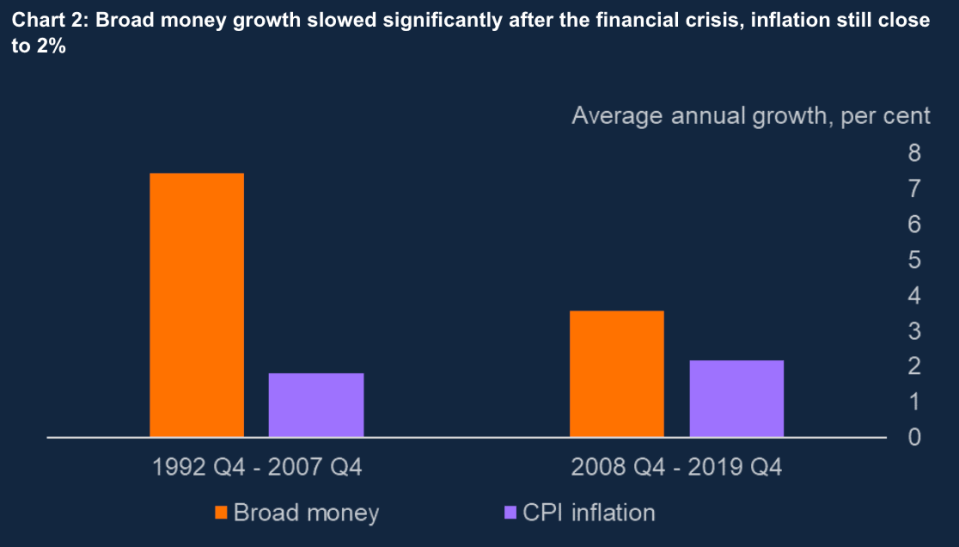
Source: A chart provided by Broadbent at his NIESR speech

Bank officials also constructed a model in which they predicted where interest rates would have had to have risen to to keep inflation at the central bank’s two per cent target amid Russia’s invasion of Ukraine jacking up international energy prices and supply chains faltering after pandemic restrictions were scrapped.

“The simulation suggests that interest rates would have to have risen well into double digits,” Broadbent said, adding at the in-person NIESR speech he thought this was somewhere around 20 per cent.

Such a move would have made millions of Brits unemployed and taken the jobless rate into the double digits as well.

The deputy governor provided little insight into whether he is leaning toward backing a twelfth interest rate rise in a row at the monetary policy committee’s next meeting on 11 May.

Numbers from the Office for National Statistics last week showed inflation fell slower than expected in March to 10.1 per cent, prompting markets to price in a five per cent rate peak.

Read more

Inflation leaps to 2.9 per cent in blow to Burnham 

Burnham cityscape showcasing modern architecture, bustling streets, and vibrant community life in a thriving urban setting

Share this article

  • Facebook
  • X
  • LinkedIn
  • WhatsApp
  • Email

Similarly tagged content:

Sections

  • Markets & Economics
  • News

Categories

  • Economics

Related Topics

  • Bank of England
  • UK inflation
  • UK interest rates

Trending Articles

  • Can debt-ridden Morrisons become a Big Four supermarket again?

  • Ratcliffe’s Ineos saves Runcorn plant

  • Amazon says it buys books in bulk to ‘improve products’

  • House prices in wealthy London boroughs fall by up to £300,000

  • Mike Ashley’s Frasers offers to pay personal shoppers in Harvey Nichols takeover

More from Morning Wire

  • How patient can the Bank of England be?

    AD
    Historic Royal Exchange building in London with modern skyscrapers behind, clear blue sky.
  • Inflation leaps to 2.9 per cent in blow to Burnham 

    Economics
    Burnham cityscape showcasing modern architecture, bustling streets, and vibrant community life in a thriving urban setting
  • Soaring energy bills set to fuel inflation spike

    Economics
    Smartphone displaying an energy bill notification with British coins and a banknote nearby.
  • Manufacturers overcome gloomy economy as output surge continues

    Industrials
    Manufacturing sector faces mounting tribunal pressures amid economic uncertainty
  • Supermarkets ‘actively shielding’ shoppers as food inflation falls again

    Retail
    Shopper in a supermarket produce aisle browsing various packaged vegetables and fruits.
  • As it happened: Miners fuel FTSE 100 recovery; oil jumps as Trump claims Strait of Hormuz

    FTSE 100 Live
    FTSE 100 stocks rise as Brent crude oil prices jump 1.8% to $104.98 amid Strait of Hormuz tensions and Trumps Iran stance
  • As it happened: Stocks jittery as oil nears $90; Trump ‘semi-negotiating’ with Iran

    FTSE 100 Live
    Large oil tanker navigating a strait under a cloudy sky, impacting oil prices and global trade.
  • Ten bold ideas to fire up the British economy

    Economics
    Morning Wire
MorningWire

Independent European business, markets and political news for decision-makers.

Morning Briefing

Europe

  • Germany
  • France
  • EU Institutions
  • Europe

Business

  • Markets
  • Business
  • Economy
  • Regulation
  • Competition
  • Public Affairs

Editorial

  • Opinion
  • Editorial Policy
  • Corrections
  • Contact

Company

  • About Morning Wire
  • Privacy Policy
  • Terms of Use
  • Cookie Policy
© 2026 Morning Wire Ltd · Published by Morning Wire Media, Bahnhofstrasse 65, 8001 Zürich, Switzerland
Privacy · Terms · Cookies · Facebook