Skip to content
Tuesday 1 September 2026London --:--Frankfurt --:--Zurich --:--
NewslettersSearchEN · DE · FR
MorningWire

European business, markets and politics

FTSE 100
10,824.26
+0.29%
DAX
26,258.11
0.00%
CAC 40
8,334.50
0.00%
STOXX 50
6,420.16
0.00%
  • Europe
  • Markets
  • Business
  • Economy
  • Regulation
  • Politics
  • Opinion
More
GermanyFranceEU InstitutionsCompetitionPublic AffairsBankingTechnologyEnergy
  • Germany
  • France
  • Europe
  • Markets
  • Business
  • Economy
  • Regulation
  • Politics
  • Opinion
  • DE
Friday 17 January 2020 4:17 am  |  Updated:  Thursday 16 January 2020 6:21 pm

Do central banks have enough firepower to fight the next recession?

By: Jumana Saleheen

Add as a preferred source on Google
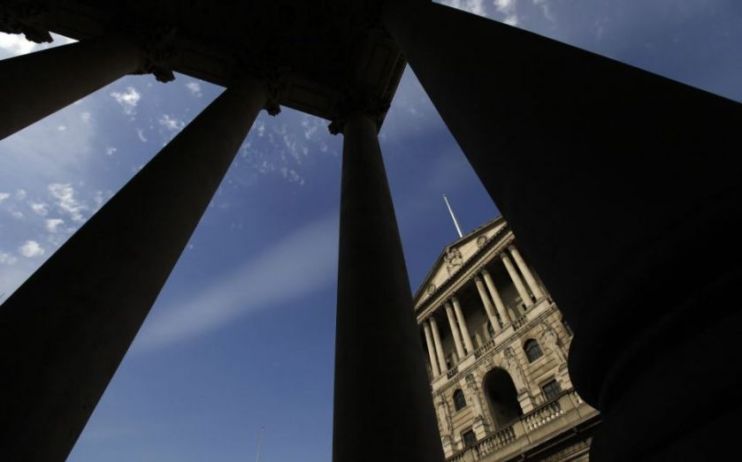
Prompted by the devastation of the global financial crisis, major central banks dropped interest rates down to near zero

By the end of 2019, the UK and US had achieved a decade recession free.

That’s an impressive feat, but fears of a recession remain. In fact, those fears peaked last year due to worrying signals from financial markets.

When the next recession does raise its head, it will be up to our central banks to try to fight it. But do they have enough firepower? This is not a new question, of course, but a recurring one, and it has led to a flurry of introspection by central bankers over the past few weeks.

By firepower, I mean the levers (such as interest rates) that the central bank can pull — and pull hard enough — to coax consumers and companies to spend more and raise demand. Prompted by the devastation of the global financial crisis, major central banks dropped interest rates down to near zero. But that alone was not enough to kickstart the economy, leading to experimentation with new tools. 

Two have proven popular: quantitative easing (QE — purchases of government and corporate bonds to lower long-term interest rates), and forward guidance (FG — a promise by the central bank on the future path of monetary policy). 

What do the central bankers themselves think? In a high-profile speech on 4 January, former Federal Reserve chairman Ben Bernanke was optimistic. He claimed that the Fed has sufficient ammunition to fight the next recession.

The Bank of England’s outgoing governor Mark Carney struck an equally optimistic tone on 9 January. However, the former president of the European Central Bank, Mario Draghi, was less positive, saying that monetary policy was losing its potency and openly calling for help from fiscal policy. 

Read more

Economists urge Bank of England to halt bond sales as borrowing costs climb

Bank of England headquarters with financial charts overlay, illustrating private credit stress test analysis

The central banks do still possess some firepower, although it may not be enough. Bernanke estimates that the Fed’s QE and FG firepower is equivalent to two to three percentage points in interest rate cuts. On top of this, the Fed Funds rate could be cut by 1.5 to 1.75 percentage points. Combined, that gives the Fed 3.5 to 4.75 percentage points of leeway. 

Unfortunately, that falls short of the five percentage points of rate cuts usually seen during a recession. Meanwhile, the Resolution Foundation estimates that the Bank of England has only 2.5 percentage points of total firepower — half of what is normally required.

There is also plenty of criticism of QE, FG, and other unconventional tools. Former US treasury secretary Larry Summers has said: “I just don’t believe QE and that stuff is worth anything like another three percentage points”. I agree. 

These new policy tools only work if central bank plans are credible, and consumers, investors, and companies respond in the way that central banks expect. The problem is that plans change, and behaviour is unpredictable. Clearly, our current central banks face a number of puzzles. 

A moment of truth is coming. The current central bank framework, which focuses on achieving inflation targets, has been in place since the early 1990s. It has served many countries well, but the cracks are showing. 

Whether this framework survives the next decade or not remains to be seen. I have a hunch that it will not.

Main image credit: Getty

Read more

Bank of England warns Burnham of UK economy’s ‘big issue’

Bank of England Governor Andrew Bailey said the future of interest rates was "more uncertain".

Share this article

  • Facebook
  • X
  • LinkedIn
  • WhatsApp
  • Email

Similarly tagged content:

Sections

  • News
  • Opinion

Categories

  • Banking
  • Business
  • Opinion

Trending Articles

  • Jaguar reveals the Type 01’s screen-free interior

  • Treasury ‘tells Healey’ to consider tax on banks and oil

  • Pensioners to hand over bank statements in government benefits crackdown

  • City firms mandate phone and face-to-face comms bootcamps for Gen Z lawyers

  • Jamie Carragher: HMRC petitions for Sky Sports star to be declared bankrupt

More from Morning Wire

  • Economists urge Bank of England to halt bond sales as borrowing costs climb

    Economics
    Bank of England headquarters with financial charts overlay, illustrating private credit stress test analysis
  • Bank of England warns Burnham of UK economy’s ‘big issue’

    Economics
    Bank of England Governor Andrew Bailey said the future of interest rates was "more uncertain".
  • Bank of England may set the stage for interest rate hikes this year

    Economics
    Bank of England recession warning
  • US bond market jitters spark UK economy recession warning

    Economics
    Donald Trump delivering a speech at a podium during a formal event, emphasizing key points to an attentive audience.
  • Fed chair Kevin Warsh faces Jackson Hole D-Day

    Economics
    Kevin Warsh, former Fed Governor, in a suit and blue tie, attending Jackson Hole meeting.
  • Will Britain follow Japan’s great growth gamble?

    Opinion
    Japan Prime Minister Sanae Takaichi speaking at a press conference, highlighting her leadership and political agenda
  • Hold interest rates but ‘sound hawkish’, Morning Wire Shadow MPC tells Bank of England

    Economics
    Andrew Bailey, Governor of the Bank of England, with the Bank of England building and Union Jack flag in the background
  • Bank of England to relax capital rules despite warning of economic threats

    Banking
    Bank of England building on Threadneedle Street, London, showcasing its historic architecture and financial significance
MorningWire

Independent European business, markets and political news for decision-makers.

Morning Briefing

Europe

  • Germany
  • France
  • EU Institutions
  • Europe

Business

  • Markets
  • Business
  • Economy
  • Regulation
  • Competition
  • Public Affairs

Editorial

  • Opinion
  • Editorial Policy
  • Corrections
  • Contact

Company

  • About Morning Wire
  • Privacy Policy
  • Terms of Use
  • Cookie Policy
© 2026 Morning Wire Ltd · Published by Morning Wire Media, Bahnhofstrasse 65, 8001 Zürich, Switzerland
Privacy · Terms · Cookies · Facebook