How do interest rates affect stockmarkets?

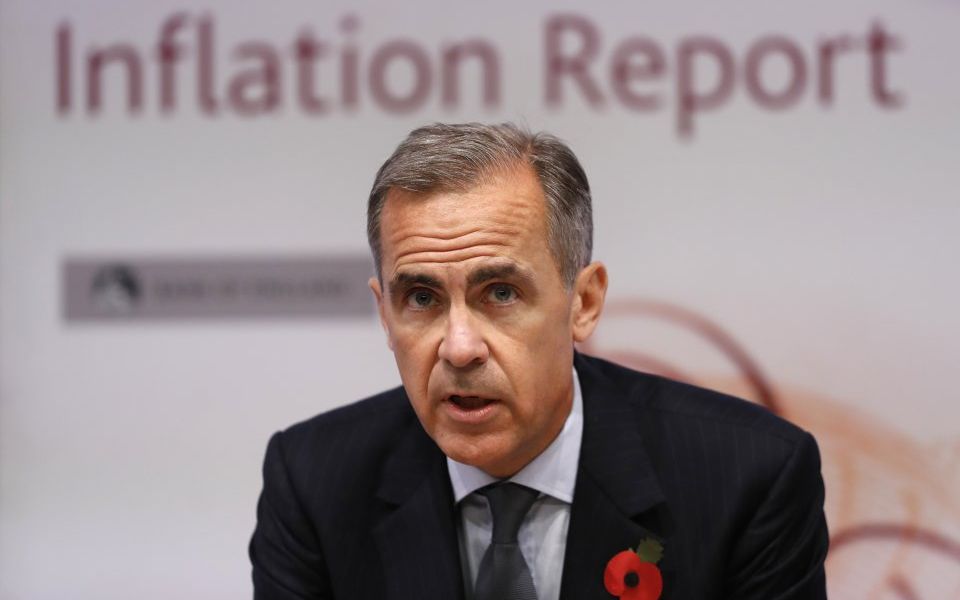
The UK economy grew 0.4% in the third quarter of 2017, increasing the likelihood of an interest rate rise in November – the first in a decade. With stocks near record highs we look how interest rates affect the stock market.
Ask yourself this – how much would someone have to give you in a year’s time for you to hand over £100 today?
Assuming it is guaranteed they will pay you back, is it £105? £107? £110?
The amount that would make you ambivalent about whether you had the cash today or received it in the future is known as the ‘time value’ of money.
The percentage difference between the two numbers, meanwhile, is known as the ‘discount rate’.
The discount rate vs interest rate
There is an extremely strong link between the discount rate and the interest rate and this is because, if you had £100 today, you could put it in a bank account and earn interest over the coming year.
The more you can earn in interest, therefore, the greater the amount you need to receive in the future to compensate you for not receiving that interest.
If, for example, interest rates were currently 10%, you would not accept less than £110 in a year’s time as, obviously enough, you would otherwise be better off taking your £100 as it is now and stashing it away in a bank account.
When interest rates are 0%, however – as they effectively are today – the future amount you would accept for your £100 now is likely to be lower. In this scenario, perhaps £102 would suffice.
We can also turn this question around
If we know we want to receive £110 in three years’ time, say, how much would we need to set aside now?
The answer to that question would again depend on where interest rates stood. If interest rates were high, you might only need to set aside £100. If they were low, however, the amount might be closer to £108.
Why interest rates move stock prices
This, in effect, is the sum the stockmarket is trying to solve – and why interest rates move share prices.
While the value of a theoretical company in, say, 2030, may not move in itself, a reduction in discount rates triggered by a reduction in interest rates will have an effect.
If, then, that company was seen as worth £110 in 2030, with interest rates high, the share price today may be £100.
With interest rates low, the company may be worth £108.
Impact around the world
The reduction in interest rates that has been seen around the world since the financial crisis has had precisely this impact on stock markets globally.
It should, in other words, come as no surprise that share prices have seen a succession of all-time highs in different countries – at a time of historically low interest rates, such moves are totally understandable and justified.
That said, investors need to remember the mantra intoned by central bankers around the world as they responded to the credit crunch by cutting rates to these levels was ‘lower for longer’ – not ‘lower for ever’.
In the UK, it would appear we are now approaching the limits of ‘longer’ as the minutes of the Bank of England’s interest rate setting committee suggest rates are going to start increasing in the near future.
What we think about rate rises
While the impact that will have on markets is impossible for anyone to predict with any certainty, we believe we can say two things with some confidence.
- A market that has become used to low rates is likely to have some adjustments to make.
- In the process of making those adjustments, the market is likely to overreact in some areas, creating opportunities for stockpicking investors.
We sincerely hope the adjustments to come do not prove too painful.
That said, our value-oriented investment process is specifically designed to take advantage of emotion and overreaction within the wider market and more than a century of history suggests that we and our investors should benefit from the sort of environment likely to prevail as and when interest rates start to rise. Past performance though is, as ever, not a guide to future performance.
Kevin Murphy is an author on The Value Perspective, a blog about value investing. It is a long-term investing approach which focuses on exploiting swings in stock market sentiment, targeting companies which are valued at less than their true worth and waiting for a correction.
Important Information: The views and opinions contained herein are those of Kevin Murphy, may not necessarily represent views expressed or reflected in other Schroders communications, strategies or funds. The sectors and securities shown above are for illustrative purposes only and are not to be considered a recommendation to buy or sell. This material is intended to be for information purposes only and is not intended as promotional material in any respect. The material is not intended as an offer or solicitation for the purchase or sale of any financial instrument. The material is not intended to provide and should not be relied on for accounting, legal or tax advice, or investment recommendations. Reliance should not be placed on the views and information in this document when taking individual investment and/or strategic decisions. Past performance is not a guide to future performance and may not be repeated. The value of investments and the income from them may go down as well as up and investors may not get back the amounts originally invested. All investments involve risks including the risk of possible loss of principal. Information herein is believed to be reliable but Schroders does not warrant its completeness or accuracy. Reliance should not be placed on the views and information in this document when taking individual investment and/or strategic decisions. The opinions in this document include some forecasted views. We believe we are basing our expectations and beliefs on reasonable assumptions within the bounds of what we currently know. However, there is no guarantee than any forecasts or opinions will be realised. These views and opinions may change. Issued by Schroder Investment Management Limited, 31 Gresham Street, London EC2V 7QA. Registration No. 1893220 England. Authorised and regulated by the Financial Conduct Authority.