Skip to content
Saturday 5 September 2026London --:--Frankfurt --:--Zurich --:--
NewslettersSearchEN · DE · FR
MorningWire

European business, markets and politics

FTSE 100
10,831.09
0.00%
DAX
26,046.40
+0.17%
CAC 40
8,278.77
-0.09%
STOXX 50
6,392.93
+0.16%
  • Europe
  • Markets
  • Business
  • Economy
  • Regulation
  • Politics
  • Opinion
More
GermanyFranceEU InstitutionsCompetitionPublic AffairsBankingTechnologyEnergy
  • Germany
  • France
  • Europe
  • Markets
  • Business
  • Economy
  • Regulation
  • Politics
  • Opinion
  • DE
Wednesday 13 November 2013 7:47 pm

Do not assume that an interest rate rise would be bad for the economy

By: Express KCS

Add as a preferred source on Google

OTHER things being equal, is it better if interest rates are as far below inflation as feasible, or as high above? Most discussions of interest rates assume that lower interest rates are the better. We are told, in an optimistic tone, that “the Bank of England may be able to keep interest rates at 0.5 per cent for another three years”, but sometimes that “the Bank of England may be forced to raise rates as early as next year”, as if a rate rise would be a terrible thing.

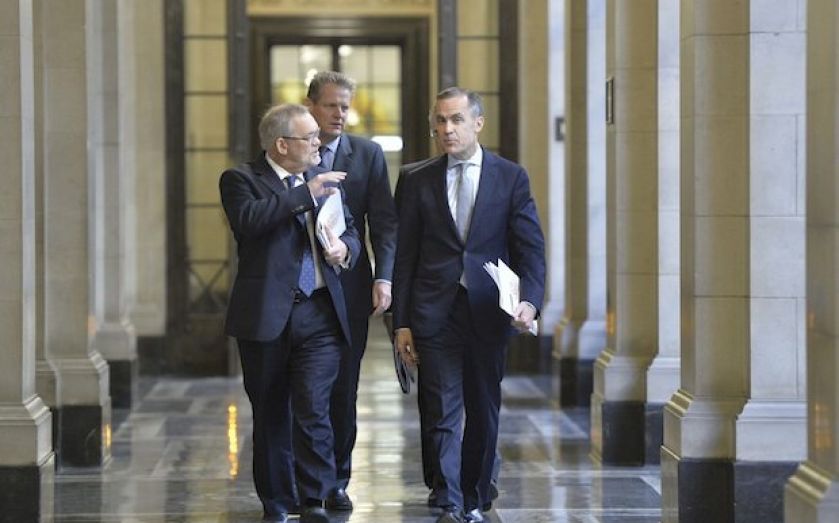
Yesterday, as official statistics showed the UK’s unemployment rate falling more rapidly than expected, and the Bank of England’s Inflation Report upgraded the Bank’s growth forecasts, Reuters stated gloomily that the “Bank of England sees risk unemployment could hit 7 per cent by end of 2014”. We would meet Mark Carney’s “forward guidance” marker for considering an interest rate rise nearly two years earlier than the Bank had previously thought.

But fear not, for Carney, now driven to offer forward guidance in interpreting his forward guidance, clarified that he could imagine unemployment falling below 7 per cent, but interest rates still not being raised for some time. Phew! We wouldn’t want rates to rise, now, would we?

Where does this notion come from – that the ideal is for interest rates to be as low as possible for as long as possible? For a given inflation rate, lower interest rates mean borrowers gain at the expense of savers. Why would we want that? Low rates mean that, to the extent that labour and capital are substitutes rather than complements (which for our purposes, we can take as meaning “for a given level of GDP”), firms will tend to prefer to substitute capital in place of labour. Is that a good thing? Low rates also mean that firms that have become fundamentally unproductive can linger on for longer before they finally die off, so the cycle of new firm entry and new product innovation becomes slower. Is that desirable?

There is a famous economic argument (famous, but not believed by anyone) that it is ideal to have a bit of deflation and about-zero interest rates. There is no established argument, however, that it is ideal to have inflation of 3 to 5 per cent and zero interest rates, which has been the UK’s situation for most of the past few years. Zero interest rates had value as a temporary necessity in 2009 to 2011, as recession came and financial collapse beckoned. But policy should not be seeking to retain low rates as long as possible. Instead, it should be seeking to normalise rates – back to a healthy equilibrium, in which interest rates are 1 to 3 per cent above the inflation target, so around 3 to 5 per cent – as quickly as feasible.

“As quickly as feasible” does not, of course, mean we raise them to 5 per cent tomorrow. But the Bank should be seeking every opportunity, every excuse, to edge rates up. Instead, it is seeking every excuse to promise it will keep them low for longer and longer. That attitude will retard truly sustainable recovery, and risks eventual high inflation and interest rates spikes. We should be challenging the Bank more upon its rationale for this approach.

Andrew Lilico is chairman of Europe Economics.

Share this article

  • Facebook
  • X
  • LinkedIn
  • WhatsApp
  • Email

Similarly tagged content:

Sections

  • Opinion

Categories

  • Opinion

Trending Articles

  • Victoria Beckham owed £350,000 by Harvey Nichols

  • M&G: FTSE 100 giant hits out at Rayner’s ground rent cap as it suffers loss

  • Fulham owner Khan sees his £1bn stadium construction project take next steps

  • John Lewis boss: UK economy facing a ‘permacrisis’ 

  • My stressful night at London’s ultra luxe £1k a night hotel where I found glass in my food

More from Morning Wire

  • Bank of England’s Pill warns against ‘wait and see’ interest rates approach

    Economics
    Huw Pill, Bank of England Chief Economist, smiling in a suit and tie against a blue NABE banner.
  • Inflation expectations softer than predicted ahead of interest rate decision

    Economics
    The Bank of England is expected to hold interest rates at four per cent due to stubbornly high inflation.
  • Mortgage nightmare as investors price in three interest rate hikes 

    Economics
    Bank of England building on Threadneedle Street, London, showcasing its historic architecture and financial significance
  • Inflation leaps to 2.9 per cent in blow to Burnham 

    Economics
    Burnham cityscape showcasing modern architecture, bustling streets, and vibrant community life in a thriving urban setting
  • As it happened: Vodafone leads FTSE 100 rally after TV launch; oil jumps again

    FTSE 100 Live
    Vodafone and Three company logos on a red and white sign outside a modern glass building
  • House prices remain sluggish in ‘subdued’ property market 

    Property
    Real estate signs: a yellow SOLD sign and a blurred green FOR SALE sign, indicating house prices and market activity.
  • Shop price inflation hits two-year high as rising energy costs hit consumers

    Economics
    Retail sales slumped in May as tax hikes and economic uncertainty hit shoppers' spending
  • El Nino heatwaves to ‘fuel inflation next year’

    Economics
    Firefighter in helmet and uniform watching a blazing forest fire at night, red glow in the sky
MorningWire

Independent European business, markets and political news for decision-makers.

Morning Briefing

Europe

  • Germany
  • France
  • EU Institutions
  • Europe

Business

  • Markets
  • Business
  • Economy
  • Regulation
  • Competition
  • Public Affairs

Editorial

  • Opinion
  • Editorial Policy
  • Corrections
  • Contact

Company

  • About Morning Wire
  • Privacy Policy
  • Terms of Use
  • Cookie Policy
© 2026 Morning Wire Ltd · Published by Morning Wire Media, Bahnhofstrasse 65, 8001 Zürich, Switzerland
Privacy · Terms · Cookies · Facebook