Skip to content
Tuesday 8 September 2026London --:--Frankfurt --:--Zurich --:--
NewslettersSearchEN · DE · FR
MorningWire

European business, markets and politics

FTSE 100
10,818.05
-0.04%
DAX
25,947.54
-0.23%
CAC 40
8,278.38
-0.33%
STOXX 50
6,386.97
-0.27%
  • Europe
  • Markets
  • Business
  • Economy
  • Regulation
  • Politics
  • Opinion
More
GermanyFranceEU InstitutionsCompetitionPublic AffairsBankingTechnologyEnergy
  • Germany
  • France
  • Europe
  • Markets
  • Business
  • Economy
  • Regulation
  • Politics
  • Opinion
  • DE
Wednesday 12 September 2018 11:20 am

The economic answer behind superstar salaries

By: Paul Ormerod

Add as a preferred source on Google

Rugby Union’s Premiership season is underway again.

This is yet another professional sport which operates on the principles of socialism: the money all ends up in the pockets of what we might call the “workers”.

In a sport which was allegedly only played by amateurs until the mid-1990s, earnings have boomed. The average salary in the Premiership is over £200,000, and the stars are paid around the one million mark.

Read more: Why Fifa and Premier League are at odds over agents' fees

As a result of such payments, most of the Premiership clubs are only kept afloat by huge loans from their owners. Their accounts for 2016/17 were released at the end of August. Bruce Craig has put £18m into Bath since 2010. Bristol owe more than £20m. Wasps have liabilities approaching £50m.

But the players’ earnings are mere shadows of those of the top American sports stars. According to Forbes magazine, in the year to June 2018, the 100 best-paid athletes made $3.8bn between them. The boxer Floyd Mayweather topped the list with $285m.

Stars of popular culture pull in similarly staggering amounts. George Clooney earned $239m and Dwayne Johnson was the second highest among male actors at a mere $119m.

These vast sums appear to pose a challenge to economic theory. These players and actors are very good, but they are not so stupendously better than others who get paid very much less. How can this be explained?

The answer was provided in a brilliant article by the American economist Sherwin Rosen as long ago as 1981, entitled “The economics of superstars”.

Rosen based his theory on the fact that activities such as watching a sport or going to a film involve what economists call “joint consumption”.

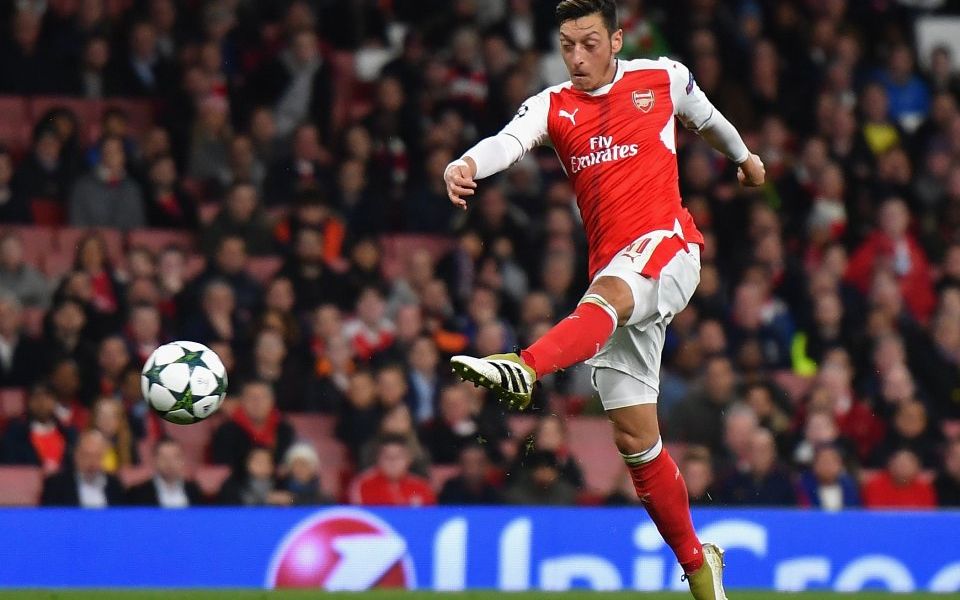
If I am watching Arsenal, say, on the television, it does not matter how many other people are viewing at the same time. The game is still available for me to watch. In contrast, if I book a table at a popular restaurant or a particular seat on a flight, no one else can use it.

In 1880, if you wanted to hear a particular singer, you had to go to a live performance. Perhaps a thousand people could enjoy the joint consumption of the product. In 1980, tens of millions could watch on television.

Rosen, writing well before the internet, argued that advances in communications technology such as radio and television increased enormously the potential size of markets involving joint consumption. As he put it so succinctly, “the possibility for talented persons to command both very large markets and very large incomes is apparent”.

For example, the football played in England’s Premier League is in general better than that in the Scottish Premiership. But the English league rakes in well over £1bn a year in television rights, and Scotland less than £20m.

It is the combination of the joint consumption nature of these services and advances in communications which mean that a relatively small number of sellers can in principle service the entire market.

The more talented they are, the fewer still are needed. And that’s how they are able to earn so much.

Read more: Editor’s notes: Amazon boss should look closer to home to spend his fortune

Share this article

  • Facebook
  • X
  • LinkedIn
  • WhatsApp
  • Email

Similarly tagged content:

Sections

  • Life&Style
  • Markets & Economics
  • News

Categories

  • Business
  • Economics
  • Sport

Trending Articles

  • Hedge fund billionaire Chris Rokos joins UK wealth exodus 

  • Iceland boss Richard Walker vows to set up shop on Falkland Islands

  • Britain ‘taxing itself to death,’ Burnham warned

  • £74m for branded condoms? UK must stop spaffing cash on foreign aid

  • As it happened: FTSE 100 inche up as oil holds gains; Healey says UK paying ‘Truss penalty’

More from Morning Wire

  • How sevens and Olympics can be commercial rugby lifeline

    Sport Business
    Smiling athlete in white jacket holding a gold medal, reaching out to cheering fans in a stadium.
  • Women’s rugby can teach the men’s game exactly what it needs right now

    Sport Business
    Female rugby player with medal takes selfie with young fans in blue hats at a stadium event
  • Top economists shun Burnham over wealth taxes

    Politics
    Andy Burnham speaking at a press conference, expressing confidence despite challenges, highlighting leadership and resilie...
  • UK founders cast doubt on Burnham’s pro-business push

    Entrepreneurship
    Andy Burnham, Mayor of Greater Manchester, in a professional setting.
  • Neets dip below one million as Labour blamed for youth unemployment

    Economics
    Andy Burnham, Sadiq Khan, and Sainsburys staff discussing Neets numbers in a supermarket bakery aisle.
  • Net zero and DEI targets cut from procurement rules as firms pressed to raise pay and hire NEETs

    Politics
    Louise Haigh, Andy Burnham, and another man smiling in front of a dark door with 10 visible.
  • Healey told tax rises for fiscal remedy are ‘not required’

    Economics
    Massachusetts Attorney General Maura Healey, smiling and gesturing, speaks at a podium.
  • Where are Andy Burnham’s economic advisers?

    Politics
    Andy Burnham and John Healey at Number 10 North, both wearing suits and ties, with a microphone in the foreground.
MorningWire

Independent European business, markets and political news for decision-makers.

Morning Briefing

Europe

  • Germany
  • France
  • EU Institutions
  • Europe

Business

  • Markets
  • Business
  • Economy
  • Regulation
  • Competition
  • Public Affairs

Editorial

  • Opinion
  • Editorial Policy
  • Corrections
  • Contact

Company

  • About Morning Wire
  • Privacy Policy
  • Terms of Use
  • Cookie Policy
© 2026 Morning Wire Ltd · Published by Morning Wire Media, Bahnhofstrasse 65, 8001 Zürich, Switzerland
Privacy · Terms · Cookies · Facebook