EU carbon hits €100 taking cost of polluting to record high

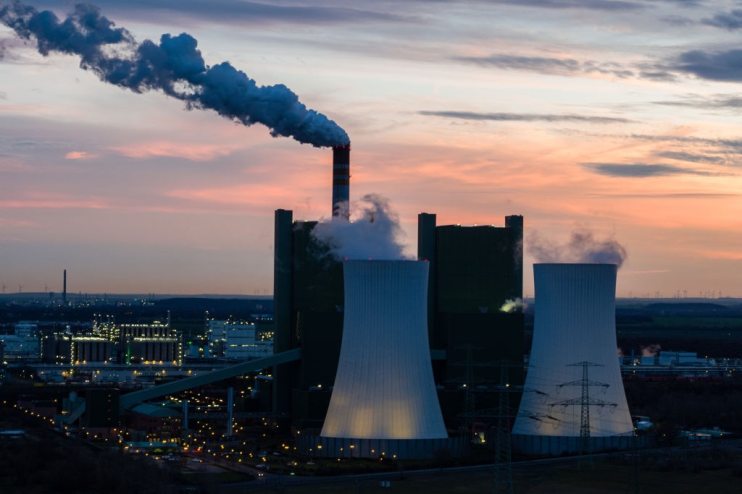
The price of permits on the European Union’s carbon market hit €100 per tonne (£88.01) for the first time on Tuesday, a milestone that reflects the increased costs that factories and power plants must pay when they pollute.
The benchmark EU Allowance (EUA) contract rose to a high of €100.70 per tonne and was trading at €100.21 per tonne later this morning.
EUAs are the main currency in the European Union’s Emissions Trading System (ETS) that forces manufacturers, power companies and airlines to pay for each tonne of carbon dioxide they emit as part of the bloc’s efforts to meet its climate targets.
The more emitters have to pay for EU carbon permits to cover each tonne of C02 they produce, the greater the incentive to invest in low carbon technologies and switch to less polluting fuels.
EU countries and lawmakers agreed reforms to the EU carbon market late last year, creating a bullish mood that has been heightened in recent weeks as companies approach an April deadline to buy and submit enough CO2 permits to cover last year’s emissions.
Traders also said expectations of cooler weather and low wind speeds increased demand for permits from fossil fuel power generators in recent days and buying by speculators also drove prices.
The price hike also follows an increase in power sector demand for CO2 permits in 2022, when dwindling Russian gas supplies helped to fuel a 7% increase in EU power generation from coal, the most CO2-intensive fossil fuel, despite the high CO2 price.
The return to coal has raised fears for Europe’s climate targets, although EU policymakers say it is a short-term response – and the high price of fossil fuels, both coal and gas, will ultimately accelerate a shift to renewable energy.
Still, rising carbon prices are a cause of political tensions in the EU and breaching the €100 threshold is likely to reignite debates over prices.
Poland, which produces most of its electricity from coal, has blamed high CO2 prices on speculators and sought EU intervention to limit price spikes. Spanish Prime Minister Pedro Sanchez last year called for a CO2 price cap to help tackle soaring inflation.
Other EU countries view a robust carbon price as vital to meeting climate goals. A diplomat from one EU country, who spoke on condition of anonymity, said a strong carbon market sent “the right signals” to investors and industry on the need to accelerate the transition from fossil fuels.
Brussels plans phaseout after years of weakness
The EU ETS was launched in 2005 and the price dropped to nearly zero in 2007 during the global financial crisis when the market was heavily over-supplied.
Years of weak prices followed until CO2 prices began to recover in 2018 when the EU agreed to remove surplus permits from the market.
Prices rallied 150 per cent in 2021 when EU policymakers unveiled their latest tranche of CO2-cutting laws.
That increase helped to reduce emissions by prompting utilities to switch from coal to gas, which produces roughly half as much CO2 when burned, to avoid paying a bigger carbon bill – although soaring gas prices last year temporarily made coal generation cheaper.
The €100 level has long been cited as the kind of price that could incentivise some of the expensive technologies seen as necessary to limit global warming.
Investments in hydrogen produced from renewable energy – instead of the conventional production method of using gas – could become economically competitive if CO2 prices stayed above €100 per tonne, argued Mark Lewis, head of climate research at Andurand Capital Management.
“I wouldn’t underestimate the symbolic importance of it. People will start realising we’re in a new paradigm,” Lewis said, but added that reaching €100 once is no guarantee that prices will remain above that level going forward.
Such technologies could also receive a boost from new state aid or EU funding, as the bloc races to offer incentives to green industries, to avoid firms relocating to take advantage of U.S. subsidies on offer to companies who develop such technologies in North America.
The iron and steel sector is among those looking to green hydrogen to help with the difficult task of producing carbon-neutral steel.
Brussels plans to phase out the free CO2 permits that sectors including steel and cement currently receive and replace them with a world-first carbon border levy on the emissions of imported goods, to make firms abroad pay the same CO2 price as European industry.
Reuters – Kate Abnett, Susanna Twidale, Nina Chestney and Nora Buli