Skip to content
Sunday 30 August 2026London --:--Frankfurt --:--Zurich --:--
NewslettersSearchEN · DE · FR
MorningWire

European business, markets and politics

FTSE 100
10,824.26
+0.29%
DAX
26,569.99
+0.77%
CAC 40
8,401.18
+0.98%
STOXX 50
6,485.67
+0.95%
  • Europe
  • Markets
  • Business
  • Economy
  • Regulation
  • Politics
  • Opinion
More
GermanyFranceEU InstitutionsCompetitionPublic AffairsBankingTechnologyEnergy
  • Germany
  • France
  • Europe
  • Markets
  • Business
  • Economy
  • Regulation
  • Politics
  • Opinion
  • DE
Saturday 23 May 2015 4:40 am

Eurovision Song Contest 2015: Secretly, these countries are probably hoping they lose

By: Sarah Spickernell

Add as a preferred source on Google

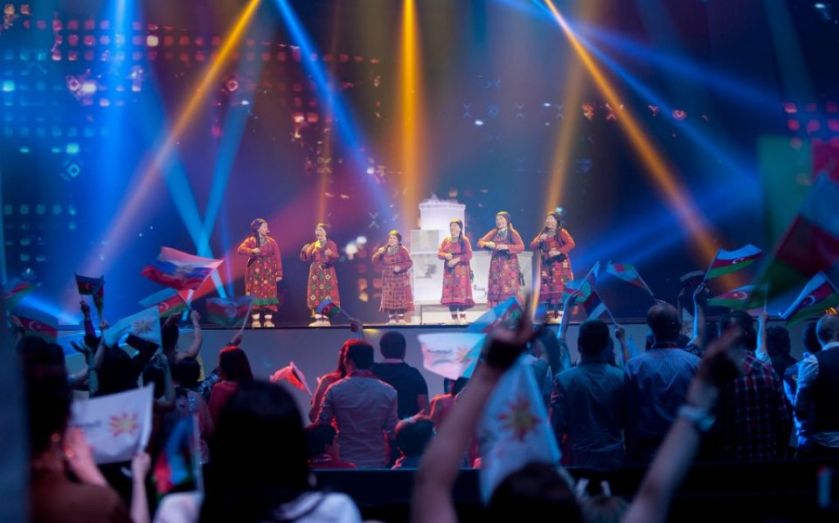
The Eurovision Song Contest is getting more and more expensive, despite Europe's decline into austerity.

The annual tradition blossomed in the 60's, at a time when things looked brighter for Europe and there was a stronger sense of solidarity. But now the event is more lavish and over-the-top than ever, and each year the winning country must fork out a great deal of cash to provide the type of performance European viewers expect.
 
In fact, last year's contest in Copenhagen turned out to be one of the most expensive ever when it came to €44.8m (£31.9m). This was beaten only by the €60m (£42.7m) spent by Azerbaijan in 2012. Over the last five years, Eurovision has cost an average of €33.6m to host. 
 
But can most countries in Europe realistically afford this? With half of the continent struggling under fierce austerity measures, winning in 2015 might seem like the worst possible outcome for some contestants. 
 
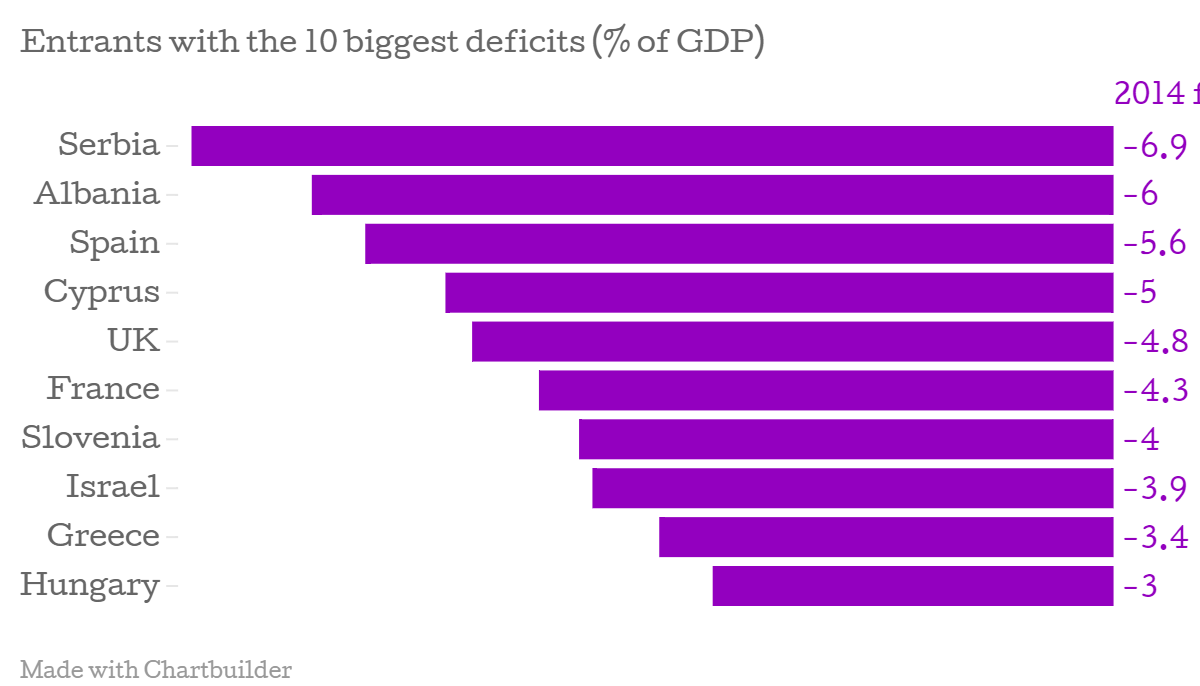
Realistically, the only ones who should want it are those with a surplus of cash, who are earning more than they are spending. According to the 2014 figures from the Central Intelligence Agency, just four of the 27 contestants fall into this category – Norway with a surplus of 12.5 per cent of GDP, Montenegro with a surplus of 2.1 per cent, and Russia and Germany, each with a surplus of 0.4 per cent.
 
Latvia wouldn't be too out of pocket by taking on the responsibility either, with a deficit of zero per cent by the latest measure.

For the rest, expenses exceeded revenues last year, giving them a deficit. For some it was small, and the pride of winning Eurovision might outweigh the cost. Countries falling into this category include Poland, Estonia, Romania, Azerbaijan, Armenia and Lithuania, all of which had a a deficit of less than two per cent. 

Not good for the UK

Some of the contestants are having a particularly tough time filling in the gap between spending and earning, and for these countries winning the prize might be no more than a problem in disguise. 
 
The UK, with its deficit of 4.8 per cent, has the fifth biggest deficit of all at 4.8 per cent of GDP. Greece, unsurprisingly, is also in the top 10 and has the added concern of paying back all its loan debts. The biggest deficits of all, however, were those of Serbia and Albania, at 6.9 per cent and six per cent, respectively. 
Share this article

  • Facebook
  • X
  • LinkedIn
  • WhatsApp
  • Email

Similarly tagged content:

Sections

  • Markets & Economics
  • News

Categories

  • Business
  • Economics

Trending Articles

  • Prince Harry’s courtroom defeat could drive up legal insurance premiums

  • Cleverly announces bid to run for London mayor

  • Fifa crisis shows that fans must get a say in who succeeds Infantino as president

  • Xenom: Hyrox and CrossFit mash-up backed by tech moguls set for London bow

  • City firms mandate phone and face-to-face comms bootcamps for Gen Z lawyers

More from Morning Wire

  • Give Emit some Love in the Ebor

    Sport
    Jockey in green and light green silks, wearing a helmet and goggles, adjusting his headwear.
  • Forecast rain sweet for Sugar and Kalpana

    Sport
    Jockey in pink helmet and green/white silks riding a brown racehorse at full gallop on a green track.
  • This Is the Moment Everything Changed: Ascensia Launches Global Art and Photography Competition for World Diabetes Day

    Business Wire
  • Hammersmith Bridge is a test for Burnham’s place-based growth

    Opinion
    Hammersmith Bridge closed in 2021 with fencing, banners, and traffic cones blocking access to the walkway.
  • The Expensify Visa® Commercial Card Brings New Proactive Spend Controls to 14 Countries

    Business Wire
  • Madera and Man the Ones for opening York sprint

    Sport
    Jockey Jack Kennedy in purple silks and white helmet with KEP Italia branding, looking forward at a racecourse.
  • Twomey’s Trean the bet in the Acomb

    Sport
    A man in a suit and patterned tie, with a horses ear visible, looks left against a green blurred background.
  • Zennor the bet after Storms at York

    Sport
    Jockeys on racehorses gallop on a dirt track under stadium lights, with green grass and hedges in the background.
MorningWire

Independent European business, markets and political news for decision-makers.

Morning Briefing

Europe

  • Germany
  • France
  • EU Institutions
  • Europe

Business

  • Markets
  • Business
  • Economy
  • Regulation
  • Competition
  • Public Affairs

Editorial

  • Opinion
  • Editorial Policy
  • Corrections
  • Contact

Company

  • About Morning Wire
  • Privacy Policy
  • Terms of Use
  • Cookie Policy
© 2026 Morning Wire Ltd · Published by Morning Wire Media, Bahnhofstrasse 65, 8001 Zürich, Switzerland
Privacy · Terms · Cookies · Facebook