Weekend chat: Many companies and investors fear greenwashing claims, says sustainability guru

Increasing biodiversity and expanding nature-based solutions to solve the climate crisis through so-called voluntary carbon markets (VCMs) are currently a hot topic.
VCMs, which encompass all transactions of carbon offsets that are not purchased with the intention to surrender into an active regulated carbon market, do include offsets that are purchased with the intent to re-sell or retire to meet carbon neutral or other environmental claims.
It’s been projected that VCMs will scale rapidly this decade, from £320m in 2019 to up to £30bn by 2030. As the market scales, carbon credits will need to be traded like commodities.
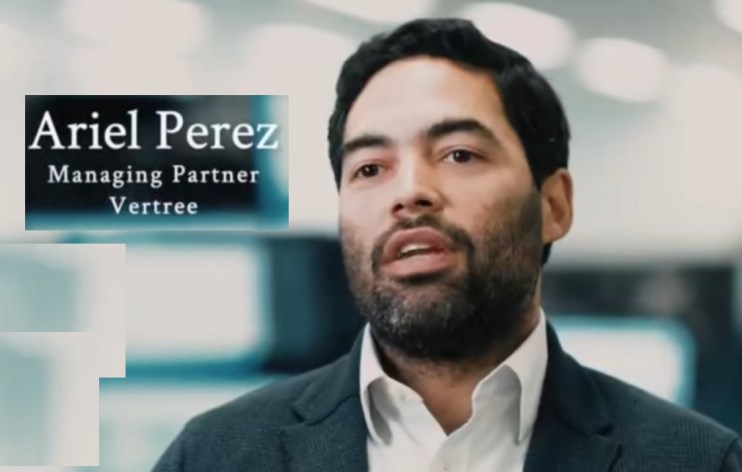
Time for Morning Wire to sit down with Ariel Perez, managing partner at Vertree, a joint venture between sustainability consultancy SYSTEMIQ and global trading house Hartree Partners.
Their aim is to create complete transparency between the carbon credits being bought and the projects they fund, demonstrating genuine climate benefits.
In August of last year, they announced a $2bn voluntary carbon market deal with Wildlife Works. This deal is at least twice the size of Amazon’s LEAF announcement and believed to be the largest ever investment in nature-based solutions to date.
Let’s start with Voluntary Carbon Markets, they are hot at the moment, particularly since COP26. Tell us more.
VCMs exist as a complement to compliance carbon markets and carbon pricing, like the EU Emissions Trading System, which are among the most effective and transparent mechanisms that exist today to address climate change. VCMs serve to price externalities and provide additional incentive for companies to take action on climate change.
It is estimated that 20 per cent of global emissions are currently covered by compliance carbon markets: VCMs could become the dominant framework used to fill the remaining void and unlock additional investment for climate change action.
“Eventually, every tonne of CO2 on this planet will be covered by either a single carbon price in a compliance market or by an implied price traded in VCMs.”
Ariel Perez, managing partner at Vertree
Whether one is a critic or supporter of carbon offsetting, countries and companies are making net-zero pledges above and beyond any regulatory or legal requirements. It is clear that VCMs will be crucial in making those pledges become a reality.
It’s been projected that VCMs will scale rapidly this decade, from £320m in 2019 to up to £30bn by 2030. As the market scales, will carbon credits be traded like commodities?
The standardisation of accounting for avoided or removed carbon, through publicly available data, has been a critical innovation. It now allows different projects around the world to produce a standard commodity, a carbon offset. Nature-based solutions also provide vital co-benefits in addition to removing carbon. These projects help restore ecosystems, protect biodiversity, and often create economic opportunities in local communities. It is important that these aspects are considered alongside the commoditisation of carbon, so that nature-based solutions are considered and priced holistically in the market.
As you said, you are a firm believer in nature-based solutions to solve the climate crisis. Please explain to us why, or how.
Nature-based solutions that reduce emissions from deforestation and degradation, remove and store carbon, and provide other vital ecosystem services, provide some of the most cost-effective, scalable, and sustainable opportunities for companies to meet their climate commitments. But they cannot “solve” the climate crisis alone.
“Abating emissions from the burning of fossil fuels, industrial processes, and agriculture should remain the priority for companies, policymakers, and investors as we transition towards a net-zero future.”
Ariel Perez
But this will require significant investments?
Yes, companies need to be prepared to invest in high-integrity nature-based solutions and that can be achieved in several ways. Companies need to understand their internal carbon budget and the range of abatement technologies and options that can reduce carbon in their businesses and supply chains today, and in the future. Only once a companies’ abatement options are understood, can a meaningful carbon offset procurement and investment strategy be developed.
Let’s move on to the space you are operating in. What are some of the key challenges your sector currently faces?
Some of the most common VCM critiques centre around the concepts of additionality and permanence. Offset projects need to result in greenhouse gas reductions that would not have happened without that specific carbon project financing, the reduction must be ‘additional. There also needs to be a guarantee that the avoided or reduced emissions will be kept out of the atmosphere in perpetuity, the ‘permanence’.
We also need more transparency in the market, both on the demand and the supply side, as well as systems of accountability.
“Companies are often nervous about making the wrong claim and giving the appearance of greenwashing.”
Ariel Perez
Transparency will be crucial to verify that projects are being properly monitored and delivering tangible co-benefits to local communities and biodiversity. It will also help ensure that there is no leakage – for example a project doesn’t shift the emissions from one place to another or make other types of environmental or social problems worse.
This can restrict financing for projects and lead companies to opt for “safer” projects to avoid reputational risks.
This limits options and the development of broader nature-based solutions or innovative technology. Increased transparency and accountability systems would help mitigate this and ensure a baseline standard across all issued offsets, therefore unlocking more long-term financing and innovation.
“Investor pressure on companies to decarbonise is creating global demand for offset credits that may outstrip supply.”
Ariel Perez
The nature of emissions reductions projects means that supply will not be able to respond quickly to increased demand.
And where do you see opportunities for growth and expansion?
Corporates making increasingly ambitious net zero pledges are struggling to figure out how to source carbon offsets and build portfolios. Once companies have a strategy and know exactly how much carbon they are going to reduce and offset, it can be difficult for them to deploy capital quickly. This is the major opportunity I see in the market, and the one we can support through our trading and environmental investment expertise. In the near to mid-future, VCMs are likely to remain fragmented and carbon will be traded in a bespoke manner, with most transactions being highly structured.
Anything else you would like to say or share?
Prioritising scalable net-zero solutions is important, and the most efficient mechanism for allocating capital in line with the relative risk and reward are financial markets. By conducting deep fundamental research and working with key stakeholders, we can all contribute to the growth and maturity of the VCM. I am more positive today than at any other point in my career on the VCM’s efficacy and potential to meaningfully address climate change in a way that is high integrity, inclusive and, most importantly, sustainable.