The Fed’s taper surprise highlights a wider problem with monetary policy

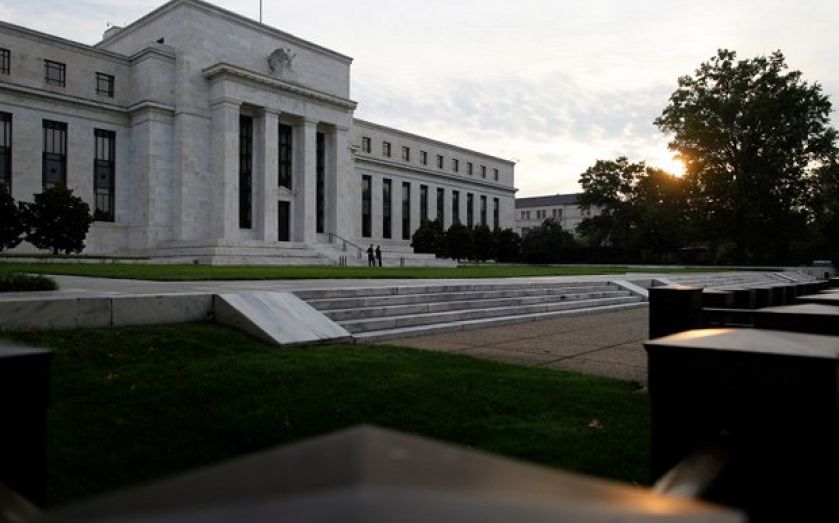
THE US Federal Reserve’s surprise decision not to scale back its stimulus programme on Wednesday night should not perhaps have been so unexpected.
Back in 2010, in those early days of quantitative easing by the US Federal Reserve and the Bank of England, I suggested that both institutions would be tempted to make sure the recovery was well underway before they looked to change course. And this was a key part of the Fed’s explanation for its decision not to taper its purchases of government and mortgage-backed bonds from $85bn (£53bn) per month. Once you’ve started, it’s hard to stop.
“So what?”, you might be wondering. But there is a wider problem with continuing with extraordinary monetary measures for longer than may be strictly necessary. The longer-term, and perhaps more concerning, effect of such action is that – by creating new bubbles – central banks put us into a similar mess to the one we were trying to avoid. If this happens, we become financially weaker at each successive crisis. This is not a happy future.
On the journey from 2010 to the present day, we have seen multiple financial bubbles develop – first in commodities, and then in asset markets. The most recent example of a boom followed by bust (which has closely tracked tapering anticipation) has been in emerging market equities and currencies, although we appear to be back in boom mode again after the Fed decision. Central London property prices are also exhibiting signs that are bubblicious to say the least. The first critique of current monetary policy is this tendency to blow bubbles.
But on top of this, central banks are promising to keep official interest rates low for a longer time period, and perhaps also with a hint that another cut is possible. Central banks have seized on this idea like a child with a new toy. The US, UK and the Eurozone have all adopted various degrees of forward guidance.
There are also problems with this, however. I can see how financial markets are keen to know where interest rates are likely to be in three years’ time, for example, but what of the ordinary person in the street? Then, of those who do know and understand, how many will believe and trust the central bank’s pledge enough to take out a mortgage or loan for their business in response? In my view, the links between the promise and the economic impact get weaker and weaker over time.
The next issue is that forward guidance is being given by a group of people who have a poor record at predicting the future. On Wednesday evening, for example, the Federal Reserve gave a new set of lower forecasts for the US economy, downgrading growth estimates for 2013 to between 2 and 2.3 per cent, compared to a 2.3 to 2.6 per cent forecast in June. This is not an unfamiliar event for the Fed. And those who follow the UK economy will be aware that the Bank of England’s predictions have been even worse, varying from wrong to appalling.
The final nail in the coffin for forward guidance is the apparent inability of those giving it to actually stick to it. The US Federal Reserve hinted in its official minutes – and via unofficial leaks to the media – that it was planning to taper in September, but then did not. If it cannot stick to hints from May and June this year, what is the credibility of forecasts to 2016?
Our apparently small and insignificant island (as seen from Russia anyway) has seen its monetary policy affected by the backwash of events elsewhere and at home. The pound has risen since Mark Carney made his formal announcement of forward guidance by an amount equivalent of a 0.9 per cent rise in base rates. This has been a brake on the economy, as well as anti-inflationary, particularly via the way sterling has pushed above $1.60 (oil and commodities are invariably priced in dollars). What this means is that, on the one hand, Carney may yet be able to claim his policy works. But if the going gets tougher, he can blame the “wolf pack” of the financial markets.
On the roads described above, both the US and the UK are finding themselves ever more trapped in a junkie culture, where the rush of a monetary hit fades ever more quickly – and then the total dosage rises. But on 27 September, Britain has the opportunity to move in the other direction, albeit by only a baby-step. On that day, a small part of the Bank of England’s gilt holdings mature. The Bank doesn’t have to reinvest those maturing gilts. I wouldn’t.
Shaun Richards is an economist and writer for Mindful Money. www.mindfulmoney.co.uk