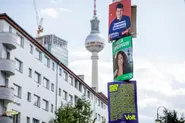
Elections are just around the corner in Berlin (September 20th) as well as two eastern states; Saxony-Anhalt (September 6th) and Mecklenburg Western-Pomerania (September 20th).
German citizens automatically get full voting rights in city, state and federal elections. Additionally, EU citizens can vote in local elections, which in the coming Berlin vote includes votes for District Assemblies (Bezirksverordnetenversammlung – BVV).
With a record number of people having gained German citizenship last year – including 39,000 in Berlin alone – there is also likely to be a large number of first-time voters set to participate in the coming elections.
But many new voters may be struggling to tell Germany’s political parties apart – excepting those who regularly read the publication (wink wink).
Here’s an overview of Germany’s legacy parties.
Christian Democratic Union (CDU) / Christian Social Union (CSU)
Starting with the current leaders of the federal government, the Christian Democratic Union is a centre-right, or conservative, party that was founded in West Germany after World War II.
The Bavarian branch of the CDU is known as the Christian Social Union, so at the federal level people speak of the CDU/CSU, or sometimes simply the “Union”, which refers to both.
The party’s colour is black – which is useful to know when you see graphics showing vote or poll results.
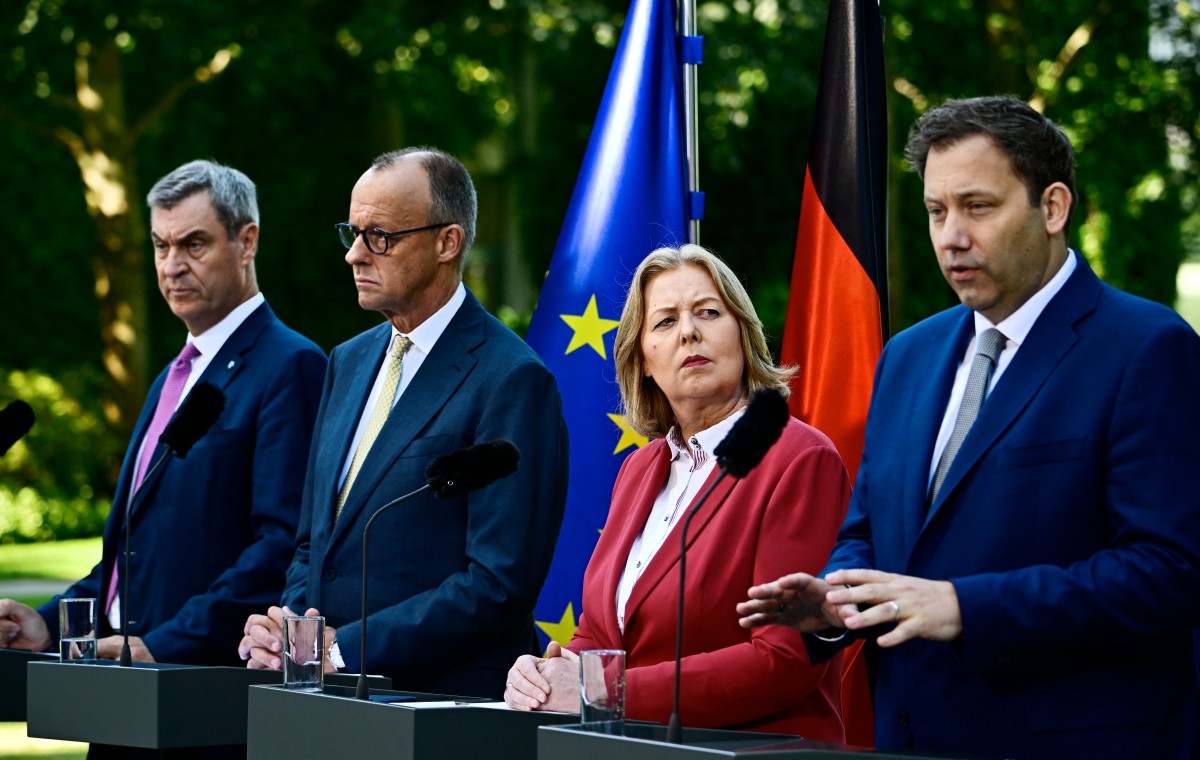
The leader of the CDU is Friedrich Merz, who also currently serves as the German Chancellor. The leader of the CSU, and also the Minister President of Bavaria, is Markus Söder.
Previously the party had been headed by former Chancellor Angela Merkel for more than 18 years.
During the last federal election, in which the Union won the most votes, Merz had vowed to steer the party’s platform back to what he saw as its traditional roots, away from Merkel’s more centrist approach. This included a push back against "irregular" immigration.
The Union parties are not in favour of the naturalisation act reform brought by the previous federal government, which allowed for dual citizenship. Party members have repeatedly called for returning to an eight year residency requirement for German citizenship.
In Berlin, the head of the party and current mayor, Kai Wegner, recently announced he wouldn't run again in September following a scandal in which he was caught lying about his whereabouts during a widespread power outage last winter. He is to be replaced in the coming election by Berlin state finance minister Stefan Evers.
Social Democratic Party (SPD)
Currently working alongside the Union parties in the federal government coalition are the Social Democrats.
The centre-left party is Germany’s oldest still functioning political party – its history can be traced back to the 1860s, and it took its current name Sozialdemokratische Partei Deutschlands (SPD), or Germany’s Social Democratic Party, in 1890.
The party’s colour is red.
Its key demands tend to centre on fair wages, pensions and social benefits.
Historically, the SPD prides itself on its principled opposition to the Nazis before it was banned and its members exiled when the Nazis took power.
The Social Democrats also headed Germany’s former ‘traffic light’ federal government, which also included the Greens and the Free Democrats. Under their leadership, the coalition worked to encourage immigration of skilled workers, including through the liberalisation of Germany’s citizenship rules.
But, especially since the collapse of the former government, the centre-left party has seen dwindling voter support.
The party’s current co-leaders are Vice Chancellor Lars Klingbeil, and Labour Minister Bärbel Bas.
In Berlin, the top SPD candidate is Steffen Krach.
Alternative for Germany (AfD)
With the parties currently in the federal government coalition covered, we’ll move on to the party that currently leads the national polls – the far-right Alternative for Germany (AfD).
The AfD is the newest party in Germany that currently holds seats in the national parliament (Bundestag). The party was founded in 2013 – its colour is blue.
Born from a Eurosceptic platform, the AfD initially focused largely on rejecting Angela Merkel’s euro bailout policies during the European debt crisis. Later the party shifted its focus toward anti-immigration policies, especially after the 2015 migration crisis and Merkel’s decision to welcome around a million refugees.
The AfD’s campaign platform for Saxony-Anhalt, for example, includes pushing a “deportation offensive” -- including against Ukrainian refugees -- forcing integration courses on foreign residents and limiting religious freedoms.
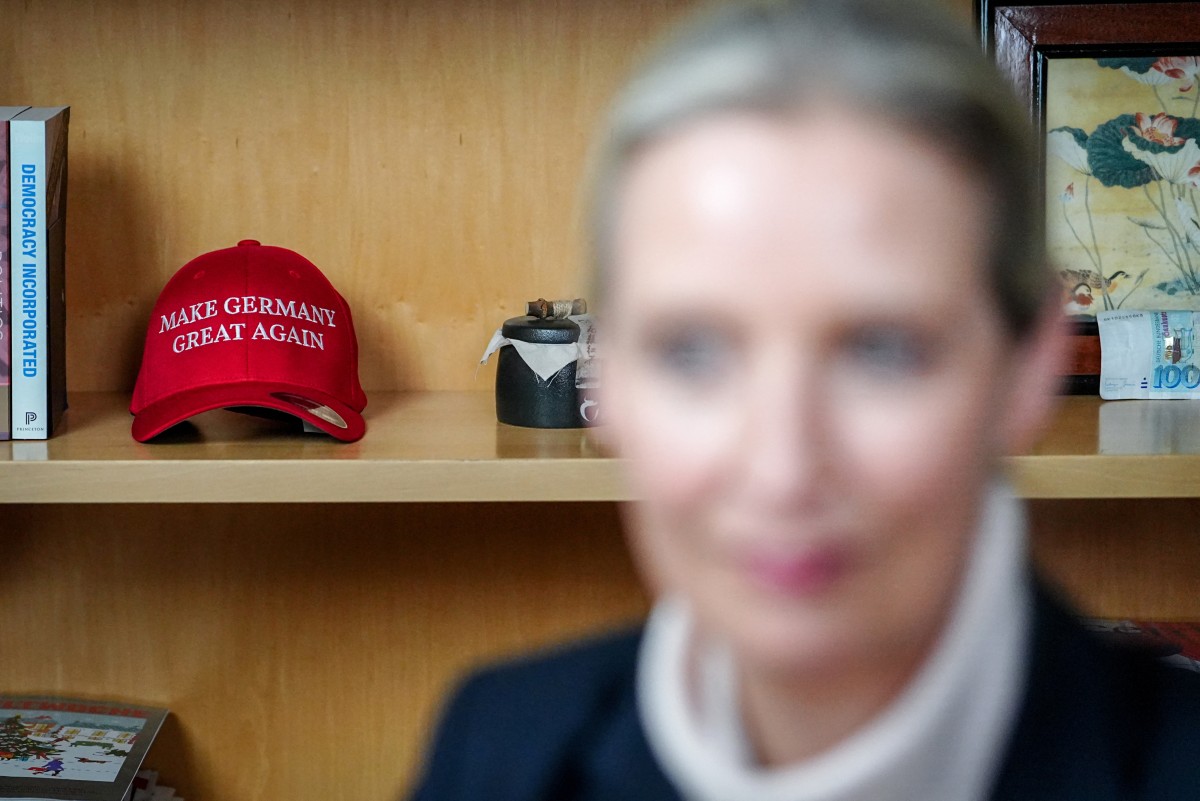
On the citizenship issue, beyond making requirements tougher, the AfD would like to end birthright citizenship and citizenship by descent – the party would limit German citizenship to those who are ‘ethnically German’.
The party’s national leaders are Alice Weidel and Tino Chrupalla. In Berlin, the AfD top-candidate is Kristin Brinker.
The Left Party (Die Linke)
While the AfD currently leads the polls at the national level, the Left Party, called Die Linke in German, is leading in Berlin – at least according to the latest poll by the Civey institute.
The Left Party was founded in 2007, and was born from the merger of two left-wing groups from the former East- and West German nations.
Die Linke’s official colour is red (which is traditional among left-wing parties in Europe), but to set it apart from the SPD it is often represented in purple or pink in graphics.
Sometimes described as a "far-left" party in media reports, it's known for advocating for democratic socialism and being anti-militarist. It’s also staunchly opposed to the far-right and the AfD.
The Left Party has advocated for granting voting rights to foreigners who’ve lived in Germany for five years. It also supports dual citizenship, and advocates for getting rid of the financial requirements currently in place for naturalisation.
The party’s national leaders are Luigi Pantisano and Ines Schwerdtner. It’s top candidate in Berlin is Elif Eralp.
Alliance 90/The Greens (Bündis 90/ Die Grünen)
More often simply referred to as the Greens (Die Grünen), or the Green Party, the formation of Alliance 90/The Greens can be traced back to social movements in the 1970s, particularly those focused on environmental protection, anti-nuclear power activism, pacifism and feminism.
The party’s two-part name alludes to the merger of West Germany’s Green Party with East Germany ‘Alliance 90’ in 1993.
The party is considered centre-left and its politics can be described as attempting to balance ecological policies and social equality.
The party’s colour, obviously, is green.
The Greens greatest federal success came in 2021, when the party joined the SDP and the Free Democrats in the ‘traffic light’ coalition. In the following federal election the Greens performed quite poorly, but the party still leads in some major cities, including Munich, and in the state of Baden-Württemberg.
Like the SPD, the Greens have a record of working to encourage skilled worker immigration, and are proud of the citizenship reform they helped bring in.
The national party is currently led by co-leaders Britta Haßelmann and Katharina Dröge. Its top candidate in Berlin is Werner Graf.
Other parties
Germany’s current Bundestag is made up of the parties listed above.
There are many more political parties in Germany, but in the past national election none of them managed to get at least five percent of the vote, which is required to hold seats in the German parliament. The same rule applies in state parliaments.
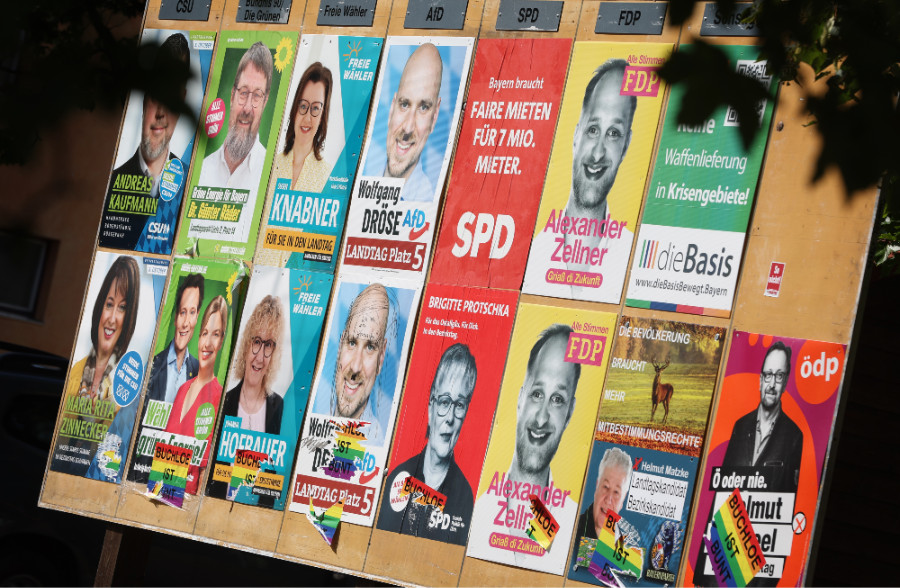
Notably the Free Democrats (FDP), which were mentioned above, are sometimes still counted among Germany’s ‘major’ parties because they had held seats in the previous parliament, and roles within the previous coalition government. However, the party’s support has since tanked. The FDP is currently only a member of one state government coalition, in Saxony-Anhalt.
Another fringe party that gets a fair amount of press is the left-wing populist BSW, which was formerly called the Sahra Wagenknecht Alliance and is involved in state governments in Thuringia and Brandenburg.