Global turbulence to rock UK: Trouble in the Eurozone, Fed rate hikes and a Chinese slowdown could hit markets

Yesterday, the Confederation of British Industry (CBI) revised its UK economic growth forecasts to 2.4 per cent and 2.5 per cent for 2015 and 2016 respectively, down from 2.7 per cent and 2.6 per cent. It wasn’t troubles at home that concerned the business organisation. The CBI cited economic instability in Greece, a sluggish Eurozone, weaker US growth and the slowdown in China as some of the external factors dampening the UK economy. What impact can we expect each of these to have over the coming few months?
EUROPE
“A messy resolution of the Greek crisis could spark financial market and exchange rate volatility which could spill over into the real economy,” the CBI said. So far, Europe has remained optimistic about the prospects of a resolution of debt talks and an agree- ment with Greece. But if a deal is not struck, and Greece defaults on its bundled €1.6bn obligation to the IMF later this month, the implications for the UK could be chilling.
A messy Greek exit from the Eurozone is the biggest external risk to the UK economy, according to Simon French, chief economist at Panmure Gordon. “While UK banks are insulated from first order contagion, it is a second round of potential political contagion in Portugal, Italy, France and Spain which would have a much more material impact on the UK economy and the UK banking system in particular.”
German markets have wobbled over the past few weeks: the Dax has fallen about 5 per cent over the past month. Across Europe, markets have winced at Syriza’s brinkmanship with EU creditors, with Greece’s euro membership teetering precariously.
There are longer-term risks too. QE and a weaker euro may have stimulated Eurozone growth in the short term, with first quarter growth of 0.4 per cent, but this is likely to flatten if oil prices rise. French supposes that Europe’s larger structural problems, like a “shrinking working age population” and “a monetary system which is manifestly unfit for purpose” could lead to deflation in the long term, which would threaten the UK because Europe is its primary trading partner.
THE US
After a contraction during the first three months of the year, the US is expected to return to growth this quarter. On Friday, the Department of Labor reported that 280,000 jobs were created in the US last month, more than expected, bolstering opinion that the Fed will raise interest rates this year.
On the one hand, higher interest rates could further boost the value of the greenback in relation to other currencies, including sterling. The UK is a net exporter to the US, and British goods and services will be more competitive on the other side of the Atlantic if the dollar strengthens further against the pound. Angus Campbell of FxPro believes that any gap which opens up in sterling-dollar would be limited, however, because the Bank of England is expected to tighten monetary policy soon too.
Moreover, French estimates that the Fed’s rate increases will be very modest. “Global growth and the strength of the dollar should ensure any increase in rates is gradual. Even Fed hawks who want to raise rates immediately are seeking to do so to head off the risk of damaging the asset bubble, rather than because the economy is hitting inflationary supply constraints.”
What would this scenario mean for UK companies? “The impact on the UK will principally be within financial markets and in commercial property,” says French, “as heavily levered companies face up to higher borrowing costs. The impact on households will be limited because the current high level of competition in the mortgage and unsecured lending market.”
Many, including French, anticipate the first interest hike to come in the third quarter, perhaps in September. Others don’t envisage a rate hike before 2016. Campbell says that, despite last week’s employment figures, the data does not sufficiently indicate a rate hike anytime soon, in light of the Fed’s consistent discussion of the many risks to the recovery. “The rises will be very small and over a long period of time, so as not to have a material impact on the US recovery.”
CHINA
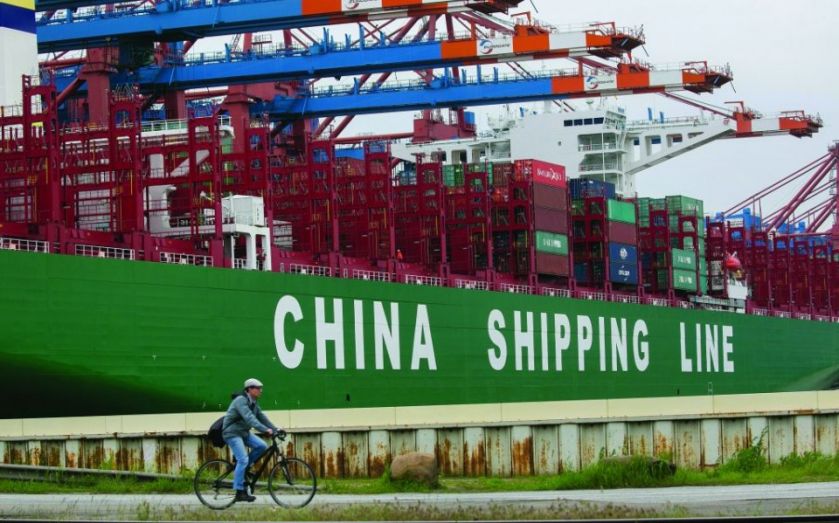
Fears about a slowdown in China have continued to rise, as the country continues to pivot away from reliance on investment and towards consumer spending. The country is an essential part of global supply chains, and the decline in its growth rate in recent years has hit commodity exporters like Australia hard. Just yesterday, oil prices fell on news of a slide in Chinese fuel imports. The country is the world’s biggest net oil importer.
Chinese authorities have, however, been able to sooth sentiment with injections of liquidity. Professor Kamel Mellahi of Warwick Business School forecasts that the Chinese government will continue to intervene to steady the economy, but that it will be “very challenging” for the government to hit its growth target of 6 per cent for 2015.
The impact of China’s slowdown on the UK is not necessarily obvious, but British exporters (like Jaguar Land Rover) may be hit if consumer spending slumps. In April, UK car production fell by 3.8 per cent, as stronger demand at home failed to outweigh a fall in exports to China and Russia.
There is also the possibility of financial instability spreading from China, if fears about debt and its property market cannot be assuaged. An IMF report earlier this year warned that “the disinflationary force of property price declines could strain bank and shadow bank balance sheets and spill over more broadly”. No one would be immune if a financial crisis erupted in China.