High interest rates hurt but they might just be the medicine UK productivity sorely needs

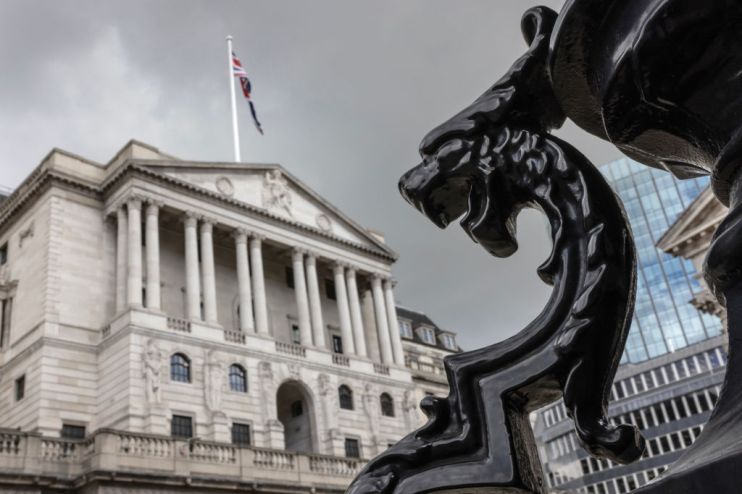
A post Global Financial Crisis policy of zero interest rates has facilitated investments which deliver poor returns, writes James Sproule
Productivity is often seen as the key for sustainable growth. But it is hardly a secret that Britain’s productivity is stuck in the doldrums – and has been so since the Global Financial Crisis (GFC) of 2007. Britain has not been alone in finding it difficult to generate any meaningful advances in productivity, but the UK’s record has been notably lamentable, lagging behind both Germany and France: we have ended up in the bottom half of the class in the OECD.
Economists have a number of explanations as to why. The GFC resulted in significant changes to financial markets regulation, and the UK – with its large international capital markets – was heavily affected. Moreover, Britain has a plethora of smaller firms. While this may help economic agility, smaller firms do tend to be less efficient. So in comparison to France and Germany, UK firms are less productive overall. There is also the issue that the UK potentially under-invests. The remedy here seems clear enough: encourage more capital expenditure – which is pretty much what the Chancellor’s last few budgets have sought to do.
But there is another, less-cited reason at work here as well: capital has been so cheap that it has not just encouraged investment, but facilitated investments which deliver poor returns.
The Zero Interest Rate Policy, or ZIRP, occurs when a central bank sets interest rates at, or close to, zero in order to spur economic activity through low-cost borrowing and easy access to credit. A raft of countries chose this route in the wake of the GFC.
From 2008 to 2022 interest rates were held at such a level that the cost of capital was almost immaterial to any investment decision. Indeed, for some larger companies the cost of borrowing after tax has actually been below the rate of inflation, making debt effectively cost-free in real terms. This has had an inevitable knock-on effect on investment decisions. At best, it has meant that extremely low – read ‘not very productive’ – returns are still seen as justifiable. It is, after all, no surprise that fifteen years of ZIRP has also seen the inexorable rise of businesses that did not seem, on the face of it, to have any cast-iron plan for making money in any sort of normal and sustainable financial situation.
This is changing. Looking over the last century, the Bank of England’s average nominal interest rate has been 5.25 percent, matching today’s base rate. To suppose that interest rates are going to revert to anything close to the levels seen between 2008-2022 is to assume we are going to see not only a renewed financial crisis, but that central bankers are willing to accept the consequences of having kept rates so low for so long. All the evidence suggests that the ‘new normal’ is far closer to where it is today than where it was prior to 2022. The result will be companies having to consider investments far more carefully – they will need to make their money work. And as firms make investments that meet higher return criteria, there will be a positive impact on productivity, an impact that will in time be felt across the economy as a whole.
There is little doubt that the shift to higher rates is causing pain – business plans have had to be rewritten, intended investments abandoned. But the upside is that the growth that emerges in the coming years should be a good deal more financially sustainable. We are facing a future where we have to realise that money is finite, that it has to be used judiciously. But if we can embrace the need to make money work harder, it may just be that we can start to look forward to a more productive second half of the decade. In other words, this might just be the spur that Britain’s productivity needs.
James Sproule is chief economist at Handelsbanken