Historians won’t care about Starmer’s international diplomacy

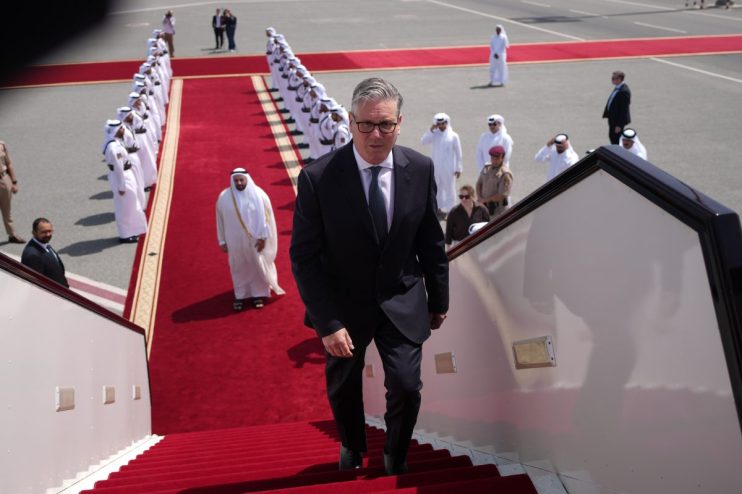
When future historians explain why Keir Starmer’s premiership fell apart, they’ll look at domestic issues, not international diplomacy, writes Matthew Lesh
Historians have long chronicled the fall of empires, searching for the telltale signs of deterioration that might serve as lessons for the present. In perhaps the most famous of such efforts, Edward Gibbon attributed Rome’s downfall to internal decay and imperial over-extension.
In the not-too-distant future, historians of early 21st century Britain will set out on a similar expedition, trying to explain why premierships keep falling apart and identifying the telltale signs that things are about to go wrong. A key theme they are likely to pick up on is the tendency for a struggling prime minister to shift their efforts towards international diplomacy.
In Boris Johnson’s case, he fixated on Ukraine as the edifice of power crumbled around him. Sunak tried to celebrate the Windsor Framework (the softening of relations with the EU) as a major success, but found that it excited relatively few people. Today, we are once again seeing a struggling prime minister trying their best to focus on foreign policy, with a centrepiece of increased hostility toward the Trump administration from Prime Minister Keir Starmer.
This iota of leadership – whether defendable or not – is undoubtedly providing a sugar rush. According to the latest Morning Wire / Freshwater Strategy Poll, Starmer’s personal approval rating has risen by eight points, but still remains at a lowly -34, with 58 per cent disapproving and just 24 per cent approving of the job he’s doing. Labour’s vote share is up four points, to 22 per cent. Reform, while down by the same amount, still leads nationally on 26 per cent of the vote share.
But we have to be careful not to conclude that this represents a significant or lasting turnaround just yet. That’s because British politics is still primarily about the here-and-now material issues more than anything else.
Domestic issues reign supreme for Brits
Despite the emergence of a new war in the Middle East, the overwhelming number one concern for the British public remains the cost of living, followed by immigration, health and social care and strengthening the national economy. Concern about defence and national security has risen, but it is far from the central worry, with just five per cent of the British public saying it is their number one priority.
The forward indicators, particularly on the cost of living question, are dire for the government. There is overwhelming concern (88 per cent) about the impact of rising energy prices on people’s household finances. A majority (52 per cent) are dissatisfied with the government’s response to the global energy crisis, and two-thirds (69 per cent) think the UK will enter a recession in the next 12 months. There’s also a strong view (74 per cent) that tax rises are on the way in the Autumn Budget, which people are more likely to blame on the current Labour government’s tax and spend decisions (52 per cent) rather than global economic headwinds (39 per cent).
The trend towards materialist concerns is particularly striking on the question of climate change. A majority (50 per cent) back the government issuing new licences for oil and gas exploration in the North Sea, compared to just 17 per cent who are opposed. Strikingly, when asked what the priority should be, almost three-quarters (73 per cent) say reducing household energy bills, even if that means slower progress on carbon emissions. This helps explain why the government has tried to claim that green energy will be cheaper (ignoring the costs of transmission and backup).
The next big test for Starmer will be the local elections next month. Brits are more likely to believe the results will be a verdict on the performance of the national government (38 per cent) than on local issues (23 per cent). If it goes wrong, a clear majority would like to see Starmer resign (60 per cent), though, in a potential saving grace, most expect he will not go (65 per cent).
Starmer may feel a welcome break on jet-setting trips across the world but in the end, more than any other factor, he will be judged on domestic concerns that touch on people’s lives every single day.
Matthew Lesh is country manager at Freshwater Strategy and a public policy fellow at the Institute of Economic Affairs